Blackstone Steak and Peppers: Tender and Charred
- Time: Active 15 minutes, Passive 10 minutes, Total 25 minutes
- Flavor/Texture Hook: Smoky, blistered peppers paired with butter finished, crusty steak.
- Perfect for: Busy weeknight dinners or feeding a hungry crowd fast.
- Quick Blackstone Dinner Recipe with Steak
- Why the Cold Prep Works
- Prepping Your Steak and Peppers
- Essential Ingredients and Easy Swaps
- Must Have Tools for Griddling
- Steps for the Perfect Sear
- Fix Tough Meat and Sogginess
- Tasty Variations for Griddle Meals
- Smart Storage and Leftover Tips
- Best Ways to Serve Steak
- Myths About Griddle Cooking
- CRITICAL Sodium Alert!
- Recipe FAQs
- 📝 Recipe Card
Quick Blackstone Dinner Recipe with Steak
The first time I fired up the gas grill for a steak and pepper night, I was running twenty minutes behind schedule, the kids were starving, and I hadn't even sliced the meat. I realized that the sheer surface area of the griddle is a literal life saver for a busy cook.
There’s something about that first wisp of smoke hitting the air and the rhythmic clack clack of the spatulas against the cold rolled steel that makes the stress of the day just vanish.
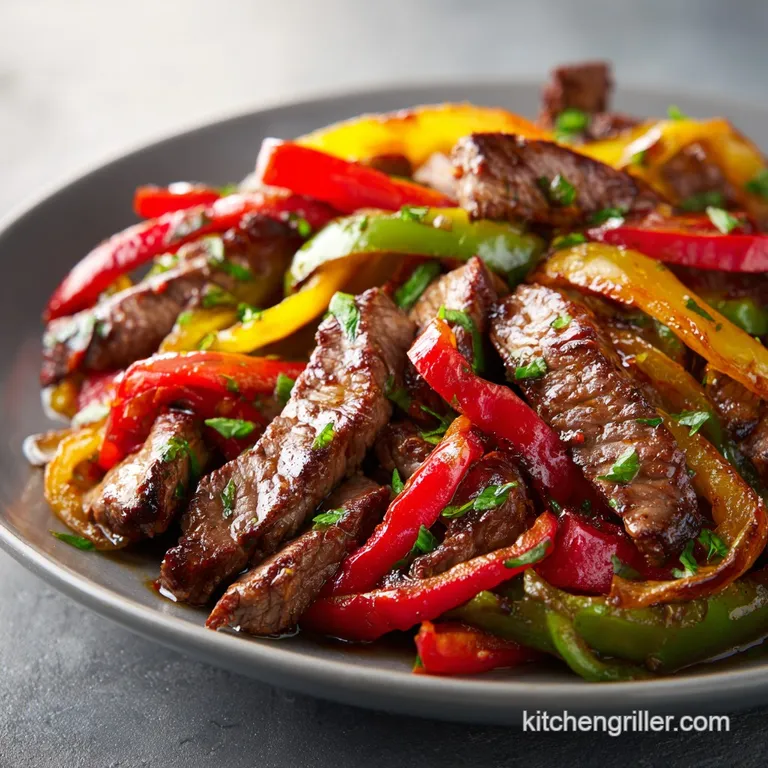
Discover your new go to Blackstone Dinner Recipe with Steak and Peppers that's sure to impress. It’s the kind of meal where you don’t need a fancy marinade or hours of prep to get that deep, savory crust we all crave.
You just need high heat, a few pantry staples, and a bit of technique to keep the veggies from getting mushy while the steak stays juicy.
We’re skipping the complicated sauces today. Instead, we’re relying on the high smoke point of avocado oil and a final hit of smoked paprika butter to do the heavy lifting.
If you’ve ever struggled with steak that feels more boiled than seared, you’re going to love how this setup handles the meat. It’s fast, it’s efficient, and honestly, cleaning the griddle is way faster than scrubbing a sink full of pans.
Why the Cold Prep Works
Most people make the mistake of trying to slice raw steak at room temperature, which usually results in uneven, jagged pieces. Putting the beef in the freezer for exactly 15 minutes is the hack that changes the game.
It firms up the fat and muscle fibers just enough so your knife glides through, giving you those uniform 1/4 inch strips that cook in a flash without drying out.
Flash Searing: High heat on the griddle creates an immediate crust that locks in juices before the interior can overcook.
Moisture Management: Slicing the vegetables into consistent strips ensures they blister on the outside while maintaining a crisp tender snap inside.
Fat Distribution: Using avocado oil provides a over high heat buffer, while the finishing butter adds a velvety mouthfeel that oil alone can't achieve.
Heat Zoning: Utilizing different burner temperatures prevents the delicate onions from burning while the steak gets the intense heat it needs.
| Thickness | Internal Temp | Rest Time | Visual Cue |
|---|---|---|---|
| 1/4 inch | 145°F (Med Rare) | 3 minutes | Deep brown crust, pink center |
| 1/4 inch | 160°F (Medium) | 3 minutes | Charred edges, no visible pink |
| 1/4 inch | 170°F (Well) | 2 minutes | Uniformly dark brown throughout |
Using the right temperature zones is a non negotiable part of griddle cooking. If you try to cook everything on high, your onions will turn to carbon before your steak is even halfway done. This table helps you time the pull so you never serve a rubbery strip of beef again.
Prepping Your Steak and Peppers
The beauty of this Blackstone Dinner Recipe with Steak is that the prep is incredibly linear. While the steak is taking its 15 minute "power nap" in the freezer, you can knock out all your vegetable slicing.
I like to use a mix of red, yellow, and orange bell peppers because they have a higher sugar content than green ones, which means they'll char and sweeten up beautifully against the saltiness of the beef.
Don't overthink the seasoning. We’re using coarse sea salt and cracked black pepper for a reason the larger grains create more surface area for that crust to latch onto. If you use fine table salt, you’ll lose that specific "shatter" when you bite into the seared edge of the steak.
| Ingredient | Science Role | Pro Secret |
|---|---|---|
| Top Sirloin | Lean Protein | Freeze for 15 mins to get paper thin slices without the struggle. |
| Avocado Oil | High Smoke Point | Unlike olive oil, this won't smoke out your backyard before the steak hits the metal. |
| Worcestershire Sauce | Umami Booster | The fermented vinegar tenderizes the beef fibers instantly upon contact. |
| Smoked Paprika | Flavor Depth | Add this at the very end to prevent the spice from burning and turning bitter. |
The Worcestershire sauce is doing double duty here. It’s providing salt and acid, but it also contains sugars that help the steak develop a dark, rich color almost instantly. It’s a trick I often use in my Blackstone steak bites appetizer when I need high impact flavor in a short window of time.
Essential Ingredients and Easy Swaps
For this recipe, we are using 1.5 lbs of top sirloin or flank steak. I personally prefer top sirloin for the price point and the way it holds its shape on the griddle, but flank works great if you’re careful to slice it strictly against the grain.
- 1.5 lbs top sirloin or flank steak: Sliced into 1/4 inch strips. Why this? Sirloin offers the best balance of tenderness and beefy flavor for quick searing.
- 2 tbsp avocado oil: For over high heat sautéing. Why this? It has a 500°F smoke point, keeping your kitchen (or patio) smoke free.
- 1 tbsp Worcestershire sauce: The ultimate savory liquid. Why this? Adds depth and helps the Maillard reaction along.
- 2 tsp coarse sea salt: For seasoning and texture.
- 1 tsp cracked black pepper: Provides a sharp, floral bite.
- 1 tsp garlic powder: Distributes flavor more evenly than fresh garlic in over high heat settings.
- 3 large bell peppers: Use a variety of colors for visual appeal and sweetness.
- 1 large white onion: Sliced into strips to match the peppers.
- 1 tbsp salted butter: Added at the finish for a glossy, rich sauce.
- 1 tsp smoked paprika: For that backyard BBQ aroma without the charcoal.
| Original Ingredient | Substitute | Why It Works |
|---|---|---|
| Top Sirloin (1.5 lbs) | Boneless Chicken Thighs | Similar cook time; slightly more fat requires a longer sear. |
| Avocado Oil (2 tbsp) | Grapeseed Oil | High smoke point and neutral flavor profile. |
| White Onion (1 large) | Red Onion | Adds a sharper bite and a vibrant purple hue. |
If you're looking for a heavier meal, you can easily turn this into a stir fry. I’ve found that the flavors here are very similar to what I use in my Blackstone steak and potato stir fry, just without the starch. If you do swap the steak for chicken, just make sure you give it an extra two minutes on the griddle to ensure it's cooked through.
Must Have Tools for Griddling
You don’t need an arsenal of gadgets, but two long handled spatulas are mandatory. Griddle cooking is a two handed sport. You’ll use one to scoop and the other to steady the food, allowing you to toss the peppers and onions with the same efficiency as a hibachi chef.
A heavy duty scraper is also your best friend. Between the steak batches and before you toss the butter in, you’ll want to scrape the "fond" (those little burnt bits) away so they don't turn bitter.
I also recommend a squeeze bottle for your oil it allows you to target dry spots on the griddle without pouring half the bottle out.
Chef Tip: Freeze your butter for 10 minutes before the final toss. Cold butter emulsifies more slowly into the pan juices, creating a thicker, more velvety glaze rather than just melting into a puddle of grease.
Steps for the Perfect Sear
1. The Cold Prep Method
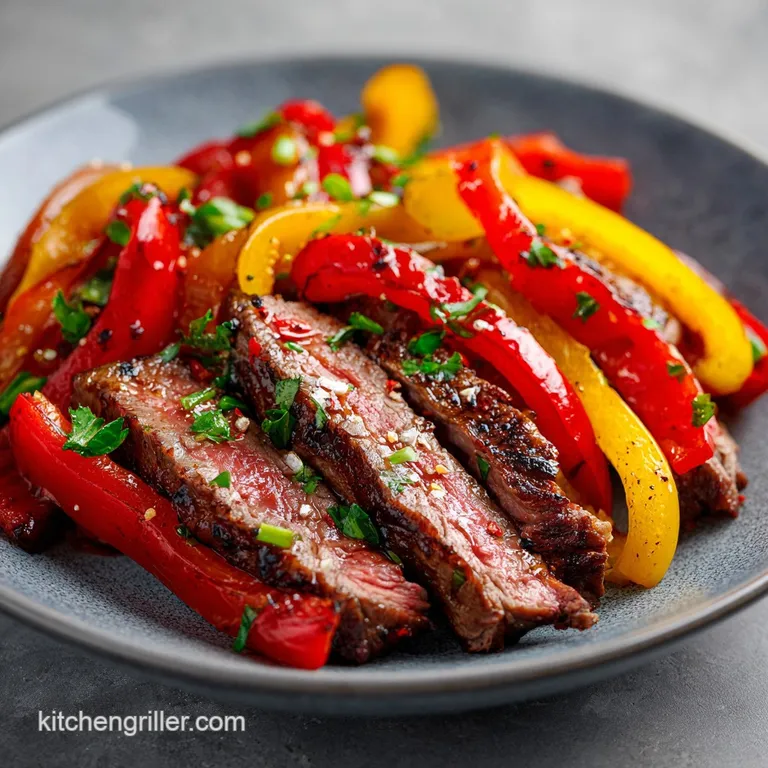
Place the 1.5 lbs of steak in the freezer for 15 minutes to firm. Slice against the grain into uniform 1/4 inch strips. In a bowl, toss the steak with 2 tbsp avocado oil, 1 tbsp Worcestershire sauce, 2 tsp sea salt, 1 tsp pepper, and 1 tsp garlic powder.
Note: This ensures every piece is coated for an even sear.
2. Establishing the Heat Zones
Preheat the Blackstone griddle. Set two burners to High (for the steak) and two burners to Medium Low (for the vegetables) until the surface shimmers and wisps of smoke appear.
3. Slicing the Veggie Medley
While the griddle heats, ensure your 3 bell peppers and 1 white onion are sliced into uniform strips. Note: Consistent sizing means everything finishes at the same time.
4. The Vegetable Char
Spread the sliced onions and bell peppers onto the Medium Low heat zone. Use spatulas to toss frequently until the edges are blistered and charred. This usually takes about 4-5 minutes.
5. The over High heat Sear
Arrange the steak strips in a single layer on the over High heat zone. Allow to sear undisturbed for 2 minutes until a dark brown crust forms. Note: Resist the urge to move them; contact time equals flavor.
6. Flipping the Beef
Flip and toss the steak for another 2-3 minutes until cooked to your desired doneness.
7. The Final Marriage
Slide the vegetables over to the steak zone. Add the 1 tbsp salted butter and 1 tsp smoked paprika.
8. The Finishing Gloss
Toss everything together for 30 seconds until the butter is melted and the steak is glossy.
9. Immediate Serving
Remove from heat immediately to prevent the steak from overcooking on the residual heat of the steel.
Fix Tough Meat and Sogginess
The biggest tragedy in a steak and pepper dish is "steamed" meat. This happens when you overcrowd the griddle. If you put too much cold meat on at once, the temperature of the steel drops, and the moisture from the meat pools instead of evaporating. The result? Gray, rubbery steak.
If you're doubling the recipe, work in batches.
Why Your Steak is Tough
If the meat feels like a workout for your jaw, you likely sliced with the grain instead of against it. Muscle fibers are like long strings; if you cut across them, your teeth don't have to do the work. If it's already cooked and tough, the only fix is to slice it even thinner before serving.
| Problem | Root Cause | Solution |
|---|---|---|
| Gray Steak | Pan was too cold or overcrowded | Cook in smaller batches on the highest heat setting. |
| Mushy Peppers | Cooked on too low heat for too long | Crank the heat and shorten the cook time for a "flash" char. |
| Bitter Aftertaste | Garlic powder or paprika burned | Add spices to the oil/meat or at the very end, never to a dry hot pan. |
Common Mistakes Checklist
- ✓ Pat the steak dry with a paper towel before adding oil (excess water prevents a crust).
- ✓ Wait for the griddle to actually smoke before dropping the meat.
- ✓ Don't skip the 3 minute rest period for the steak strips.
- ✓ Use two spatulas to keep the food moving constantly once the sear is set.
- ✓ Ensure the onions go on the cooler side; they have more sugar and burn faster than peppers.
Tasty Variations for Griddle Meals
For an Easy Blackstone Steak Fajita
Swap the smoked paprika for a teaspoon of cumin and chili powder. Squeeze a fresh lime over the whole mess right at the end. The acid cuts through the fat of the sirloin beautifully. Serve it with warm flour tortillas and a dollop of sour cream.
For a Low Carb Philly Style
Omit the peppers and double the onions. Once the steak and onions are finished, pile them into small mounds on the griddle and drape a slice of provolone cheese over each. Squirt a little water near the pile and cover with a griddle dome for 30 seconds to melt the cheese into every crevice.
When scaling this recipe up for a party, remember the salt rule: don't just double the salt. If you're moving from 4 servings to 8, use 1.5x the salt and spices first, then taste. Over salting a massive pile of steak is a mistake you can't undo, whereas you can always sprinkle a little more coarse salt at the end.
For liquids, like the Worcestershire, reduce the total by about 10% when doubling to prevent the griddle from becoming a soup.
Smart Storage and Leftover Tips
Steak is notoriously finicky when it comes to leftovers. If you zap it in the microwave, it turns into leather. The best way to store this is in an airtight glass container in the fridge for up to 3 days.
I don't recommend freezing the cooked peppers as they turn to mush upon thawing, but the steak itself can be frozen for up to 2 months.
To reheat, skip the microwave. Toss the steak and peppers back onto a hot skillet or griddle with a tiny splash of water or beef broth. Cover it for 60 seconds. The steam will heat the meat through and soften the fibers without re cooking the interior to death.
Zero Waste Tip: If you have leftover scraps of onion or the tops of the bell peppers, don't toss them! Throw them into a freezer bag. Once the bag is full, you can simmer them with some beef bones to make a rich, homemade stock for soups or gravies.
Best Ways to Serve Steak
This dish is a powerhouse on its own, but if you want to make it a full spread, serve it over a bed of cilantro lime rice or with a side of smashed red potatoes. The smoky butter sauce that forms at the end is basically liquid gold, so you want something on the plate that can soak it up.
- The "Bowl" Style: Serve over quinoa with sliced avocado and a drizzle of chipotle ranch.
- The "Sandwich" Style: Stuff the mixture into a toasted hoagie roll with a bit of garlic aioli.
- The "Salad" Style: Cool the mixture slightly and toss it with arugula and a balsamic glaze.
Myths About Griddle Cooking
"You need to oil the meat, not the pan." Actually, for a Blackstone, you need both. Oiling the griddle surface ensures the steel stays seasoned and non stick, while oiling the meat ensures that every nook and cranny of the protein is protected and ready to brown.
"The more you flip the steak, the better the crust." This is the opposite of the truth. A Maillard crust needs uninterrupted contact with the heat source. If you're constantly moving the meat, it will never reach the temperature required to create that deep brown, savory surface. Flip once, then toss at the very end.
"You can't use butter on a griddle because it burns." You absolutely can, you just have to time it. Butter has a low smoke point because of the milk solids. If you add it at the beginning, it will turn black and bitter.
But if you add it in the last 30 seconds of cooking, it melts into a rich sauce that coats the steak and peppers in a velvety finish without burning.
I've made the mistake of adding the butter too early more times than I'd like to admit. Trust me, wait for that final "marriage" step. It’s the difference between a good dinner and one that has your friends asking for the recipe before they've even finished their first bite.

CRITICAL Sodium Alert!
1280 mg 1280 mg (56% 56%)
The American Heart Association recommends no more than 2,300mg of sodium per day, with an ideal limit of about 1,500mg for most adults.
Tips to Reduce Sodium in Your Steak and Peppers
-
Eliminate Coarse Sea Salt-25%
The 2 tsp of coarse sea salt is a major sodium contributor. Removing it entirely will significantly lower the sodium content.
-
Choose Low-Sodium Worcestershire Sauce-20%
Replace the 1 tbsp of Worcestershire sauce with a low-sodium version. Many brands offer significantly reduced sodium options without sacrificing flavor.
-
Use Unsalted Butter-5%
Switch from 1 tbsp of salted butter to unsalted butter. This will remove an unnecessary source of sodium.
-
Boost Flavor with Fresh Herbs & Spices
Enhance the overall taste by adding fresh herbs like cilantro or parsley, or increasing other spices like chili powder or cumin. This adds complexity without adding sodium.
Recipe FAQs
Is it necessary to freeze the steak before slicing?
Yes, it is essential for uniform cutting. Placing the steak in the freezer for 15 minutes firms the meat, allowing you to achieve precise 1/4 inch strips that cook evenly on the griddle.
How to ensure the onions and peppers do not burn?
Use the Medium Low heat zones exclusively for your vegetables. Since these ingredients contain natural sugars that caramelize quickly, keeping them away from the High heat steak zone prevents them from turning bitter before they soften.
Is it true I can use any cooking oil for this recipe?
No, this is a common misconception. Stick to avocado oil because it has the high smoke point required to handle the extreme heat of the Blackstone without burning or producing off-flavors.
How to achieve the perfect crust on the steak?
Sear the strips undisturbed for 2 minutes on the High Heat zone. If you enjoyed mastering this high temperature searing technique, you can apply the same principle of avoiding premature flipping to other meat preparations for superior browning.
Why is my steak tough after cooking?
You likely sliced with the grain instead of against it. Slicing against the grain shortens the muscle fibers, which is the primary secret to ensuring every bite of your steak strips remains tender.
How to properly finish the dish before serving?
Toss the cooked steak and vegetables with the salted butter and smoked paprika for 30 seconds. This final step emulsifies the fats and spices into a glossy, flavorful coating that ties all the ingredients together.
Should I wash the steak before seasoning?
No, never wash raw meat. Instead, pat the steak strips dry with a paper towel; removing surface moisture is the most effective way to guarantee the meat sears immediately rather than steaming in its own juices.
Blackstone Steak And Peppers
Ingredients:
Instructions:
Nutrition Facts:
| Calories | 496 calories |
|---|---|
| Protein | 39g |
| Fat | 31g |
| Carbs | 14g |
| Fiber | 3g |
| Sugar | 6g |
| Sodium | 1280mg |
