Blackstone Steak and Cheese Quesadillas: Crispy and Charred
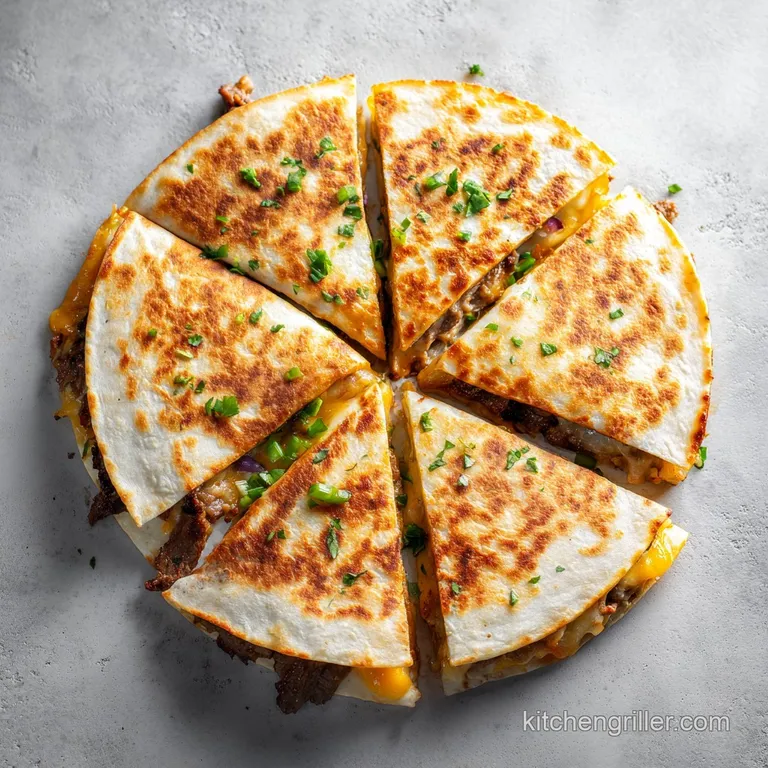
- Time: Active 15 minutes, Passive 10 minutes, Total 25 minutes
- Flavor/Texture Hook: Shattering crisp tortillas meet velvety, salt crusted ribeye and charred onions.
- Perfect for: High energy weekend hangouts or a bold weeknight dinner upgrade.
- Mastering This Blackstone Steak and Cheese Quesadillas Recipe
- Why High Heat Creates Flavor Fusion
- Essential Components For Griddle Greatness
- Required Gear For Perfect Results
- The Step By Step Griddle Process
- Fixing Common Griddle Cooking Mistakes
- Bold Flavor Twists and Alternatives
- Scaling Your Griddle Feast
- Myths About Griddle Cooking
- Keeping Your Leftovers Shattering Crisp
- Mapping Bold Flavors For Serving
- CRITICAL Sodium Alert!
- Recipe FAQs
- 📝 Recipe Card
Mastering This Blackstone Steak and Cheese Quesadillas Recipe
We’ve all been there. You crave that fusion of salty beef and melty cheese, so you throw some steak in a pan, toss it in a tortilla, and hope for the best. But instead of that glorious, shattering crunch you get at a high end food truck, you end up with a sad, soggy mess.
The meat is rubbery because it steamed in its own juices, and the tortilla is limp, soaked through by the moisture of un charred onions. It is a heartbreak on a plate, and frankly, you deserve better than a damp wrap.
The secret to fixing this isn't some secret sauce or a magic tortilla. It is about heat management and moisture control. When you use a flat top griddle, you have a massive surface area that allows steam to escape instantly.
This means your steak actually sears rather than boils, and your vegetables get that sweet, charred edge that only comes from direct contact with 200°C steel. This Blackstone steak and cheese quesadillas recipe is designed to harness that raw power to give you the contrast of textures you’ve been missing.
Right then, let's talk about why we are doing this. We are looking for that specific moment where the fat from the ribeye renders out and fries the edge of the tortilla. We want the onions to go from sharp and pungent to sweet and jammy in a matter of minutes.
By the time you fold that 30cm flour tortilla over the molten provolone, you should hear a literal crack as your spatula presses it down into the melting butter. This is the fix for every mediocre quesadilla you've ever had.
Why High Heat Creates Flavor Fusion
- Conductive Searing: The heavy cold rolled steel of the griddle transfers heat directly into the thin ribbons of ribeye, creating a mahogany crust in seconds rather than minutes.
- Evaporative Crispness: Because the cooking surface is open, the water content in the bell peppers evaporates instantly, preventing the "steam bath" effect that makes tortillas soggy.
- Fat Polymerization: The combination of avocado oil and rendered beef tallow creates a temporary non stick barrier that fries the tortilla starch into a rigid, brittle lattice.
- Maillard Intensity: The Worcestershire sauce sugars interact with the high heat to create a deep, savory coating on the meat that is much more intense than stovetop browning.
| Thickness | Internal Temp | Rest Time | Visual Cue |
|---|---|---|---|
| 1-2 mm (Shaved) | 63°C (Medium) | 2 minutes | Edges turn deep brown/crisp |
| 5 mm (Thin strips) | 63°C (Medium) | 3 minutes | No visible red in the center |
| 1 cm (Cubed) | 63°C (Medium) | 5 minutes | Exterior is dark brown all over |
When you are working with shaved ribeye, the surface area to volume ratio is massive. This is why we don't worry about "resting" the meat in the traditional sense; instead, we move it to the cool zone so the residual heat finishes the internal cook without turning the protein into leather. This steak and cheese fusion is a close cousin to my Blackstone steak and peppers which hits similar notes.
Essential Components For Griddle Greatness
| Component | Science Role | Pro Secret |
|---|---|---|
| Ribeye Steak (680g) | High fat content (marbling) ensures the meat stays silky under intense heat. | Freeze for 30 minutes before slicing to get paper thin ribbons. |
| Provolone Cheese | Provides a mild, creamy base with a low melting point for "the stretch." | Use deli sliced "mild" provolone for a better melt than aged varieties. |
| Avocado Oil | High smoke point (270°C) allows for searing without the oil breaking down or tasting burnt. | Apply in a thin "sheen" rather than a puddle to encourage browning. |
| Worcestershire Sauce | Acts as a liquid "umami bomb" and provides sugars for rapid caramelization. | Add it after the initial sear to prevent the sugars from burning too fast. |
To make this quesadillas recipe truly pop, you need the right foundations. Use 30cm (12 inch) flour tortillas. Why? Because you need the real estate to fold over that massive pile of steak and peppers without the guts spilling out into the grease.
If you go smaller, you lose the ratio of "crispy edge" to "cheesy center."
- 1.5 lb (680g) Ribeye steak: Shaved thin against the grain. Why this? Fat renders into the tortilla for flavor.
- Substitute: Flank steak (sliced very thin) for a leaner, beefier bite.
- 2 tbsp Worcestershire sauce: The savory backbone. Why this? Adds fermented depth and saltiness.
- Substitute: Soy sauce mixed with a pinch of brown sugar.
- 1 tsp Garlic powder & 1 tsp Onion powder: The aromatic base. Why this? Distributes more evenly than fresh on high heat.
- Substitute: Granulated garlic for a grainier texture.
- 0.5 tsp Coarse Sea Salt & 0.5 tsp Cracked Black Pepper: Seasoning essentials. Why this? Large grains provide "pops" of flavor.
- Substitute: Kosher salt (Diamond Crystal) is a great alternative.
- 1 Large White Onion & 1 Green Bell Pepper: The classic crunch. Why this? White onions hold their structure better than yellow.
- Substitute: Poblano peppers for an earthy, mild heat.
- 2 tbsp Avocado oil: The over high heat vehicle. Why this? Won't smoke out your backyard at 200°C.
- Substitute: Grapeseed oil or Rice Bran oil.
- 2 tbsp Unsalted Butter: The finishing touch. Why this? For that "diner style" golden brown crust.
- Substitute: Ghee (clarified butter) for even higher heat stability.
- 4 Large Flour Tortillas (12 inch/30cm): The vessel. Why this? Large enough to hold the 64g of protein per serving.
- Substitute: Whole wheat tortillas for a nuttier flavor.
- 8 slices Provolone Cheese: The glue. Why this? It has a specific velvety pull when melted.
- Substitute: White American cheese for an ultra creamy, Philly style finish.
- 1 cup Shredded Monterey Jack: The moisture barrier. Why this? High moisture content helps fuse the steak to the tortilla.
- Substitute: Pepper Jack if you want a subtle spicy kick.
Required Gear For Perfect Results
You cannot make a world class quesadillas recipe with flimsy tools. You need a heavy duty flat top griddle think Blackstone or Camp Chef. The thermal mass of the steel is what prevents the temperature from dropping when you dump 680g of cold meat onto it.
If you use a thin skillet, the pan cools down, the meat releases its liquid, and suddenly you are boiling your steak. We want a sizzle that sounds like a standing ovation, not a gentle simmer.
Beyond the griddle, a pair of long handled metal spatulas is mandatory. You’ll use these like extensions of your own hands to toss the steak and "chop" it on the fly. This mechanical action breaks up the ribbons, ensuring every single millimeter of beef gets touched by the heat.
I also highly recommend a heavy grill press. It’s not just for looks; it ensures the entire surface of the tortilla makes contact with the buttered steel, which is how you get that uniform, shattering crisp finish.
Finally, an infrared thermometer is a lifesaver. You might think you know when the steel is hot, but "guessing" leads to burnt butter or grey steak. Aim for that 190°C to 200°C range. If you go higher, the tortillas will burn before the cheese inside even thinks about melting.
If you go lower, you lose the mahogany crust. Precision is the difference between a "good" dinner and something people will actually text you about the next day.
The step-by-step Griddle Process
- Ignite and Stabilize: Preheat your Blackstone griddle to medium high heat. Use your infrared thermometer to ensure you are hitting between 190°C and 200°C across the main cooking zones.
- Lube the Steel: Apply a thin, even layer of avocado oil. You aren't deep frying here; you just need a slick surface to facilitate heat transfer.
- The Initial Sear: Lay the shaved ribeye in a single, thin layer. Do not move it. Let it sit for exactly 2 minutes. Note: This builds the "crust" which is the foundation of the flavor fusion.
- Seasoning Explosion: Sprinkle the garlic powder, onion powder, salt, and pepper over the meat. Pour the Worcestershire sauce directly onto the pile.
- The Chop and Toss: Using two metal spatulas, aggressively toss and chop the meat. You want to see that mahogany color everywhere. Once browned (about 2-3 minutes), slide the steak to the outermost "cool zone" of the griddle.
- The Vegetable Char: In the spot where the steak just lived (utilizing those leftover juices), drop your onions and green peppers. Sauté for 3-4 minutes until the edges are charred and the centers are translucent.
- The Great Merge: Toss the steak and vegetables together into one glorious pile. Divide them into four equal portions on the griddle's cooler side.
- Tortilla Foundation: Lay the four flour tortillas on the hot side of the griddle. Immediately place 2 slices of provolone on each, followed by a handful of Monterey Jack.
- The Assembly: Scoop one portion of the steak mixture onto half of each cheesy tortilla. Fold the other half over to create a half moon shape.
- The Golden Finish: Slide a pat of butter under each quesadilla. Press down with your spatula or a grill press. Cook for 1-2 minutes per side until the tortilla is shattering crisp and deep gold.
Fixing Common Griddle Cooking Mistakes
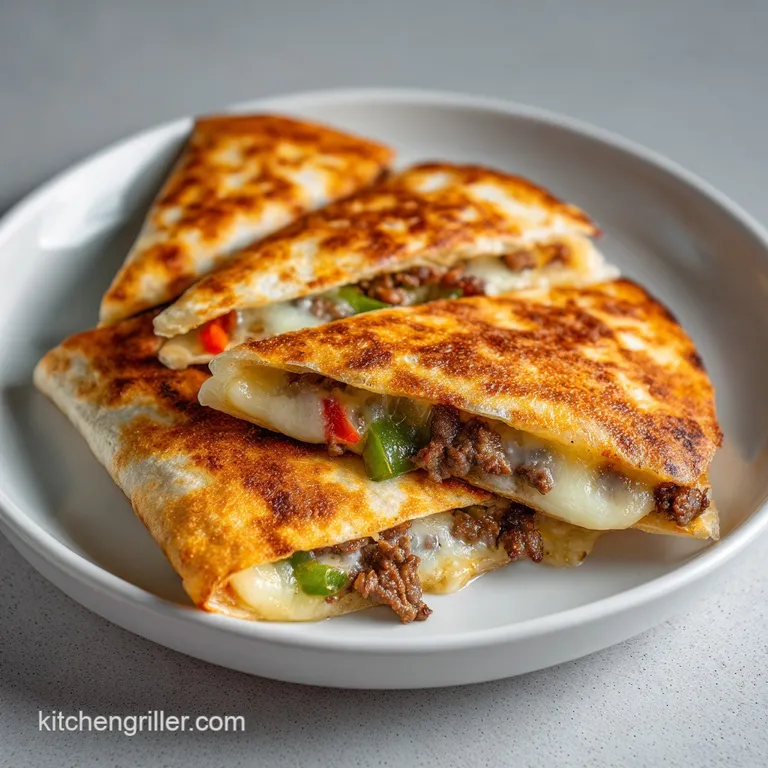
Why Your Meat Is Tough
Even with ribeye, you can end up with rubbery steak if you don't slice it correctly. The muscle fibers in beef run in a specific direction. If you slice with the grain, you're leaving long, stringy fibers that are hard to chew. Always slice against the grain.
Also, if you let the meat sit in a pile on the over high heat zone for too long, it will overcook and become dry. The "cool zone" is your best friend use it to keep things warm without sacrificing the texture.
Why Your Tortilla Is Soggy
This usually happens because of "liquid runoff." Onions and peppers release a lot of water as they cook. If you assemble the quesadilla while the vegetables are still "sweating," that moisture gets trapped between the cheese and the bread. The fix is to sauté the vegetables until they are truly charred.
This evaporates the surface moisture and concentrates the sugars. Also, don't be shy with the butter at the very end it creates a fried barrier that keeps the interior moisture from soaking into the crust.
| Problem | Root Cause | Solution |
|---|---|---|
| Tortilla burns before cheese melts | Griddle temperature is too high (>210°C). | Move quesadilla to a cooler zone and cover with a dome for 30 seconds. |
| Steak is grey/steamed | Overcrowding the griddle surface. | Cook the steak in two batches to ensure maximum surface contact. |
| Cheese leaks out and burns | Filling is too close to the edges. | Keep the steak and cheese 1cm away from the tortilla edge before folding. |
- ✓ Pat the shaved steak dry with paper towels before hitting the griddle (removes surface moisture for a better sear).
- ✓ Ensure the griddle has a visible "shimmer" of oil before adding the beef.
- ✓ Don't add the butter until the very last stage of assembly to prevent it from burning.
- ✓ Use a "shredded" cheese on top of the "sliced" cheese to fill the gaps and act as a glue.
- ✓ Let the finished quesadillas sit on a wire rack for 60 seconds after cooking to prevent steam from softening the bottom.
Bold Flavor Twists and Alternatives
If you want to take this Blackstone steak and cheese quesadillas recipe into a different "realm," you have to play with the heat and the acid. I love adding a handful of pickled jalapeños right before I fold the tortilla. The vinegar in the pickles cuts through the heavy fat of the ribeye and the creamy provolone, creating a bright pop of flavor. If you love that citrus kick, you should see my Blackstone steak fajitas for a different vibe.
For those who want a "Philly Cheesesteak" fusion, swap the Monterey Jack for a drizzle of Cheez Whiz or a heavy layer of white American cheese. It changes the texture from "stringy" to "liquid gold." You can also experiment with the bread.
While flour tortillas are the standard, a sourdough wrap or even a thin flatbread can work if you adjust the cook time. Just remember that thicker breads require a slightly lower temperature to heat through without burning the exterior.
| Original Ingredient | Substitute | Why It Works |
|---|---|---|
| Provolone Cheese | Pepper Jack | Adds a manageable heat and similar melting point. |
| Shaved Ribeye | Shaved Chicken Thigh | Higher fat than breast, stays juicy under high heat. |
| White Onion | Red Onion | Adds a sharper bite and a vibrant purple contrast. |
| Bell Pepper | Sliced Mushrooms | Provides an earthy, meaty texture for vegetarians. Note: Release lots of water; cook longer! |
Scaling Your Griddle Feast
When scaling down to a single serving (1/4 of the recipe), the biggest challenge is the griddle real estate. A large Blackstone can feel "empty," which leads to the oil burning off in the unused sections. I recommend only lighting one burner to save fuel and create a natural temperature gradient.
You’ll still use the same 63°C target for the meat, but your "cool zone" will just be the unlit side of the griddle.
Scaling up to feed a crowd (8-12 people) is where the Blackstone really shines. However, you must avoid the "mountain" mistake. If you pile 2kg of steak in one spot, it will steam. Instead, work in rows.
Line the steak up in a long ribbon across the back, move it to the front when done, and use the middle for the vegetables. For the tortillas, you can fit about 4-6 at a time on a standard 90cm griddle.
Work in batches and keep the finished ones in a warm oven (approx 90°C) on a wire rack to maintain that shattering crisp texture.
Myths About Griddle Cooking
"You must sear the meat to seal in the juices." This is a classic kitchen myth that just won't die. Searing meat creates flavor through the Maillard reaction (browning), but it doesn't create an impermeable moisture barrier.
In fact, over high heat searing can actually cause the muscle fibers to contract more violently, pushing juices out. The reason we sear our ribeye is purely for that intense, salty crust flavor fusion. The "juiciness" comes from the rendered fat and not overcooking the protein.
"Shaved meat doesn't need high heat." Some people think that because the meat is thin, it should be cooked low and slow. This is the fastest way to get grey, rubbery beef. Thin meat needs the highest heat possible so that the outside browns before the inside becomes over textured. It’s a race against time.
If you go low and slow, the meat loses its structural integrity and turns into a mushy pile of protein. High heat is the only way to get that "shatter" on the edges of the beef.
Keeping Your Leftovers Shattering Crisp
Storage is the enemy of the quesadilla. If you throw a leftover quesadilla into a plastic container while it's still warm, the residual steam will turn it into a soggy sponge within minutes. Always let them cool completely on a wire rack first. They will stay fresh in the fridge for up to 3 days.
For long term storage, you can freeze them for up to 2 months. Wrap them individually in parchment paper and then foil to prevent freezer burn.
When it comes to reheating, stay away from the microwave. A microwave will make the tortilla chewy and the steak rubbery. Instead, put them back on a dry skillet or a griddle over medium heat. This draws out the moisture and re activates the fats, bringing back about 80% of that original shattering crunch.
If you're in a rush, an air fryer at 180°C for 3-4 minutes is a brilliant "cheat code" for perfectly crispy leftovers.
For a zero waste tip, don't throw away the scraps of onion or the stems of the peppers. These are flavor gold. Toss them into a freezer bag and use them to start a beef stock or a spicy griddle soup later.
Even the leftover "steak bits" that fall out of the quesadilla can be scrambled into eggs the next morning for an elite breakfast fusion.
Mapping Bold Flavors For Serving
To serve this, you need to think about the "flavor map." You have the heavy, rich fat of the ribeye and the creamy, salty provolone. To balance that out, you need brightness. A side of fresh pico de gallo or a squeeze of lime juice is non negotiable. It resets your palate between every bite.
I also like to serve these with a "fusion crema" just sour cream mixed with a little bit of the leftover Worcestershire and a dash of hot sauce.
- Sweet/Savory: The caramelized onions provide the sweetness that balances the sea salt on the steak.
- Crisp/Tender: The tortilla provides the "shatter," while the ribeye provides the "velvety" chew.
- Bright/Rich: The lime juice or pickled peppers cut through the heavy provolone.
If you are looking for the "ultimate" experience, serve these alongside some crispy potato wedges or a simple arugula salad with a lemon vinaigrette. The peppery bite of the arugula is a masterclass in contrast when paired with the deep umami of the steak.
It's all about that high intensity fusion that keeps you coming back for another slice. Trust me, once you master the "over high heat press" method on the Blackstone, you'll never look at a stovetop quesadilla the same way again.
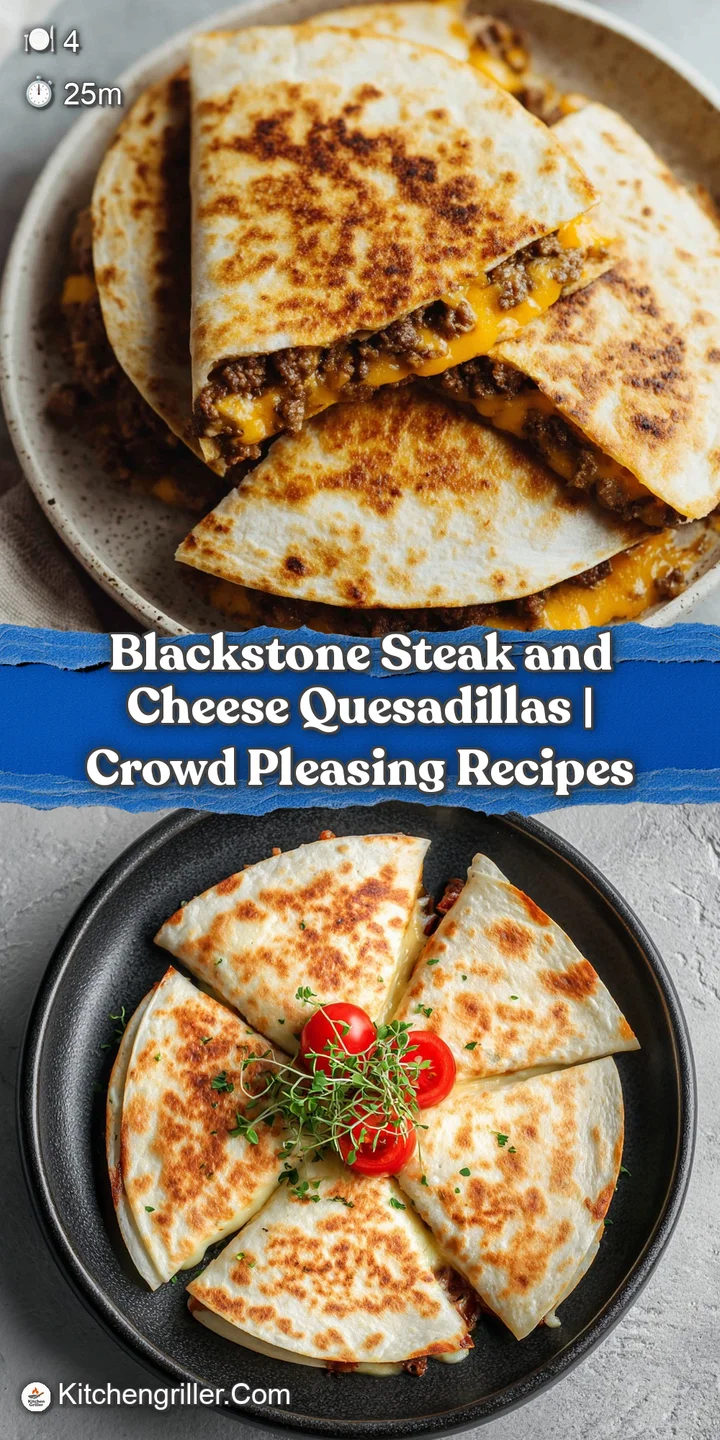
CRITICAL Sodium Alert!
1345 mg 1345 mg of sodium per serving (58% 58% of daily value)
The American Heart Association recommends limiting sodium intake to about 2,300mg per day, with an ideal limit of 1,500mg for most adults.
Strategies to Drastically Lower Sodium in Your Philly Cheesesteak
-
Ditch the Salt and Reduce Worcestershire-30%
Completely omit the 0.5 tsp Coarse Sea Salt. For Worcestershire sauce, use a low-sodium version and reduce the amount by half, or opt for a splash of balsamic vinegar for acidity instead. This is your biggest opportunity for sodium reduction.
-
Smart Cheese Choices-15%
Provolone and Monterey Jack cheese can be significant sodium contributors. Opt for reduced sodium versions of both cheeses. You can also slightly decrease the quantity of cheese used overall.
-
Boost Flavor with Herbs and Spices
Instead of relying on salt, amp up the flavor with fresh or dried herbs like oregano, basil, or thyme. Use extra garlic and onion powder, or add smoked paprika for a smoky depth. These add flavor without sodium.
-
Fresh Onion & Pepper Power
Ensure you're using fresh onions and peppers, not canned or pre-seasoned versions. Their natural flavors will contribute to the dish's taste without adding extra sodium.
-
Unsalted Butter & Healthy Oil
You're already using unsalted butter and avocado oil, which is great! Continue to use these unsalted options to avoid adding unnecessary sodium.
Recipe FAQs
How to ensure the tortillas turn out shattering crisp rather than soggy?
Use high heat and butter on the griddle surface. Pressing the tortillas into the butter directly on the hot griddle creates a crispy, golden brown crust that prevents the ingredients from making the bread limp.
Is it necessary to use a double boiler for melting the cheese?
No, this is a common misconception. The residual heat from the griddle and the direct contact with the meat and vegetables are more than enough to perfectly melt the provolone and Monterey Jack inside the folded tortilla.
How to achieve the perfect mahogany crust on the shaved ribeye?
Spread the meat in a single layer and let it sit undisturbed for 2 minutes. This patience allows the steak to sear instead of steam, which is the same searing technique we use to maximize flavor development in our heartier griddle meals.
Can I prep the ingredients ahead of time?
Yes, slice your peppers and onions and shave your steak up to 24 hours in advance. Storing these prepped ingredients in the refrigerator keeps them ready for a quick 10-minute cook whenever you are hungry.
How to properly manage the different zones of the Blackstone griddle?
Move the cooked steak to the cooler zone while you sauté vegetables on the hot side. This prevents the meat from overcooking and becoming tough while the onions and peppers finish their softening and charring process.
Is the griddle temperature important for the success of this recipe?
Yes, maintain a surface temperature between 375°F and 400°F. Keeping the griddle in this range ensures that the moisture evaporates quickly, which is critical for achieving a crisp tortilla and properly seared steak.
How to prevent the steak from drying out during the cooking process?
Cook the shaved steak quickly over medium high heat and remove from the primary heat source once browned. Because the ribeye is sliced very thin, it only needs a short amount of time to develop a crust before it should be moved to a cooler area of the griddle.
Blackstone Steak Cheese Quesadillas
Ingredients:
Instructions:
Nutrition Facts:
| Calories | 1054 kcal |
|---|---|
| Protein | 64g |
| Fat | 69g |
| Carbs | 39g |
| Fiber | 3g |
| Sugar | 5g |
| Sodium | 1345 mg |
