Garlic Butter Steak Bites
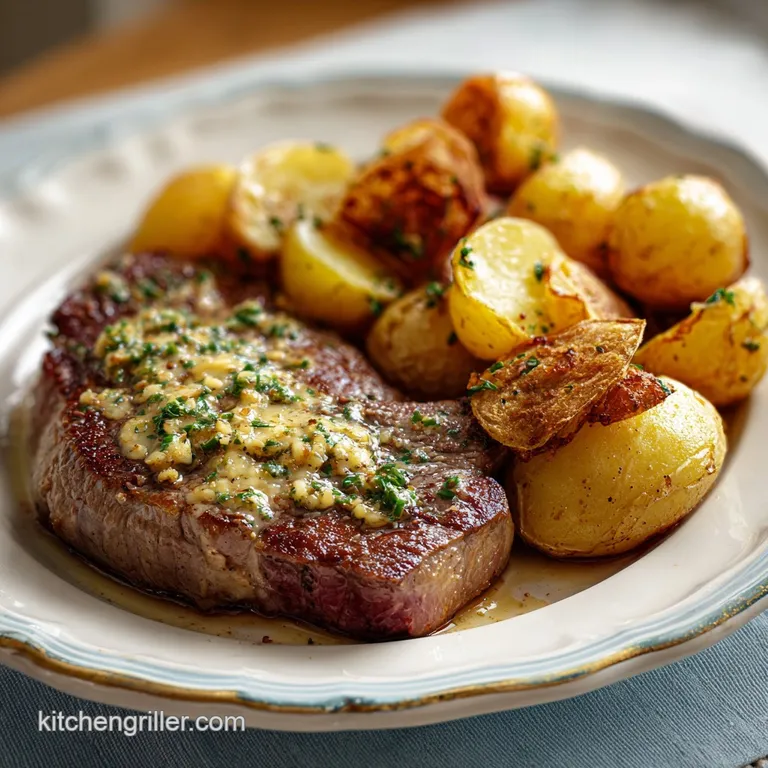
- Master the Ultimate MustTry Blackstone Recipe with Garlic Butter Steak
- Why This High Heat Griddle Method Works Wonders
- The Flavor Journey: From Raw Ingredients to Sear
- Essential Components for Your Garlic Butter Feast
- Necessary Gear for Griddling Like a Pro
- Executing the Perfect Sear and Butter Finish
- Solving Common Griddle Cooking Mistakes and Issues
- Customizing Your Meal With Bold New Flavors
- Best Practices for Storing and Reheating Leftovers
- Side Dishes That Complement Your Steak Perfectly
- Kitchen Myths About Griddle Steaks
- Scaling the Recipe for Large Crowds
- Recipe FAQs
- 📝 Recipe Card
Master the Ultimate MustTry Blackstone Recipe with Garlic Butter Steak
Can you hear that? It is the sound of a thousand tiny explosions as a perfectly seasoned piece of beef hits a 500°F steel plate. There is something primal and undeniably bold about the scent of searing meat mingling with rosemary and smashed garlic in the open air.
It is not just about cooking; it is about that violent, beautiful transformation from raw protein to a crusty, juicy masterpiece that shatters against your teeth. Discover this Must Try Blackstone Recipe with Garlic Butter Steak for an unforgettable meal.
Why does everyone obsess over the griddle? It is the sheer power of the surface. When you drop those cubes of sirloin, you aren't just heating them; you are engaging in a high stakes flavor game where the goal is a deep, mahogany crust without overcooking the center.
Most people struggle with "gray meat" because they don't respect the heat, but we are going to fix that today. You'll get that velvety butter finish and potatoes so crispy they practically snap. Trust me, once you taste the fusion of smoke and garlic on this steel, you'll never go back to a standard skillet again.
Why This High Heat Griddle Method Works Wonders
The magic of the Blackstone isn't just that it’s big; it’s the way it handles thermal energy. Unlike a thin frying pan that loses heat the second you drop cold meat into it, a thick steel griddle acts like a battery, storing up massive amounts of heat and dumping it into your food instantly.
This is what creates that "steakhouse" crust we all crave. We’re building layers here starting with the starch on the potatoes and ending with a cold butter emulsion that coats every single fiber of the meat.
- Thermal Mass Efficiency: The heavy steel plate maintains a consistent temperature, ensuring the steak bites sear instantly rather than steaming in their own juices.
- Starch Retrogradation: Par boiling the Yukon Golds beforehand allows the surface starches to gelatinize, which then dehydrates and crisps up into a glass like shell on the griddle.
- Emulsion Stability: Adding cold butter to the hot steak at the very end prevents the fats from "breaking" or becoming oily, instead creating a thick, glossy sauce that clings to the meat.
- Surface Area Maximization: Cubing the steak increases the surface area exposed to the heat, meaning more Maillard reaction (the browning) per bite compared to a whole steak.
| Steak Thickness | Target Internal Temp | Rest Time | Visual Finished Cue |
|---|---|---|---|
| 1 inch cubes | 135°F (Medium Rare) | 3 minutes | Deep brown crust with a warm pink center |
| 1 inch cubes | 145°F (Medium) | 3 minutes | Firm exterior with a hint of light pink |
| 1 inch cubes | 155°F (Medium Well) | 2 minutes | Dark, charred edges with a solid gray/tan center |
When choosing your doneness, remember that steak bites continue to cook for a minute or two after they leave the heat. Because the Blackstone is so aggressive with its heat transfer, you really want to pull these bites off just a few degrees before your goal.
The difference between a succulent, melt in-your mouth bite and a rubbery nugget is often just sixty seconds on the steel.
The Flavor Journey: From Raw Ingredients to Sear
Every ingredient in this MustTry Blackstone Recipe with Garlic Butter Steak serves a distinct purpose in the flavor hierarchy. We aren't just throwing things together; we are constructing a profile that hits salty, earthy, and fatty notes all at once.
The Worcestershire sauce provides the fermented depth, while the smoked paprika adds a "faked" charcoal hint that complements the gas fired griddle.
| Component | Scientific Role | Pro Chef Secret |
|---|---|---|
| Top Sirloin | Provides dense protein structure for searing | Slice against the grain for maximum tenderness |
| Yukon Gold Potatoes | High starch content for crispy exterior | Never skip the par boil; it ensures the inside is fluffy |
| Garlic Paste | Aromatic infusion through sulfur compounds | Mince into a paste with salt to release all the oils |
| Unsalted Butter | Fat based flavor carrier and emulsifier | Use high-quality grass fed butter for a richer yellow hue |
The interaction between the garlic and the rosemary in the butter is where the "fusion" really happens. As the garlic hits the hot meat, those sulfur compounds mellow out, becoming sweet and nutty. The rosemary oils are heat stable, meaning they won't turn bitter like more delicate herbs might.
It is a bold combination that demands a over high heat environment to shine.
Essential Components for Your Garlic Butter Feast
I’ve made the mistake of using "budget" steak before, and while the griddle can work miracles, starting with top sirloin is the way to go for this specific dish. It has the right balance of lean meat and beefy flavor without the massive price tag of a ribeye.
You want those cubes to be uniform so they all finish at the exact same time don't just hack them up haphazardly.
- Top Sirloin Steak (2 lbs): Cut into 1 inch cubes. Why this? It's lean enough for quick searing but stays tender when cooked to medium rare.
- Substitute: Ribeye or New York Strip for a richer, fattier experience.
- Yukon Gold Potatoes (1.5 lbs): Par boiled and diced into 1/2 inch cubes. Why this? They have a naturally buttery texture and thin skins that crisp up beautifully.
- Substitute: Red bliss potatoes or even sweet potatoes for a sugary charred edge.
- Avocado Oil (2 tbsp): Used for the potatoes. Why this? It has a very high smoke point, preventing the potatoes from tasting "burnt."
- Substitute: Grapeseed oil or clarified butter (ghee).
- Unsalted Butter (4 tbsp): Softened. Why this? Gives you total control over the salt levels of the final glaze.
- Substitute: Salted butter (just reduce the sea salt in the marinade).
- Garlic Cloves (4 units): Minced into a paste. Why this? Paste integrates better into the butter than chunks, which might burn on the steel.
- Substitute: 1 tablespoon of pre minced jarred garlic (though fresh is infinitely bolder).
- Fresh Rosemary & Parsley: Finely chopped. Why this? Adds a bright, resinous finish that cuts through the heavy fat of the beef.
- Substitute: Dried herbs (use only 1/3 the amount) or fresh thyme.
One quick tip: when you're cubing your steak, make sure it’s cold. It’s way easier to get those clean, sharp 1 inch squares when the meat isn't squishing around under your knife. Once they're cut, let them come to room temperature for about ten minutes in the marinade.
This prevents the "thermal shock" that can make meat tighten up and become tough.
Necessary Gear for Griddling Like a Pro
You can't achieve this level of flavor with a spatula and a dream. You need the right tools to move fast. A Blackstone or similar flat top griddle is essential because we need the space to separate the potatoes from the steak. If you crowd the meat, it will steam, and we want a hard, aggressive sear.
I always recommend a heavy duty stainless steel bench scraper alongside your spatulas. This allows you to scrape under the potatoes and steak to ensure you’re getting every bit of that caramelized crust off the steel and into your bowl. You’ll also want an infrared thermometer.
It’s the only way to know if you’ve actually hit that 475°F to 500°F sweet spot. If the griddle is only 350°F, you're just making a stir fry, not a MustTry Blackstone Recipe with Garlic Butter Steak.
Chef's Note: If you’re cooking in the wind, your griddle surface temperature will drop significantly. Use wind guards or increase your burner height to compensate. Cold steel is the enemy of the Maillard reaction!
Executing the Perfect Sear and Butter Finish
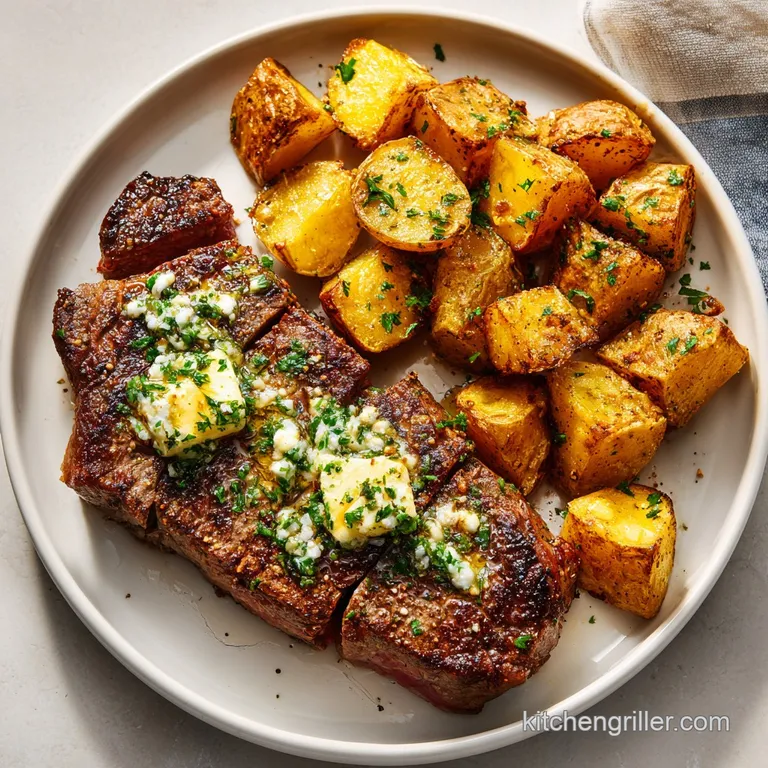
- Preheat your Blackstone griddle on high. Use that infrared thermometer to ensure you are hitting between 475°F and 500°F. Wait until you see wisps of smoke.
- Toss your 2 lbs of cubed sirloin in a bowl with olive oil, Worcestershire, smoked paprika, sea salt, and black pepper. Note: The Worcestershire acts as a "glue" for the spices and adds immediate umami.
- Mix your 4 tbsp softened butter with the minced garlic, parsley, and rosemary. This is the "soul" of the dish get it well combined.
- Apply the avocado oil to the cooler side of the griddle. Lay down your par boiled potato cubes in a single layer. Listen for the immediate sizzle.
- Season the potatoes with onion powder. Let them sear for 8-10 minutes, turning every few minutes until they are golden brown and shatter crisp.
- Move to the hottest zone. Drop the steak bites in a single layer. Leave them alone for 2 full minutes. Do not touch them. We need that crust to form.
- Toss the steak bites with your spatula and cook for another 1-2 minutes. They should be browned on all sides but still tender.
- Slide the steak to the edge of the griddle where the heat is lowest, or turn the burner off entirely.
- Drop the cold garlic butter directly onto the steak bites. Use your spatulas to toss them rapidly. Watch for the butter to turn into a creamy, velvety glaze.
- Combine the potatoes with the steak on the griddle for one final toss, then scrape everything into a serving bowl immediately.
The most important part of this whole process is step 6. My friend once told me she couldn't get her steak bites to brown, and it was because she kept moving them around like she was sautéing vegetables. You have to let the steel do its job. That two minute "disturb free" window is where the flavor is born.
Solving Common Griddle Cooking Mistakes and Issues
Even the best cooks can run into trouble when the heat is this high. The most common heartbreak is the "Gray Steak Syndrome." This happens when the meat releases moisture and boils in its own liquid instead of searing. Usually, this is because the griddle wasn't hot enough or you crowded the cubes too closely together.
Give them space to breathe!
Why Your Potatoes Are Soggy
If your potatoes aren't crunching, you likely skipped the par boiling step or didn't dry them enough before hitting the oil. Par boiling creates a "fuzzy" starchy surface that fries up into a crust.
If the potatoes are wet, the oil has to evaporate the water before it can start crisping the surface, which takes too long.
| Problem | Root Cause | Solution |
|---|---|---|
| Tough, Chewy Steak | Meat was too cold or cooked past 150°F | Pull meat at 130°F and let carry over heat finish it |
| Burnt Garlic | Butter added too early to high heat | Only add garlic butter once the burners are off or on low |
| Potatoes Sticking | Griddle surface not "seasoned" or low oil | Use more avocado oil and ensure a clean, scraped surface |
Common Mistakes Checklist
- ✓ Ensure the steak is patted dry before adding the marinade to avoid excess moisture.
- ✓ Never crowd the steak; work in batches if your griddle surface is smaller than 28 inches.
- ✓ Par boil potatoes in salted water to season them from the inside out.
- ✓ Use cold butter for the finish; it emulsifies better than room temp or melted butter.
- ✓ Clean your griddle surface between the potatoes and the steak to prevent burnt starch bits.
If you find that your steak is sticking to the griddle, don't force it. Usually, the meat will "release" itself once the crust has fully formed. If you try to flip it too early, you’ll leave that beautiful brown flavor stuck to the steel plate. Be patient the heat knows what it's doing.
Customizing Your Meal With Bold New Flavors
While the garlic butter is the gold standard, this MustTry Blackstone Recipe with Garlic Butter Steak is a fantastic canvas for fusion. If you want to push the heat, add a teaspoon of red chili flakes to the butter or a dash of hot honey at the very end.
The sweetness of the honey against the charred beef is a complete game changer.
If you’re looking for a different vibe, check out my Blackstone steak bites appetizer for a slightly different take on the seasoning. Sometimes I’ll even swap the potatoes for bell peppers and onions to lean into a fajita style flavor profile, though you lose that satisfying crunch of the Yukon Golds.
The Low Carb Swap
If you're watching your carbs, you can swap the potatoes for radishes. I know, it sounds crazy, but when you sear radishes on a Blackstone, they lose their peppery bite and become mellow and "potato like" in texture.
Just par boil them for about 5 minutes first, then treat them exactly like the potatoes in this recipe.
The Umami Bomb
For those who want maximum intensity, add a teaspoon of fish sauce or a tablespoon of soy sauce to the steak marinade. It won't taste like seafood; instead, it provides a deep, savory backbone that makes the beef taste even "beefier." You can also grate some fresh parmesan over the potatoes right as you pull them off the heat.
Best Practices for Storing and Reheating Leftovers
If you actually have leftovers (which is rare), you need to be careful with how you reheat them. Steak bites turn into leather if you microwave them on high power. The goal is to warm them back up without pushing the internal temperature past 145°F.
- Fridge Life: Store in an airtight container for up to 3 days. The garlic flavor will actually intensify over the first 24 hours.
- Freezing: I don't recommend freezing the cooked potatoes as they become mealy, but the steak bites can be frozen for up to 2 months.
- Zero Waste: Use the potato peels! Toss them with oil and salt and air fry them into "skin chips." If you have leftover garlic butter, it is incredible on smash burgers the next day.
To reheat, the best method is actually back on the griddle or in a cast iron skillet. Heat the pan over medium, add a tiny splash of water or beef broth, and cover for 2 minutes.
This creates a "steam fry" environment that revives the moisture in the meat and recrisps the bottom of the potatoes without overcooking the centers.
Side Dishes That Complement Your Steak Perfectly
This dish is quite heavy on the fats and carbs, so I usually like to pair it with something bright and acidic. A simple arugula salad with a lemon truffle vinaigrette works wonders. The peppery greens cut right through the rich garlic butter.
You could also throw some asparagus spears or broccolini directly onto the griddle alongside the steak; they only need about 4-5 minutes to become tender crisp.
| Cook Method | Prep Time | Resulting Texture | Best For |
|---|---|---|---|
| Blackstone | 15 mins | Maximum crust, smoky | Weekend feasts, outdoor hosting |
| Cast Iron | 15 mins | Even browning, heavy | Small batches, indoor cooking |
| Oven Roast | 5 mins | Softer, less crust | Large crowds, hands off prep |
Another great pairing is a quick horseradish cream sauce. Mix sour cream, prepared horseradish, a squeeze of lemon, and chives. Dipping those crispy potatoes and steak bites into a cold, spicy sauce creates a temperature and flavor contrast that is purely addictive.
Kitchen Myths About Griddle Steaks
There is a long standing myth that you should only flip your steak once. On a Blackstone, this is actually counter productive for steak bites. Because they are so small, frequent flipping after the initial 2 minute sear ensures that all sides get contact with the hot steel, creating a 360 degree crust.
This is often called the "moving sear" method, and it is the secret to high end griddle cooking.
Another myth is that you need to salt your meat hours in advance. While that works for thick 2 inch ribeyes, for 1 inch steak bites, salting right before they hit the heat is perfectly fine.
The sea salt stays on the surface, creating a salty, crunchy "bark" that wouldn't happen if the salt had already dissolved and pulled moisture to the surface.
Finally, don't believe the idea that you can't use butter on a Blackstone because of the low smoke point. The trick is the timing. We aren't cooking the steak in the butter from the start; we are using the butter as a finishing glaze.
By adding it at the very end when the heat is off or low, you get all the flavor without any of the acrid smoke of burnt milk solids.
Scaling the Recipe for Large Crowds
Scaling this recipe up for a party is one of the best reasons to own a Blackstone. If you want to double it to 4 lbs of steak and 3 lbs of potatoes, the most important thing is to manage your zones.
- Scaling Up: Cook the potatoes in two separate piles to ensure they all get surface contact. For the steak, cook in two batches. If you dump 4 lbs of cold meat onto the steel at once, the surface temperature will plummet, and you’ll lose your sear.
- Scaling Down: If you’re just cooking for one or two, use only one burner of the griddle. This saves propane and gives you a massive "cool zone" to move food to once it's done, preventing overcooking while you finish the butter toss.
When doubling the spices, be careful with the salt. I usually go 1.5x on the salt rather than a full 2x, as it can quickly become overwhelming when combined with the Worcestershire and the garlic paste. You can always add more salt at the table, but you can't take it away!
Regardless of how many people you're feeding, the goal remains the same: bold heat, high-quality fats, and a relentless pursuit of that perfect, crispy juicy contrast. Now, get out there, fire up the steel, and make something legendary. It’s time to eat!
Quick Summary
A high intensity griddle feast featuring aggressively seared sirloin and glass crisp potatoes finished with a velvety herb emulsion.
- Time: Active 15 minutes, Passive 15 minutes, Total 30 minutes
- Flavor/Texture Hook: Shatter crisp potato shells with a buttery, garlic infused steak crust
- Perfect for: High energy outdoor dinners and weekend "chef mode" hosting
make-ahead: Par boil and dice potatoes up to 24 hours in advance for faster griddle prep.
Frequently Asked Questions
Can I use a different cut of beef for this Blackstone steak recipe? Yes, while top sirloin is recommended for its balance of flavor and price, you can use ribeye or New York strip.
These cuts have more intramuscular fat (marbling), which will lead to a richer, more "melt in-your mouth" texture, though they may require a slightly shorter cook time to avoid over rendering the fat.
Why do I need to par boil the potatoes before putting them on the griddle? Par boiling is essential because raw potato cubes take significantly longer to cook through than steak bites.
By boiling them until just tender, you ensure the inside is fluffy and fully cooked while the high heat of the Blackstone focuses entirely on creating a crispy, golden brown exterior.
Is it okay to use dried herbs instead of fresh parsley and rosemary? You can use dried herbs, but the flavor will be less "bright." Since dried herbs are more concentrated, use only 1/3 of the amount (about 1 teaspoon of dried vs 1 tablespoon of fresh).
For the best results in this over high heat dish, fresh herbs provide a resinous aroma that dry herbs simply cannot match.
How do I prevent the garlic from burning on the hot griddle? The secret is timing. Never add the garlic butter at the start of the cook. Instead, add it during the final 30-60 seconds after you have turned off the burners or moved the steak to a cooler zone.
The residual heat of the meat and the steel is plenty to melt the butter and cook the garlic without burning it.
What is the best way to clean the Blackstone after cooking this garlic butter steak? While the griddle is still warm, scrape off any food debris with a bench scraper. Squirt a small amount of water over the surface to steam off the sticky butter and Worcestershire residue.
Scrape again, wipe with a paper towel, and apply a very thin coat of oil to maintain the seasoning and prevent rust.
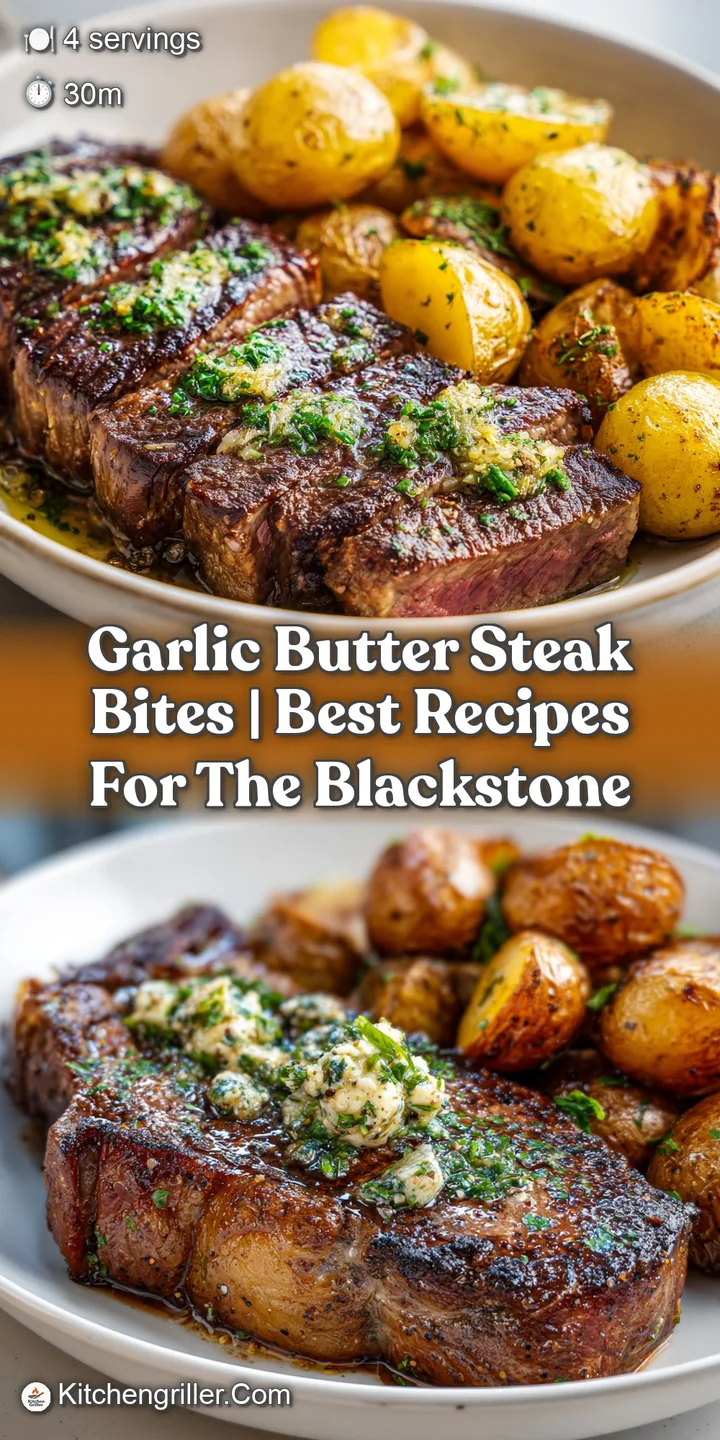
Recipe FAQs
What temperature should my Blackstone griddle be?
Set your griddle to high heat. You are aiming for a surface temperature between 475°F and 500°F to ensure a proper sear.
How to ensure the steak doesn't stick to the griddle?
Pat your steak cubes completely dry before adding the marinade. This removes surface moisture that prevents the formation of a crust; if the meat is currently sticking, stop moving it and wait until the sear releases naturally.
Is it true the potatoes need to be cooked before hitting the griddle?
Yes, par-boiling is essential. Par-boiling your diced Yukon Gold potatoes in salted water seasons them from the inside out and ensures they become golden and crisp in just 8-10 minutes on the griddle. If you enjoyed the precise timing of this vegetable prep, see how we apply the same logic in our no-mush bean burger process.
How to get the best garlic butter flavor?
Use cold butter for the final emulsion. Tossing cold butter with the cooked steak bites at the very end creates a velvety, rich coating that clings to the meat much better than softened or melted butter would.
Why should I use avocado oil on the griddle?
Avocado oil has a very high smoke point. Because this recipe requires temperatures up to 500°F, you need an oil that won't burn or turn bitter during the searing process.
How to prevent burnt starch bits from ruining the steak?
Clean your griddle surface thoroughly after cooking the potatoes. Removing any lingering starch bits before adding the steak ensures your beef crust develops cleanly without any charred, burnt flavors.
Can I cook a larger quantity if I have a small griddle?
No, avoid crowding the surface. If your griddle is smaller than 28 inches, you must work in batches to maintain the high heat necessary for searing; otherwise, the meat will steam rather than brown.
Garlic Butter Steak Bites
Ingredients:
Instructions:
Nutrition Facts:
| Calories | 864 kcal |
|---|---|
| Protein | 48 g |
| Fat | 53 g |
| Carbs | 35 g |
| Fiber | 4 g |
| Sugar | 1 g |
| Sodium | 678 mg |
