Loaded Smashed Potatoes: Ultra-Crispy
- Time: Active 10 minutes, Passive 20 minutes, Total 30 minutes
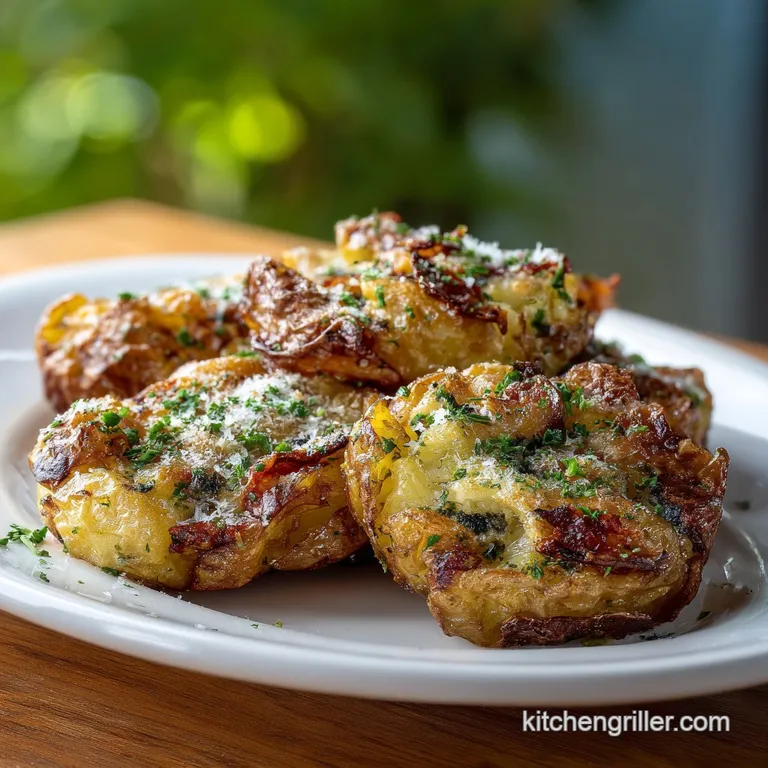
- Flavor/Texture Hook: Shatter crisp salty skins with a molten cheese and smoky bacon finish.
- Perfect for: Backyard griddle enthusiasts, high intensity flavor seekers, and easy weeknight upgrades.
- Mastering the Ultimate Loaded Smashed Potatoes
- Why Surface Area Creates Maximum Crunch
- Component Analysis for Griddle Success
- Selecting the Finest Elements for Success
- Assembling Your Griddle Cooking Arsenal
- Perfecting the Griddle Technique Step-by-Step
- Avoiding Pitfalls for Crisp Excellence
- Scaling Guidelines for Feeding a Crowd
- Global Flavors to Transform Your Dish
- Handling Leftovers and Meal Prep Planning
- Ideal Accompaniments for a Complete Meal
- Smashed Potato Myths
- Recipe FAQs
- 📝 Recipe Card
Mastering the Ultimate Loaded Smashed Potatoes
Right then, let's talk about the absolute best way to handle a potato. We’ve all done the standard baked potato or the classic mash, but there is something visceral about the "smash." The first time I threw a par boiled Yukon onto a piping hot Blackstone griddle and leaned into it with a burger press, the sound alone sold me.
It wasn't just a sizzle; it was a rhythmic crackle as the skin split and flattened, creating a jagged, irregular surface that was basically begging for some hot oil to transform it into gold.
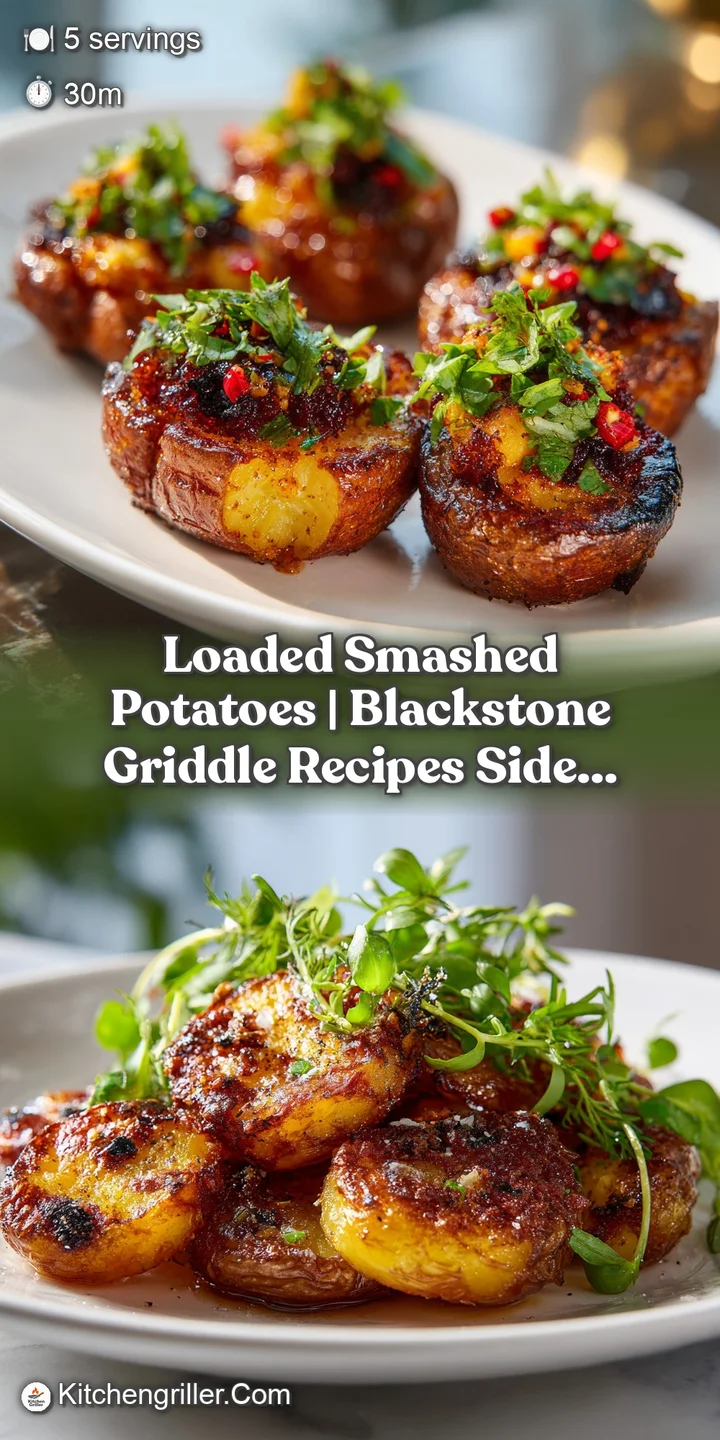
The beauty of these Loaded Smashed Potatoes is the contrast. You get that initial shatter of the crust, followed immediately by a creamy, buttery interior that hasn't lost its moisture. It’s bold, it’s salty, and honestly, it’s a little bit aggressive in the best way possible.
I used to think a side dish was just a supporting actor, but these usually end up stealing the entire show. We aren't doing subtle here we're doing over high heat, high flavor, and total griddle dominance.
If you’ve ever struggled with potatoes sticking to your griddle or ending up as a mushy pile of disappointment, trust me, I've been there. The secret isn't just in the heat; it's in the preparation.
We’re going to build layers of flavor starting with salted water, moving to a fat heavy sear, and finishing with a molten cheese blanket. Let’s get stuck in and turn a bag of baby potatoes into the most requested side dish in your repertoire.
Why Surface Area Creates Maximum Crunch
The magic of this dish happens because we are fundamentally changing the geography of the potato. When you leave a potato whole, you have a limited amount of skin to crisp up. By smashing it, you increase the surface area by nearly 300 percent.
This creates more "landing zones" for the oil and butter to work their magic, leading to a mahogany colored crust that stays crispy even after you load it up with sour cream.
- Starch Gelatinization: Boiling the potatoes first swells the starch granules, making the interior velvety and ready to be compressed without shattering into dry crumbs.
- Thermal Dehydration: The intense, direct heat of the Blackstone griddle rapidly evaporates surface moisture, allowing the skin to go from soft to shatter crisp in minutes.
- Fat Stratification: Using both olive oil and butter provides two different smoke points and flavor profiles, ensuring the potato browns deeply without the fat burning off too quickly.
- Pellicle Formation: Letting the potatoes air dry after boiling creates a thin, dry "skin" that reacts better with the griddle surface, preventing that annoying sticking that ruins the presentation.
| Goal | Fresh Potato Prep | Shortcut (Frozen/Canned) | Flavor Impact |
|---|---|---|---|
| Texture | Shatter crisp exterior, buttery core | Often grainy or overly soft interior | Fresh has a superior "snap" |
| Seasoning | Absorbs salt during the par boil | Surface salt only; core remains bland | Fresh offers deep, built in seasoning |
| Integrity | Holds together during the heavy smash | Tends to pulverize or turn to mush | Fresh allows for a perfect 1/2 inch disc |
Choosing fresh baby Yukons is the high flavor move here. While you might be tempted by a can of whole potatoes to save ten minutes, you'll sacrifice that earthy, nutty flavor that only comes from a fresh tuber meeting a hot iron plate.
The shortcut versions often contain preservatives that prevent the starches from browning evenly, leaving you with a pale, lackluster result.
Component Analysis for Griddle Success
To get that restaurant quality finish, we need to understand what each ingredient is doing on the griddle. It isn't just about putting things in a pan; it's about how they interact with 400°F of cast iron.
| Ingredient | Science Role | Pro Secret |
|---|---|---|
| Baby Yukon Gold | Waxy starch profile that holds shape | Keep the skins on; they provide the essential structural "crunch" |
| Unsalted Butter | Milk solids provide deep browning | Add butter during the final 2 minutes of the sear for nutty aroma |
| Smoked Paprika | over High heat stable pigment for color | It mimics the "char" of a wood fire even on a gas griddle |
| Sharp Cheddar | High fat to protein ratio for melting | Shred it yourself from a block; pre shredded has anti clumping wood pulp |
I cannot stress the "shred your own cheese" rule enough. Those bags of pre shredded stuff are coated in potato starch or cellulose. When you try to melt that on a griddle, it doesn't flow; it just sits there looking sad and plastic. If you want that velvety, dripping cheese pull, grab the grater and do the work.
It’s a five minute task that changes the entire experience.
Selecting the Finest Elements for Success
When you're shopping for your Loaded Smashed Potatoes, look for consistency. You want baby potatoes that are roughly the same size about the size of a golf ball is the sweet spot. If they vary too much, some will be mush while others are still hard in the center after the boil.
- 1.5 lbs Baby Yukon Gold or Red Bliss potatoes: Why this? Yukons offer a naturally buttery flavor and a creamy texture that outperforms starchy Russets.
- 1 tbsp Kosher salt: Why this? Essential for seasoning the potato from the inside out during the boiling phase.
- 2 tbsp Extra virgin olive oil: Why this? Provides a over high heat base that prevents the potatoes from sticking to the griddle.
- 2 tbsp Unsalted butter: Why this? Adds richness and helps achieve a mahogany colored crust through milk solid browning.
- 1 tsp Garlic powder: Why this? Distributes more evenly than fresh garlic, which would burn at these high griddle temps.
- 0.5 tsp Smoked paprika: Why this? Adds a subtle earthiness and a deep red hue that makes the potatoes look incredible.
- 1 cup Sharp cheddar cheese, freshly shredded: Why this? Provides a bold, tangy contrast to the earthy potato and melts perfectly.
- 0.5 cup Cooked bacon crumbles: Why this? Adds essential salt, smoke, and a secondary crunch factor to every bite.
- 0.25 cup Fresh chives, thinly sliced: Why this? The sharp, oniony bite cuts through the heavy fat of the cheese and sour cream.
- 0.5 cup Sour cream: Why this? The cool, tangy finish that balances the heat and salt of the griddle seared potato.
For a fantastic pairing, these potatoes are a match made in heaven for a juicy steak. If you're already firing up the griddle, check out my Blackstone steak and potatoes guide for a full meal plan. The way the beef juices mingle with the crispy potato edges is something you just have to experience.
Assembling Your Griddle Cooking Arsenal
You don't need a professional kitchen, but a few specific tools will make this process much smoother. The star of the show is obviously the Blackstone, but the way you interact with it matters.
First, you need a heavy duty burger press or a large, flat metal spatula. When we smash these potatoes, we need consistent pressure. If you use a fork, you'll just mash them. We want a flat, even disc. I often use a piece of parchment paper between the press and the potato.
This prevents the potato from sticking to your tool and tearing, which is a common mistake that ruins the "disc" shape.
Second, a basting dome is your best friend. Since the Blackstone only heats from the bottom, getting that cheese to melt quickly without overcooking the bottom of the potato can be tricky.
A dome traps the steam and radiant heat, creating a mini oven effect that melts even the thickest layer of cheddar in under 60 seconds. If you don't have one, a large stainless steel bowl flipped upside down works in a pinch.
Finally,, make sure you have a good set of long handled tongs and a wide spatula. You'll be working over high heat, and you want to be able to flip these delicate discs without them breaking apart.
A wide spatula allows you to get under the entire potato at once, ensuring that beautiful crust stays attached to the potato and doesn't stay behind on the griddle.
Perfecting the Griddle Technique step-by-step
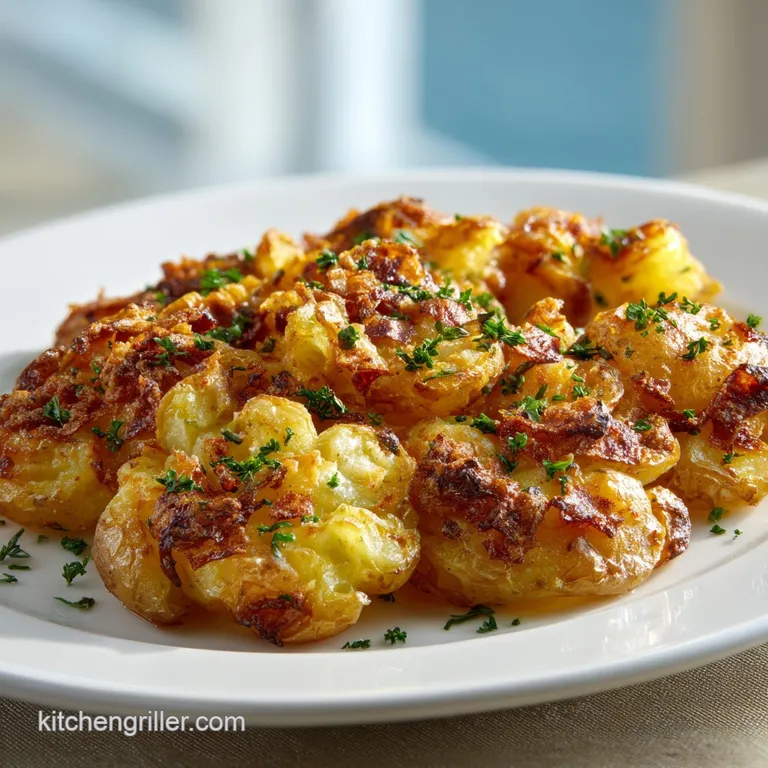
- Place 1.5 lbs of baby potatoes in a large pot and cover with cold water, adding 1 tbsp of Kosher salt. Note: Starting with cold water ensures the potatoes cook evenly from edge to center.
- Bring the pot to a boil and cook for 10–12 minutes until a fork slides in with zero resistance.
- Drain the potatoes thoroughly and let them air dry in the colander for 2 minutes. Note: This allows surface steam to escape, which is vital for a crispy sear.
- Preheat your Blackstone griddle to medium high heat and spread 2 tbsp of olive oil across the surface using a spatula.
- Arrange the warm potatoes on the oiled griddle, leaving at least two inches of space between each one.
- Cover a potato with parchment paper and use a heavy press to flatten it to 1/2 inch thickness. Note: Any thinner and they might fall apart; any thicker and they won't get that "shatter" crunch.
- Brush the tops of the smashed potatoes with 2 tbsp of melted butter and sprinkle with garlic powder and smoked paprika.
- Cook for 5–7 minutes until the bottom is a deep, dark golden brown and releases easily from the griddle.
- Flip the potatoes carefully and top each with a generous portion of shredded cheddar and bacon crumbles.
- Use a basting dome for 60 seconds until the cheese is bubbling and completely draped over the edges.
- Remove from the heat and garnish with a dollop of sour cream and a sprinkle of fresh chives before serving.
Avoiding Pitfalls for Crisp Excellence
The most common issue I see with Loaded Smashed Potatoes is the "soggy bottom" syndrome. This usually happens for one of two reasons: the potatoes were too wet when they hit the griddle, or the griddle wasn't hot enough. When that potato hits the oil, you should hear a loud, aggressive sizzle.
If it’s a quiet hiss, pull them off and wait for the surface to get hotter.
Why Your Potatoes Are Sticking
If your potatoes are tearing when you try to flip them, you're likely trying to move them too soon. Much like a steak, the potato will "release" from the cooking surface once a proper crust has formed. If it's sticking, it's telling you it's not ready yet. Give it another minute.
Also, make sure your griddle is well seasoned. A dry spot on the iron is a magnet for potato starch.
| Problem | Root Cause | Solution |
|---|---|---|
| Potatoes Shattering | Overcooked during the par boil | Boil only until "fork tender," not falling apart |
| Pale/Soft Exterior | Griddle temp too low or crowded pan | Increase heat to medium high and work in batches |
| Burnt Toppings | Cheese added too early in the sear | Only add cheese/bacon after the flip and during the final 60 seconds |
Common Mistakes Checklist
- ✓ Never skip the air drying step; moisture is the absolute enemy of a good sear.
- ✓ Don't overcrowd the griddle; steam from one potato can soften the one next to it.
- ✓ Use a neutral oil with a high smoke point (like avocado or light olive oil) for the base layer.
- ✓ Avoid moving the potatoes once they are smashed; let the crust build undisturbed.
- ✓ Ensure the bacon is already crispy before adding it to the potatoes to avoid a rubbery texture.
If you find yourself with extra potatoes or want to try a different method for a future meal, check out these grilled sweet potatoes. They offer a totally different flavor profile but use similar over high heat principles to get that perfect caramelization.
Scaling Guidelines for Feeding a Crowd
Feeding a large group with this recipe is easy, but you have to manage your "griddle real estate" wisely. A standard 36 inch Blackstone can handle about 3 lbs of potatoes at once, but you’ll be busy flipping.
- Scaling Down (1-2 People): Use a smaller pot for the boil to save time. You can use a cast iron skillet on the stove if you don't want to fire up the big griddle. Reduce the cook time by 2 minutes as a smaller volume of potatoes won't drop the griddle temperature as significantly.
- Scaling Up (10+ People): Work in batches. Keep the first batch warm in a 200°F oven on a wire rack while you finish the rest. Do not stack them; the steam will ruin the crunch you worked so hard for.
- The Salt Rule: If you double the recipe, you don't need to double the salt in the boiling water. Use 1.5x the salt for 2x the potatoes to avoid an over salted core.
- Baking Adjustment: If you need to finish these in an oven because you ran out of propane, set it to 425°F (220°C). They will take about 15 minutes to crisp up, but you won't get that same direct contact sear that the griddle provides.
Global Flavors to Transform Your Dish
Once you've mastered the classic "loaded" version, you can start playing with the flavor profile to match whatever else you're serving. The smashed potato is basically a blank canvas for fat and salt.
- Jalapeño Popper Style: Swap the sour cream for a schmear of cream cheese and top with fresh jalapeño slices and cheddar. The heat from the peppers cuts through the richness beautifully.
- Mediterranean Fusion: Use feta cheese instead of cheddar, and top with kalamata olives, dried oregano, and a drizzle of tzatziki. This works incredibly well if you're griddling some lamb chops alongside.
- Truffle & Parmesan: For a high end vibe, use truffle oil instead of olive oil and top with freshly grated Parmesan and parsley. Skip the bacon and let the earthy truffle flavor take the lead.
- Buffalo Blue: Toss the smashed potatoes in a little buffalo sauce right before the cheese step, then top with blue cheese crumbles and celery salt. It's like a chicken wing in potato form.
If you are looking for a completely different vibe for your next outdoor cookout, you might enjoy this Mexican Street Corn recipe. It uses the same over high heat griddle technique to get that charred, smoky flavor that pairs perfectly with these potatoes.
Handling Leftovers and Meal Prep Planning
Let's be honest: these are best eaten immediately. However, if you do have leftovers, don't you dare put them in the microwave. A microwave will turn that glorious crust into a rubbery, sad mess.
Storage: Keep leftovers in an airtight container in the fridge for up to 4 days. You can also freeze the par boiled and smashed (but not yet griddled) potatoes. Freeze them on a baking sheet first, then transfer to a bag. They’ll stay good for 2 months.
Reheating: The best way to revive the "shatter crisp" is back on the griddle or in an air fryer. Give them 3-4 minutes at 400°F. If using a pan, add a tiny drop of oil to wake up the crust.
Zero Waste Tip: If you have leftover bacon and chives but no potatoes, save them! That bacon fat left on the griddle is liquid gold. I like to use it to sauté some cabbage or onions the next day.
Even the potato skins that might fall off during the smash can be toasted into "potato bark" a salty, crunchy snack that’s better than any bag of chips.
Ideal Accompaniments for a Complete Meal
Since these Loaded Smashed Potatoes are quite heavy and rich, you want to pair them with something that has a bit of acidity or brightness. A heavy cream sauce on your main dish might be "too much of a good thing." Instead, think about lean proteins or zesty marinades.
They are the ultimate partner for grilled chicken thighs with a lemon herb rub or a balsamic glazed flank steak. The acidity in the balsamic or lemon helps reset your palate between bites of cheesy, bacony potato.
If you’re keeping it casual, they are also the best possible side for a smash burger doubling down on the "smash" theme of the night!
- Grilled Asparagus: The snap of fresh asparagus provides a nice textural contrast to the soft potato center.
- Garden Salad: A simple arugula salad with a sharp vinaigrette cuts right through the cheddar and sour cream.
- Corn on the Cob: If the griddle is already hot, some charred corn rounds out the "summer cookout" vibe perfectly.
Smashed Potato Myths
- Myth: You must peel the potatoes. Truth: Absolutely not. The skin is where the majority of the texture lives. Without the skin, the potato will lose its structural integrity on the griddle and turn into a pile of mash.
- Myth: Adding oil to the boiling water stops sticking. Truth: This is a waste of oil. The oil will just float on top and be poured down the drain. To stop sticking, focus on the temperature of your griddle and the dryness of the potato surface.
- Myth: You can't over boil them. Truth: You definitely can. If they are falling apart in the pot, they will disintegrate when you try to smash them. You want "just barely tender" the griddle will finish the cooking process.
Recipe FAQs
Is it necessary to boil the potatoes before smashing them?
Yes, boiling is essential for the right texture. Cooking them for 10 12 minutes until fork tender ensures they smash evenly without breaking apart into a mash.
How to ensure the potatoes get perfectly crispy?
Air dry the potatoes for 2 minutes after draining. Removing surface moisture is the secret to a professional sear; if you enjoyed mastering this crust building technique, you can apply similar heat control logic to our crispy skin wings.
Should I move the potatoes while they are searing?
No, avoid moving them once smashed. Letting the potatoes sit undisturbed for the full 5 7 minutes per side is what creates that deep, golden brown crust.
How to melt the cheese quickly on the griddle?
Close the griddle hood or use a basting dome for 60 seconds. This traps the heat, ensuring the sharp cheddar melts thoroughly over the bacon crumbles without burning the base of the potato.
Is it true I can use a standard pan instead of a griddle?
No, this is a common misconception. While a heavy skillet can work, a flat top griddle provides the consistent heat distribution and surface area needed to prevent overcrowding, which is key to avoiding soggy potatoes.
How to keep the bacon from getting rubbery?
Pre-cook your bacon until it is already crispy before adding it to the potatoes. Since the potatoes only spend about a minute under the dome for melting, the bacon will not have enough time to render or crisp up on the griddle.
Can I prepare the potatoes ahead of time?
Yes, but keep the steps separate. You can boil and air-dry the potatoes in advance, but for the best texture, wait to smash and sear them on the griddle until just before you are ready to serve.
Loaded Smashed Potatoes
Ingredients:
Instructions:
Nutrition Facts:
| Calories | 401 kcal |
|---|---|
| Protein | 13.5 g |
| Fat | 27.3 g |
| Carbs | 25.2 g |
| Fiber | 3.0 g |
| Sugar | 1.8 g |
| Sodium | 490 mg |
