Smoked Mac and Cheese with Panko Crust
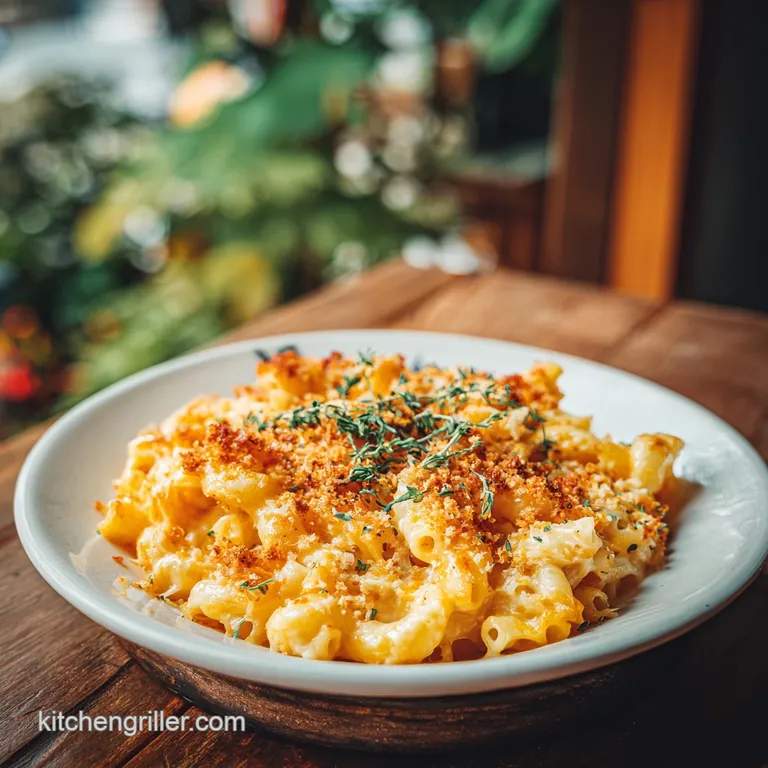
- Time: Active 15 minutes, Passive 45 minutes, Total 1 hours
- Flavor/Texture Hook: Smoky, velvety cheese with a shattering Panko crust.
- Perfect for: Backyard BBQ sides, pitmaster style gatherings, or holiday comfort food.
- Crafting Perfect Smoked Mac and Cheese Naturally
- Recipe Specifications and Timeline
- Analyzing the Essential Components
- Pitmaster Tools for Success
- Executing the Multi Stage Cook
- Fixing Common Texture Mistakes
- Customizing the Flavor Profile
- Scaling and Volume Adjustments
- Technical Culinary Truths
- Storage and Efficiency Tips
- Optimal Serving and Pairing
- Recipe FAQs
- 📝 Recipe Card
Crafting Perfect Smoked Mac and Cheese Naturally
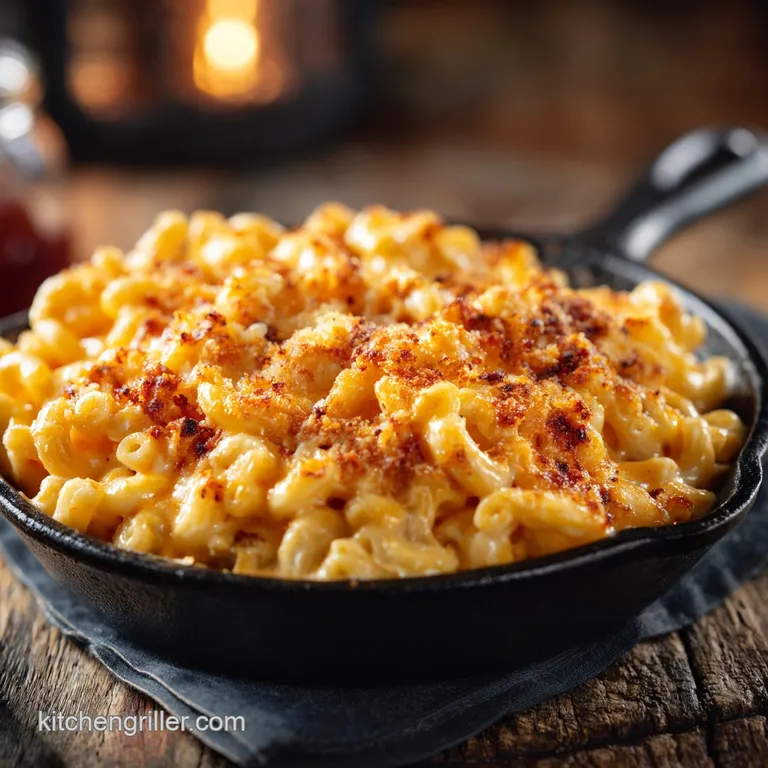
Walking into a BBQ joint in the heart of the South, the first thing that hits you isn't the meat it's the aroma of bubbling cheese mingling with hickory wood. I remember the first time I pulled a heavy cast iron skillet from my own grill; the edges were sizzling with darkened cheese "lace" while the Panko topping had turned into a golden, buttery crust that promised a loud shatter with every spoonful.
This article shares a fantastic recipe for Traeger Smoked Cast Iron Mac and Cheese.
Most people treat pasta as an afterthought at a cookout, but when you subject it to a controlled smoke environment, it becomes the star. We aren't just baking this; we're using the smoker as a convection laboratory where the pasta absorbs ambient wood flavor while the cheese fats remain stable.
It took me three or four attempts to realize that boiling the pasta all the way through before smoking was my biggest mistake it turned to mush every time.
In this guide, we'll look at why certain fats work better under smoke and how to prevent your sauce from "breaking" into an oily mess. We're aiming for a consistency that is thick enough to coat a spoon but liquid enough to stay creamy even after 45 minutes in the pit.
Trust me, once you hear that first crunch of the crust against the silky pasta, there is no going back to the stovetop version.
Recipe Specifications and Timeline
The Physics of the Smoke Infusion: The porous surface of par boiled pasta acts as a landing site for smoke particulates, which bind to the fats in the milk and cream.
By keeping the temperature at 225°F, we allow these molecules to penetrate the sauce without curdling the dairy proteins.
- Thermal Stability: Using heavy cast iron prevents rapid temperature swings that can cause the cheese sauce to separate.
- Starch Gelatinization: Under cooking the pasta by 2 minutes allows it to finish hydrating using the milk and cream, locking in flavor.
- Maillard Timing: The final 10 minutes of higher heat creates the aromatic crust without drying out the interior.
- Fat Emulsification: Combining high moisture Monterey Jack with Sharp Cheddar creates a structural web that holds the smoke.
| Method | Time | Texture | Best For |
|---|---|---|---|
| Traditional Stovetop | 20 mins | Liquid/Creamy | Quick weeknight meals |
| Oven Baked | 45 mins | Solid/Casserole | Holiday potlucks |
| Smoker (Our Method) | 60 mins | Velvety/Smoky | Authentic BBQ enthusiasts |
The smoker method provides a depth of flavor that an oven simply cannot replicate. While an oven relies on radiant heat to cook, a pellet grill or offset smoker uses moving air laden with wood compounds. This movement helps the smoke reach every nook and cranny of the elbow macaroni.
| Thickness | Internal Temp | Rest Time | Visual Cue |
|---|---|---|---|
| 2 inch deep | 165°F | 10 mins | Bubbling edges, matte top |
| 3 inch deep | 170°F | 15 mins | Slow, thick bubbles |
| 1 inch deep | 160°F | 5 mins | Rapid sizzling, dark lace |
Analyzing the Essential Components
| Ingredient | Science Role | Pro Secret |
|---|---|---|
| Sharp Cheddar | Flavor & Acidity | Grate it yourself to avoid anti caking starches. |
| Monterey Jack | Melting Agent | High moisture content ensures a smooth, non gritty pull. |
| Whole Milk | Hydration Base | Use cold milk to prevent the butter from seizing during mixing. |
| Smoked Gouda | Smoke Amplifier | Adds a nutty, buttery depth that bridges the wood flavor. |
Selecting the right cheese is the difference between a silky masterpiece and a grainy bowl of regret. Pre shredded cheese is coated in potato starch or cellulose to prevent clumping in the bag; unfortunately, those same additives prevent the cheese from melting into a cohesive sauce.
I always buy blocks and spend the extra five minutes grating them by hand.
While your smoker is hot, you might as well throw on a Smoked Pork Butt recipe to serve alongside the pasta. The richness of the pork balances the sharp acidity of the cheddar beautifully.
Pitmaster Tools for Success
For the best results, a 12 inch cast iron skillet is the gold standard. It holds heat like a battery, ensuring the bottom of the pasta stays warm even when you take it to the table. If you don't have one, a disposable aluminum pan works, but you'll lose that characteristic "cheese lace" crust on the bottom.
- 1 lb Elbow macaroni or Cavatappi: Why this? Ridges or curves trap more of the velvety cheese sauce in every bite.
- Substitute: Shells or Penne (similar surface area).
- 2 tbsp Salted butter, cubed: Why this? Adds fat to coat the pasta and prevents sticking.
- Substitute: Unsalted butter with an extra pinch of salt.
- 12 oz Sharp Cheddar, freshly grated: Why this? Provides the punchy, acidic backbone of the flavor profile.
- Substitute: Extra Sharp White Cheddar for a cleaner look.
- 8 oz Monterey Jack, freshly grated: Why this? The "glue" that keeps the sauce elastic and stretchy.
- Substitute: Muenster or Havarti.
- 4 oz Smoked Gouda, freshly grated: Why this? Harmonizes with the wood smoke for a layered taste.
- Substitute: Smoked Provolone.
- 3 cups Whole milk: Why this? Provides the necessary liquid for the pasta to finish cooking.
- Substitute: 2% milk (will be slightly less creamy).
- 1 cup Heavy cream: Why this? Boosts fat content to prevent the sauce from drying out.
- Substitute: Half and half (results in a thinner sauce).
- 1 tsp Smoked paprika: Why this? Adds a subtle earthiness and a sunset orange hue.
- Substitute: Regular paprika or a dash of cayenne.
- 1 tsp Garlic powder: Why this? Bridges the gap between the dairy and the savory smoke.
- Substitute: Onion powder.
- 1/2 tsp Ground mustard: Why this? An emulsifier that helps fats and liquids stay bonded.
- Substitute: 1 tsp Dijon mustard.
- 1/2 cup Panko breadcrumbs: Why this? Larger surface area creates a more significant crunch than fine crumbs.
- Substitute: Crushed Ritz crackers for a buttery finish.
- 2 tbsp Melted butter: Why this? Ensures the breadcrumbs brown evenly in the smoker.
- Substitute: Olive oil.
- 1/4 cup Grated Parmesan: Why this? Adds a salty, umami rich crust to the topping.
- Substitute: Pecorino Romano.
Chef Tip: Freeze your Smoked Gouda for 15 minutes before grating. Since it is a softer cheese, the cold firms up the fats so it doesn't turn into a clump in your grater.
Executing the Multi Stage Cook
- Boil the macaroni. Cook the 1 lb elbow macaroni in salted water for exactly 2 minutes less than the package directions. Note: It should still have a firm "bite" in the center.
- Drain and coat. Toss the hot pasta with the 2 tbsp cubed butter in a large bowl. Note: This creates a fat barrier so the pasta doesn't soak up all the sauce immediately.
- Mix the dairy. Whisk together the 3 cups whole milk, 1 cup heavy cream, 1 tsp smoked paprika, 1 tsp garlic powder, and 1/2 tsp ground mustard.
- Combine cheese. In a separate bowl, toss the grated Cheddar, Monterey Jack, and Gouda together.
- Layer the skillet. Place half the pasta in the 12 inch cast iron skillet, top with half the cheese mixture, then repeat with the remaining pasta and cheese.
- Pour the liquid. Slowly pour the milk and cream mixture over the pasta until the liquid sits just below the top layer of noodles.
- Smoke the base. Place the skillet in the smoker at 225°F and cook for 30 minutes until the cheese is fully melted and the liquid is steaming.
- Prepare the topping. Mix the 1/2 cup Panko, 2 tbsp melted butter, and 1/4 cup Parmesan in a small bowl.
- Add the crunch. Sprinkle the Panko mixture over the top of the skillet.
- Finish the cook. Increase the smoker heat to 350°F (if possible) or simply continue at 225°F for another 15 minutes until the top is golden and crackling.
If you love that smoky cheese profile, my Smoked Queso Dip recipe uses a similar low and slow approach that is perfect for dipping chips while the main course finishes.
Fixing Common Texture Mistakes
Why Your Sauce Is Grainy
If your Mac and Cheese feels like sand on your tongue, the heat was likely too high or you used pre shredded cheese. When cheese gets too hot, the proteins tighten and squeeze out the fat, leaving behind a gritty texture. Keep your smoker below 250°F for the main hydration phase to avoid this.
Solving Dry Mac
Pasta is like a sponge; it will continue to drink liquid as long as it is hot. If your skillet looks dry, you likely over cooked the noodles in the initial boiling phase or didn't use enough cream. Heavy cream has a higher fat to water ratio, which helps it stay liquid even under heat.
| Problem | Root Cause | Solution |
|---|---|---|
| Oily surface | Sauce broke/separated | Add 2 tbsp of pasta water or whisk in a splash of cold milk. |
| Mushy pasta | Over boiled noodles | Reduce initial boil time to 5-6 mins next time. |
| Bland flavor | Not enough acidity | Add a teaspoon of lemon juice or extra sharp cheddar. |
Common Mistakes Checklist:
- ✓ Grate your own cheese to avoid cellulose clumping.
- ✓ Stop boiling the pasta while it is still slightly "crunchy" in the middle.
- ✓ Don't skip the ground mustard; it’s the secret to keeping the oil and water together.
- ✓ Let the dish rest for 10 minutes after smoking to allow the sauce to set.
Customizing the Flavor Profile
The Pitmaster Twist
For a more aggressive Iron Mac and Cheese, stir in 1 cup of chopped leftover brisket or pulled pork before adding the cheese. The rendered beef fat from the brisket mingles with the Gouda to create a deep, savory umami that is unparalleled.
The Heat Seeker
If you want a spicy version of this Smoked Cast Iron Mac and Cheese, swap the Monterey Jack for Pepper Jack and add two diced jalapeños to the milk mixture. The capsaicin in the peppers is fat soluble, meaning the cream will carry that heat into every single noodle.
The gluten-free Swap
You can easily adapt this Cast Iron Mac and Cheese by using a high-quality gluten-free elbow macaroni (like corn or brown rice based). Just be aware that gluten-free pasta releases more starch, so you may need an extra 1/2 cup of milk to keep the consistency velvety.
| Original Ingredient | Substitute | Why It Works |
|---|---|---|
| Whole Milk | Evaporated Milk | Highly concentrated proteins help prevent sauce breaking. |
| Panko | Crushed Pork Rinds | Adds a salty crunch while being totally keto friendly. |
| Sharp Cheddar | Smoked Cheddar | Doubles down on the wood fired profile. |
For a colder side option, check out my Macaroni Salad for recipe which offers a sweet contrast to the heavy, savory notes of the smoked version.
Scaling and Volume Adjustments
When you need to feed a massive crowd, doubling this recipe is straightforward, but you must account for the depth of your pan. If the pasta is more than 4 inches deep, the center may not reach the safe temperature of 165°F before the edges burn.
- Scaling Up (2x): Use two separate 12 inch skillets rather than one deep pan. Increase spices by 1.5x (not 2x) to prevent the garlic and mustard from becoming overwhelming. Reduce total liquid by 10% as the larger volume creates its own steam.
- Scaling Down (1/2x): Use an 8 inch cast iron skillet. Reduce the cook time by 10-15 minutes, as smaller thermal masses heat up much faster in a pellet grill environment.
| Servings | Macaroni | Cheese Total | Liquid Total | Pan Size |
|---|---|---|---|---|
| 4 People | 0.5 lb | 12 oz | 2 cups | 8 inch Skillet |
| 8 People | 1 lb | 24 oz | 4 cups | 12 inch Skillet |
| 16 People | 2 lbs | 48 oz | 7.5 cups | 2x 12 inch Skillets |
Decision Shortcut: If you want a creamy, saucy texture, add an extra 1/2 cup of heavy cream. If you want a firm, sliceable mac, add 1 extra egg (beaten) to the milk mixture.
If you want a stronger smoke flavor, use hickory or mesquite pellets and keep the temp at 200°F for the first hour.
Technical Culinary Truths
Rinse Your Pasta? No. There is a common belief that rinsing pasta removes excess starch and prevents sticking. While true for cold salads, in Smoked Mac and Cheese, we actually need that surface starch.
It acts as a natural thickener for our milk and cream, helping the sauce cling to the noodles rather than sliding off to the bottom of the skillet.
Searing the Cheese? Yes. Some worry that the dark, crispy bits on the edge of the skillet are burnt. In the pitmaster world, we call this "bark" or "lace." It is the result of the Maillard reaction where sugars and proteins reorganize under heat to create new flavor compounds.
Don't throw those bits away; they are the most flavor dense part of the dish.
Storage and Efficiency Tips
- Fridge Life
- This dish stays fresh in an airtight container for up to 4 days. However, the pasta will continue to absorb moisture, so it will be firmer the next day.
- Freezer
- I don't recommend freezing the fully assembled dish as the dairy will likely separate upon thawing. If you must, freeze the components separately and assemble fresh.
- Reheating
- To get that velvety texture back, add a splash of milk before microwaving or placing it back in a 300°F oven. This replaces the moisture lost to the pasta's starch.
Zero Waste Pitmastering: Don't toss out the cheese rinds! If you have leftover rinds from the Parmesan or Gouda, throw them into a bag in your freezer. They are gold for flavoring stocks or soups later.
Any leftover Mac and Cheese can be rolled into balls, breaded, and deep fried to make incredible appetizers for the next day's game.
Optimal Serving and Pairing
The Traeger Smoked Mac and Cheese is a heavy hitter, so it needs something bright or acidic to cut through the fat. I love serving it with a vinegar based coleslaw or a fresh green salad with a lemon vinaigrette. If you're going full BBQ, it is the natural companion to smoked ribs or a spicy brisket.
- 1. Boil Time
- Exactly 6 minutes for elbow macaroni.
- 2. Smoker Temp
- 225°F for the infusion phase.
- 3. Final Temp
- Pull the skillet when the center hits 165°F on an instant read thermometer.
The beauty of the Traeger Smoked Mac and Cheese is its resilience. Even if your smoker temp fluctuates a bit, the cast iron and the high fat content of the heavy cream provide a safety net. Just remember to be patient; you can't rush the way wood smoke settles into cheese.
It's a slow dance that results in the best comfort food you've ever tasted. Keep the lid closed, keep the smoke rolling, and let the cast iron do the heavy lifting.

Recipe FAQs
Should I boil the pasta completely before smoking?
No, undercook it significantly. Boil the pasta for exactly two minutes less than package directions, as it finishes cooking and absorbing flavor in the creamy sauce during the smoke phase.
How do I prevent the cheese sauce from becoming grainy?
Maintain a low smoking temperature. Keep your smoker around 225°F during the initial phase; high heat causes the proteins in the cheese to seize and push out the fat, resulting in separation and grit.
What is the ideal internal temperature to pull the smoked mac and cheese?
Pull it when the center reaches 165°F. Use an instant read thermometer to confirm doneness; the edges will be bubbly and the top should be lightly set before adding the final Panko crust.
How to achieve the best smoky flavor infusion?
Use a high surface area pasta and cook low and slow. The porous, partially cooked noodles readily absorb the ambient wood smoke particulates during the initial 30 minutes at 225°F.
Is it true that pre-shredded cheese must be avoided?
Yes, always grate your cheese fresh. Pre-shredded cheeses are coated with anti caking agents like cellulose, which actively prevent the cheese from melting into a smooth, cohesive sauce.
How to make a crispy topping for the skillet?
Toss Panko breadcrumbs with melted butter and Parmesan. After the initial smoke, sprinkle this mixture over the top and return it to the smoker (or increase heat) for 15 minutes until golden brown.
Can I substitute the whole milk for a thinner consistency?
No, stick to whole milk or use heavier alternatives. If you need a very rich sauce, you can use evaporated milk, similar to the technique used for an extremely stable Creamy Broccoli Salad recipe dressing.
Smoked Mac And Cheese Cast Iron
Ingredients:
Instructions:
Nutrition Facts:
| Calories | 768 kcal |
|---|---|
| Protein | 33 g |
| Fat | 47 g |
| Carbs | 51 g |
| Fiber | 2 g |
| Sugar | 6 g |
| Sodium | 639 mg |
