Smoked Tri Tip Recipe Medium Rare
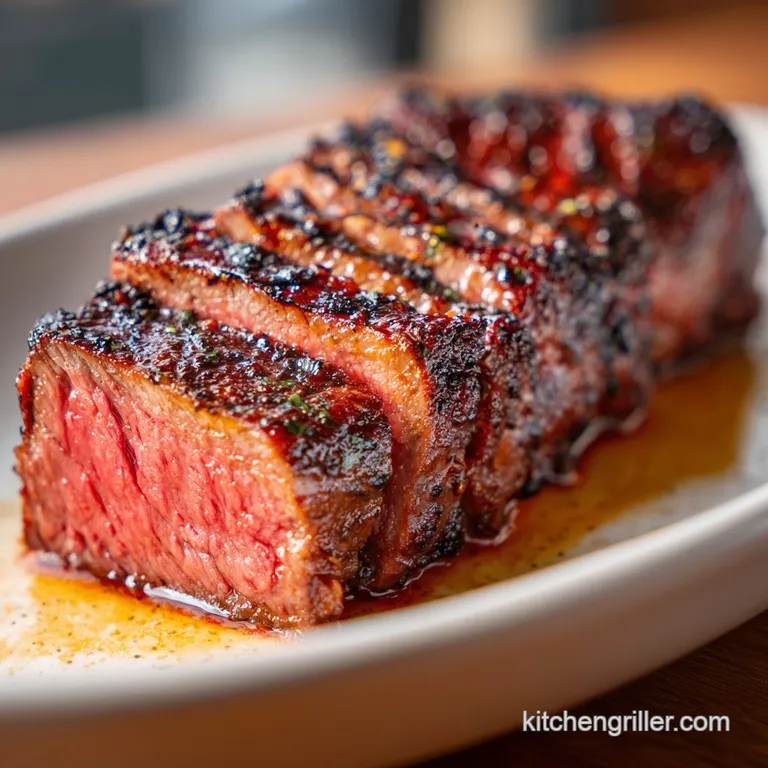
- Time: Active 15 minutes, Passive 1 hours 30 mins, Total 1 hours 45 mins
- Flavor/Texture Hook: Velvety pink center with a salty, charred crust
- Perfect for: Backyard gatherings or weekend meal prep
- The Laboratory of Flavor: Smoked Tri Tip Recipe Medium Rare
- The Physics of Reverse Sear and Protein Denaturation
- Component Analysis: Ingredient Deep Dive
- Precision Checkpoints for a Perfectly Tender Smoked Result
- Essential Pitmaster Tools for Maintaining Thermal Stability
- Step-by-Step Methodology for Edge to Edge Pink Results
- Troubleshooting Temperature Swings and Texture Issues
- Scaling the Recipe for Larger Crowds
- Experimental Profiles Beyond Traditional Santa Maria Rubs
- Debunking Smoked Beef Folklore
- Preserving the Structural Integrity of Smoked Fibers
- Synergistic Pairings that Complement the Smoke Profile
- Critical Sodium Level
- Recipe FAQs
- 📝 Recipe Card
The Laboratory of Flavor: Smoked Tri Tip Recipe Medium Rare
The first time I attempted a tri tip, I treated it like a standard steak. I cranked the heat, seared it fast, and ended up with a piece of meat that felt more like a leather boot than a barbecue classic.
I didn't understand the grain, and I certainly didn't understand how the triangular muscle fibers react to aggressive heat. It was a humbling moment in my outdoor kitchen, but it forced me to treat my smoker like a laboratory.
Since that day, I've obsessed over the "low and slow" transition into a over high heat finish. When you pull that 2.75 lb Tri tip roast off the grates and the aroma of toasted garlic and smoldering oak hits you, you'll know exactly why patience is the most important ingredient in this smoked tri tip recipe medium rare.
We are looking for that specific moment when the fat cap has rendered into a translucent lacquer and the meat yields to the touch with just a slight, springy resistance.
This isn't just a recipe; it's a technical process designed to overcome the tri tip's naturally lean profile. By the time we're done, you'll have a roast that slices like butter and carries a deep, mahogany bark that shatters slightly under the knife.
Let's look at the science of why this specific approach yields such consistent results every single time.
The Physics of Reverse Sear and Protein Denaturation
Enzymatic Tenderization: Maintaining a low temperature of 225°F allows naturally occurring enzymes to break down tough muscle proteins before they reach 140°F and permanently tighten.
Thermal Gradient Stability: By heating the meat slowly, we minimize the temperature gap between the exterior and the core, ensuring an edge to edge pink finish without the dreaded gray ring.
Surface Dehydration: The steady airflow of the smoker dries the surface of the roast, which is a chemical prerequisite for a rapid and intense Maillard reaction during the final sear.
| Thickness | Internal Temp | Rest Time | Visual Cue |
|---|---|---|---|
| 1.5 inches | 115°F (Pre Sear) | 10 mins | Beads of moisture on surface |
| 2 inches | 120°F (Pre Sear) | 15 mins | Fat cap becomes translucent |
| 2.5+ inches | 125°F (Pre Sear) | 15 mins | Deep mahogany bark color |
The table above is your primary decision making tool during the cook. Because tri tip roasts vary in density, watching the internal temperature is far more reliable than watching the clock.
If you want a consistent smoked tri tip recipe medium rare, you must pull the meat before it hits the final target temperature to account for carryover cooking.
Component Analysis: Ingredient Deep Dive
| Ingredient | Science Role | Pro Secret |
|---|---|---|
| Coarse Kosher salt | Denatures surface proteins | Dry brine for at least 2 hours to pull salt into the muscle fibers. |
| Coarse black pepper | Creates "Bark" texture | Use 16 mesh pepper to allow smoke to cling to the jagged edges. |
| Granulated garlic | Maillard reaction fuel | Granulated resists burning better than fine powder during the sear. |
| Smoked paprika | Pigment and phenols | Adds a visual "smoke ring" illusion and earthy depth. |
We use these specific ratios to balance the heavy beef flavor with a crust that can withstand the intense heat of the final sear. The 2 tbsp Coarse Kosher salt is non negotiable; it acts as a molecular tenderizer, loosening the protein strands so they retain more moisture during the 1 hours 30 mins cook time.
Precision Checkpoints for a Perfectly Tender Smoked Result
To execute this smoked tri tip recipe medium rare properly, you'll need the following items from your pantry. I recommend prepping the rub in a small bowl first to ensure the 0.5 tsp Dried parsley is evenly distributed among the heavier granules of 2 tbsp Coarse Kosher salt and 1.5 tbsp Coarse ground black pepper.
- 2.75 lb Tri tip roast: Look for one with a thin, even fat cap.
- 2 tbsp Coarse Kosher salt: Provides the fundamental seasoning and moisture retention.
- 1.5 tbsp Coarse ground black pepper: The backbone of the bark.
- 1 tbsp Granulated garlic: Adds a savory, aromatic punch.
- 1 tsp Onion powder: Rounds out the umami profile.
- 1 tsp Smoked paprika: Enhances the color and smoky aroma.
- 0.5 tsp Dried parsley: Added for a subtle herbal finish.
Chef's Tip: If your roast comes completely trimmed, rub it with a very thin layer of beef tallow or avocado oil before applying the rub. This provides the "glue" that the spices need to adhere during the long smoke.
Essential Pitmaster Tools for Maintaining Thermal Stability
You don't need a professional grade rig to master this, but you do need accuracy. Whether you're using a Traeger smoked tri tip recipe medium rare approach or a traditional offset smoker, your biggest enemy is fluctuating air temp.
- Pellet Grill or Smoker: Capable of holding a steady 225°F.
- Instant read Thermometer: This is your most vital laboratory instrument.
- Cast Iron Skillet: For the final over high heat sear if your smoker doesn't have a direct flame zone.
- Butcher Paper or Foil: To wrap the meat during the rest period.
- Long Slicing Knife: A sharp, non serrated blade to ensure clean cuts against the grain.
step-by-step Methodology for Edge to Edge Pink Results
1. Prepping the Canvas
Trim any silver skin from the bottom of the 2.75 lb Tri tip roast but leave the thin fat cap intact. Note: This fat protects the meat from drying out. Combine all spices and coat the meat liberally, pressing the rub in firmly until no red meat is visible.
2. Infusing the Smoke
Preheat your smoker to 225°F using oak or hickory pellets. Place the roast directly on the grates with the fat cap facing the heat source. Note: This helps the fat render into the muscle. Smoke for approximately 60 to 90 minutes until the internal temperature reaches 115°F.
3. Executing the Flash Sear
Remove the meat and crank your grill to 500°F or heat a cast iron skillet until it's screaming hot. Sear the tri tip for 2 minutes per side until a dark, crackling crust forms. You are looking for a deep mahogany color, not carbonized black.
4. Respecting the Rest
Transfer the meat to a cutting board and tent it loosely with foil. Let it sit for 15 minutes until the juices redistributed through the fibers. Skipping this step will result in a dry roast as all the moisture will dump onto the board.
5. Mastering the Grain
Identify the two different grain directions on the tri tip. Slice the roast in half where the grains meet, then slice each half perpendicular to the fibers. Note: This is the secret to a tender "melt in-your mouth" texture.
Troubleshooting Temperature Swings and Texture Issues
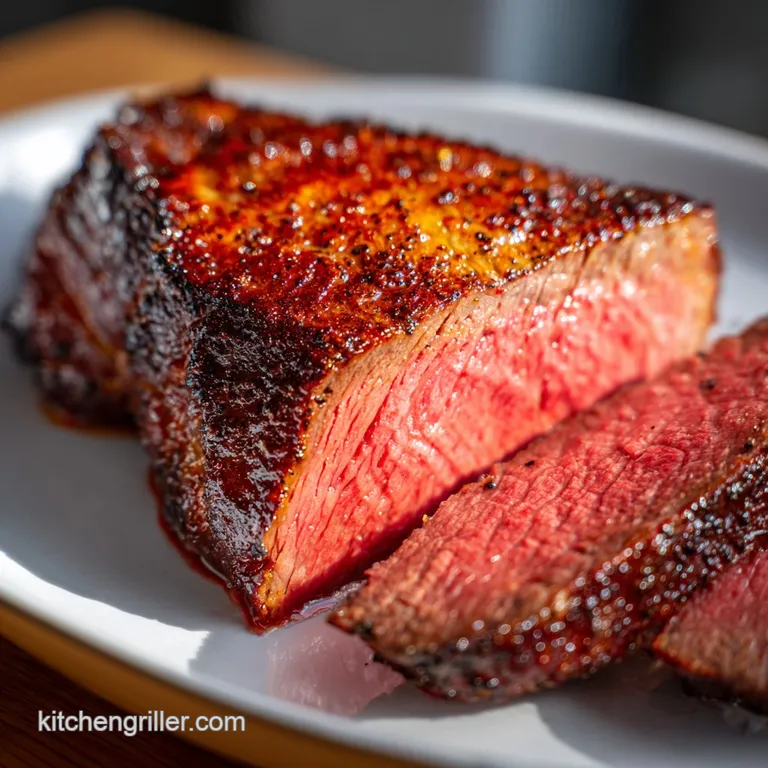
Why Your Tri Tip Is Tough
If you followed the temperature guide but the meat still feels "rubbery," you likely sliced with the grain instead of against it. Tri tip is unique because the muscle fibers change direction about halfway through the cut.
If you don't adjust your knife angle, half the roast will feel like jerky while the other half is perfect.
| Problem | Root Cause | Solution |
|---|---|---|
| Gray, overcooked edges | Smoker temp was too high | Keep the smoker at a strict 225°F or 250°F maximum. |
| Rub won't stick | Surface of meat was too wet | Pat the meat dry with paper towels before applying the rub. |
| No smoke flavor | Meat was put on cold smoker | Ensure the smoker is producing "blue" smoke before adding meat. |
The "stall" isn't usually an issue with tri tip because it's a smaller cut, but you might see the temperature plateau around 110°F. Don't panic and don't raise the heat. Just stay patient.
Common Mistakes Checklist
- ✓ Never skip the 15 minute rest; it's the difference between juicy and dry.
- ✓ Avoid using "fine" table salt; it's too easy to over salt the meat.
- ✓ Don't peek! Every time you open the smoker lid, you lose 10-15 degrees of heat.
- ✓ Ensure your cast iron is preheated for at least 5 minutes before the sear.
- ✓ Always use a meat thermometer rather than relying on time alone.
Scaling the Recipe for Larger Crowds
When scaling this recipe up for a party, don't just double the cook time. Two 2.75 lb roasts will take roughly the same amount of time as one, provided there is enough airflow between them in the smoker.
- Down (1.5 lb roast): Reduce the smoke time by 30%, but keep the target pull temp at 115°F.
- Up (5+ lbs / Multiple roasts): Keep the spice ratios the same, but increase the resting time to 20 minutes to handle the larger thermal mass.
- Proportions: If you find a 4 lb roast, increase the salt and pepper linearly, but don't feel the need to double the onion powder or paprika, as their flavor can become overpowering in high concentrations.
Experimental Profiles Beyond Traditional Santa Maria Rubs
While the classic salt, pepper, and garlic rub is the gold standard for a best smoked tri tip recipe medium rare, you can experiment with the flavor profile. If you're looking for a different comfort classic, my Smoked Meatloaf Recipe uses similar wood fired principles if you want to swap proteins entirely.
- The Bold Espresso Crust: Add 1 tbsp of finely ground espresso to the rub. The acidity in the coffee helps tenderize the meat while providing a dark, bitter contrast to the rich fat.
- The Santa Maria Traditionalist: Use equal parts salt, pepper, and garlic salt, but add a pinch of cayenne for a subtle "back of-the throat" heat that cuts through the beefiness.
| Method | Time | Texture | Best For |
|---|---|---|---|
| Reverse Sear | 1h 45m | Velvety, edge to edge pink | Maximum tenderness and flavor |
| Traditional Hot | 45 min | Gradiated pink to gray | When you're in a time crunch |
| Sous Vide + Smoke | 4h 0m | Completely uniform texture | Beginners who fear overcooking |
Debunking Smoked Beef Folklore
The "Searing Seals in Juices" Myth: Science has proven this false. Searing actually causes the surface to lose moisture more rapidly. The reason we sear is for the Maillard reaction the chemical reaction between amino acids and reducing sugars that gives browned food its distinctive flavor.
The "Room Temp" Myth: You don't need to let your meat sit on the counter for an hour before smoking. In fact, cold meat takes smoke better and develops a more pronounced smoke ring because myoglobin stays in its native state longer.
Preserving the Structural Integrity of Smoked Fibers
Storage: Store leftovers in an airtight container in the fridge for up to 4 days. If you have extra fat trimmed before the cook, render it down in a small saucepan to make homemade beef tallow. This can be drizzled over the meat when reheating to restore moisture.
Freezing: You can freeze the whole cooked roast for up to 3 months. Wrap it tightly in plastic wrap, then a layer of foil, then place it in a freezer bag. To thaw, leave it in the fridge for 24 hours.
Reheating: Avoid the microwave at all costs. It will turn your medium rare masterpiece into rubber. Instead, place the slices in a pan with a splash of beef broth, cover with foil, and heat in a 300°F oven until just warmed through.
Synergistic Pairings that Complement the Smoke Profile
Tri tip is a heavy, rich meat that needs acidity or starch to balance the palate. For a decadent side that handles the smoker just as well, try this Smoked Mac and recipe. The creaminess of the cheese sauce is the perfect foil for the peppery bark of the beef.
Alternatively, a crisp chimichurri sauce made with fresh parsley, oregano, and red wine vinegar can cut right through the fat cap's richness. If you want to keep it traditional, serve it with pinquito beans and a simple green salad.
The key is to avoid overly sweet sides that might compete with the natural sweetness developed during the slow smoking process. Trust me, once you nail the grain direction and that 130-135°F final internal temperature, this will become your most requested cook.
Critical Sodium Level
1920 mg mg of sodium per serving (83% % of daily value)
The American Heart Association recommends limiting sodium intake to approximately 2,300mg per day for overall health.
Sodium Reduction Tips for Your Tri-Tip Roast
-
Reduce Salt-25%
Cut the amount of Kosher salt in half. This will significantly lower the sodium content without drastically changing the flavor profile.
-
Omit Salt Completely-20%
Consider removing the Kosher salt completely and relying on other spices for flavor. This will yield the greatest reduction.
-
Reduce Granulated Garlic-10%
Decrease the amount of granulated garlic by half. Some granulated garlic products can contain added salt.
-
Increase Other Spices
Enhance the flavor with salt free spices like smoked paprika, onion powder, dried parsley, and fresh herbs to compensate for the reduced salt.
-
Use Fresh Herbs
Incorporate fresh herbs such as rosemary, thyme, or oregano for added flavor complexity without any added sodium. Fresh herbs will elevate the natural taste of the tri-tip.
Recipe FAQs
How long do you smoke a tri-tip for medium rare?
Approximately 1.5 hours at 225°F. Smoke until the internal temperature hits 115°F, then sear until the final temperature reaches 130-135°F for medium rare.
Is it better to smoke tri-tip at 225 or 250?
Prefer 225°F for best results. This lower temperature allows the connective tissues to break down slowly while maximizing smoke adhesion, which is crucial for developing good bark.
What is the 4 4 4 rule for steak?
No, the 4-4-4 rule generally applies to thicker cuts cooked fast over high heat, not low and slow smoking. For smoking, you rely on internal temperature probes (like pulling at 115°F for medium rare) rather than fixed time increments.
Is tri-tip good on a smoker?
Yes, it is excellent on a smoker. The low and slow process perfectly renders the fat cap without drying out the lean muscle fibers, resulting in incredible moisture retention.
What is the target internal temperature to pull the tri-tip before the final sear?
Pull the roast when it hits 115°F. This accounts for the high heat jump during the sear and the subsequent carryover cooking during the rest period to achieve a perfect medium rare.
What is the most important step after the smoke and sear to ensure tenderness?
You must rest the meat for at least 15 minutes, tented loosely. This crucial resting period allows the tightened muscle fibers to relax and redistribute their internal moisture, which is essential if you mastered the thermal control during the cook, similar to how we manage structure in our Smoked Brisket for recipe.
How should I slice the tri-tip after it is done resting?
Slice against the grain in two distinct sections. Tri-tip has two muscle groups with grains running in opposite directions, so you must cut it in half first before slicing perpendicular to the fibers in each half.
Smoked Tri Tip Medium Rare
Ingredients:
Instructions:
Nutrition Facts:
| Calories | 486 calories |
|---|---|
| Protein | 48.6 g |
| Fat | 31.2 g |
| Carbs | 2.1 g |
| Fiber | 0.5 g |
| Sugar | 0.2 g |
| Sodium | 1920 mg |
