Blackstone Burgers: Crispy and Savory
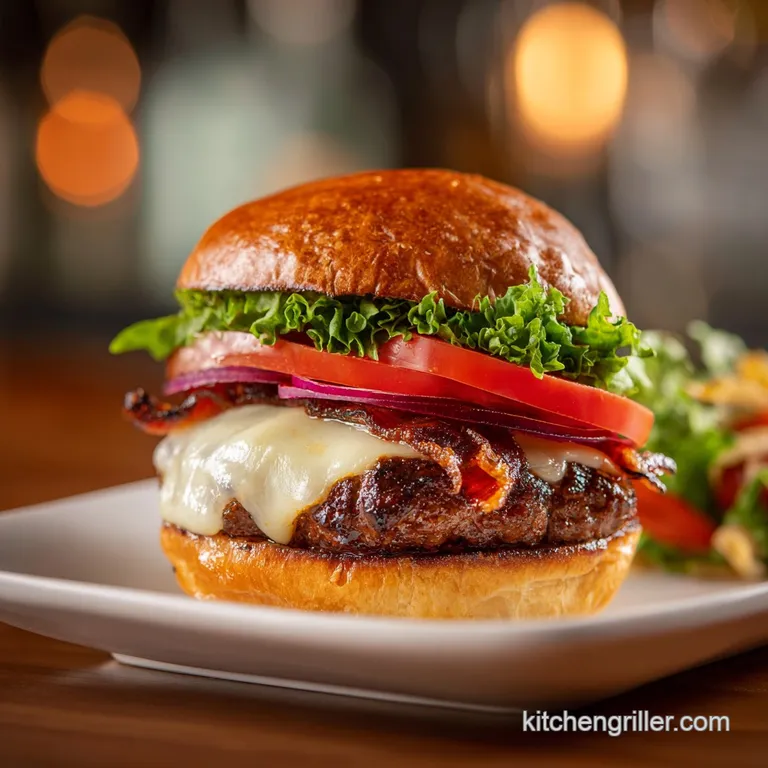
- Time: Active 15 minutes, Passive 10 minutes, Total 25 minutes
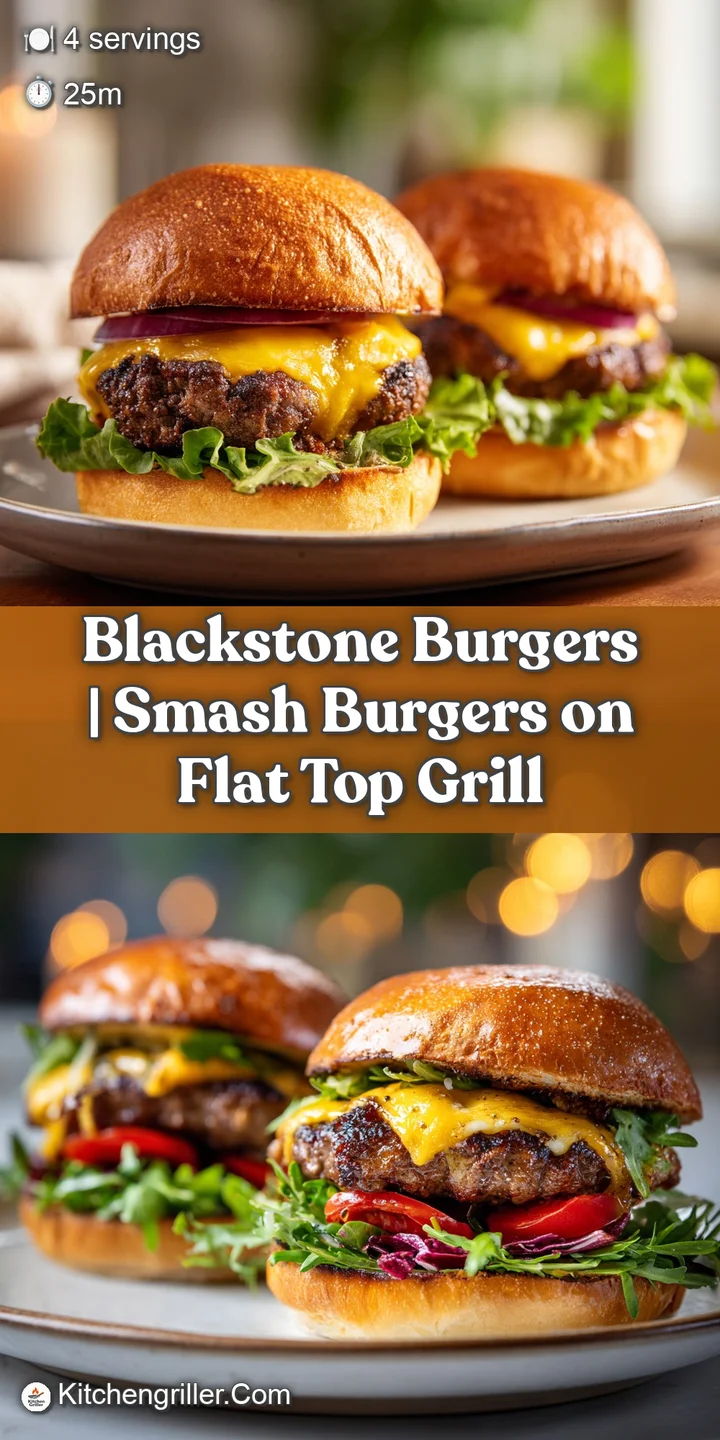
- Flavor/Texture Hook: Intense savory beefiness with a lacy, shatter crisp edge and velvety melted cheese.
- Perfect for: High energy weekend cookouts or when you need a diner quality fix in under 30 minutes.
- Achieving The Ultimate Blackstone Burgers
- Key Techniques For Crust
- Blackstone Burgers Specs
- Essential Shopping List Items
- Necessary Cooking Equipment
- The Step-By-Step Cooking Process
- Solving Common Burger Issues
- Easy Dietary Adjustments
- Freezing And Reheating Tips
- The Perfect Side Dishes
- Critical Sodium Alert 🚨
- Recipe FAQs
- 📝 Recipe Card
Achieving The Ultimate Blackstone Burgers
The smash burger isn't just a trend, it's a piece of American culinary history that dates back to the grease stained counters of 1920s Kentucky. Back then, a cook discovered that pressing a burger flat against a searing hot griddle with a heavy can of beans created a crust so flavorful it didn't need fancy toppings.
That tradition moved through the Midwest, becoming the gold standard for what a "real" burger should be. When you fire up your griddle for these Blackstone Burgers, you're not just cooking dinner, you're tapping into a century old technique that prioritizes the chemical reaction between beef and steel over everything else.
The sound of 80/20 ground chuck hitting 450 degree steel is a violent, beautiful hiss that signals the start of something legendary. It's the aroma of rendering fat and searing proteins that draws neighbors over the fence before you've even flipped the first patty. We aren't looking for thick, steak like pucks here.
We want thin, ragged, lacy edges that look almost like a doily made of crispy beef. It's a bold approach to grilling that demands your full attention for the 10 minutes the meat is on the heat.
Every time I prep this ultimate blackstone burgers 71591 recipe, I think about that first bite. The way the toasted brioche bun, slick with butter, gives way to the sharp tang of the sauce and the salty, intense crunch of the beef.
It's a texture profile you simply cannot replicate on a traditional grate grill because the juices just fall through the bars. On the flat top, those juices stay right there, frying the meat in its own rendered liquid gold.
Trust me, once you master the "smash," you'll never look at a standard grilled burger the same way again.
Key Techniques For Crust
The secret isn't in the seasoning, it's in the physics of the press. Most people are afraid to really lean into the meat, thinking they'll squeeze out all the moisture. But because we start with cold meat balls on a screaming hot surface, the initial smash creates an instant seal that traps the remaining juices inside while the exterior undergoes a massive flavor transformation.
- Thermal Shock Strategy: Starting with cold 80/20 beef is non negotiable because the cold fat takes longer to render. This gives you those precious seconds to smash the patty paper thin before the fat liquefies and runs off, ensuring the interior stays moist while the edges get that iconic "lace" effect.
- The Parchment Barrier: Using a square of parchment paper between your press and the raw meat prevents the proteins from sticking to your tool. This allows you to smear the edges of the burger outward, creating more surface area for the steel to work its magic on.
- Moisture Management: By thin shaving the white onions and smashing them directly into the raw side of the meat, you're using the onion's natural water content to steam the patty from the inside out. This happens while the bottom side is frying, creating a dual texture result that is incredibly tender.
| Thickness | Internal Temp | Rest Time | Visual Cue |
|---|---|---|---|
| 1/4 inch (Smashed) | 160°F | 1 minute | Deep mahogany crust with lacy, translucent edges |
| 1/2 inch (Standard) | 145°F | 3 minutes | Pink center with a solid brown exterior |
| 3/4 inch (Pub style) | 135°F | 5 minutes | Soft center, minimal edge crisping |
This specific blackstone burgers 71591 method relies on the "Smashed" profile to ensure every square millimeter of the beef gets that intense heat contact. While a thicker burger needs time to rest to redistribute juices, our smashed version is so thin that the juice is basically bonded to the crust, meaning you can eat it almost immediately without a messy plate.
Blackstone Burgers Specs
To get this right, we have to look at the individual components. You can't just throw any ground beef on the griddle and expect greatness. We're looking for a specific fat to lean ratio that can stand up to 450 degrees without turning into a dry piece of leather.
The 80/20 ground chuck is the sweet spot because that 20 percent fat acts as your cooking oil, seasoning, and moisture all at once.
| Ingredient | Science Role | Pro Secret |
|---|---|---|
| 80/20 Ground Chuck | Fat to Protein Binding | Keep it cold until the second it hits the hot steel. |
| American Cheese | Low Melting Point | Use real deli sliced for a smoother, velvety melt. |
| Brioche Buns | High Sugar Content | Toasting creates a barrier that prevents sauce sogginess. |
If you're wondering how this compares to other methods, you should check out my Blackstone smash burgers guide which dives deeper into different heat zones. The brioche bun is vital here because its high fat and egg content allows it to toast into a sturdy structure that can support the heavy, juicy patties without disintegrating.
Essential Shopping List Items
When you're at the store, don't settle for the pre formed patties. They've been compressed by a machine, which aligns the protein fibers and makes for a rubbery burger. Buy a 1.5 lb pack of loose ground chuck.
You want to see those distinct strands of meat because that's what creates the air pockets for the juices to hide in.
- 1.5 lbs 80/20 ground chuck: Why this? The high fat content is essential for frying the meat on the flat top.
- 4 brioche buns: Why this? They provide a buttery, soft contrast to the crispy beef edges.
- 4 slices American cheese: Why this? It has the best emulsification properties for a silky, consistent melt.
- 1 white onion: Why this? Shaved thin, it provides sweetness and moisture during the smash.
- Sauce Base: 1/2 cup mayonnaise, 1 tbsp yellow mustard, and 1 tbsp sweet relish.
- Pantry Staples: 1 tbsp kosher salt, 1 tsp cracked black pepper, and 2 tbsp unsalted butter.
- Toppings: 12 dill pickle chips for that essential acidic crunch.
| Original Ingredient | Substitute | Why It Works |
|---|---|---|
| Brioche Buns | Potato Rolls | Same soft texture and slight sweetness. |
| American Cheese | Mild Cheddar | Good flavor, but Note: won't melt as smoothly or quickly. |
| White Onion | Shallots | Provides a more delicate, garlicky sweetness when charred. |
Using the right salt is also a big deal. I always use kosher salt (like Diamond Crystal) because the larger flakes are easier to distribute evenly. Fine table salt is too easy to over apply, and on a thin burger, there is zero room for error with saltiness.
Necessary Cooking Equipment
You can't make these with a flimsy plastic spatula. You need tools that can handle the physical force of the smash. A heavy duty stainless steel spatula with a flat edge is the bare minimum, but a dedicated burger press is even better.
It allows you to apply even pressure across the entire surface of the patty, which is the only way to get that perfectly even crust.
You'll also need a over high heat surface. A Blackstone griddle is the gold standard because it maintains a consistent 450 degree temperature across a large area. This allows you to toast the buns, char the onions, and sear the meat all at the same time.
If you don't have one, a large cast iron skillet is your next best bet, though you'll have to work in smaller batches.
Chef's Note: If your spatula has holes in it, it's useless for smashing. You need a solid surface so the meat doesn't squeeze through the gaps. If you're using a regular spatula, use a second heavy object (like a grill press or another heavy pan) to push down on the blade.
The step-by-step Cooking Process
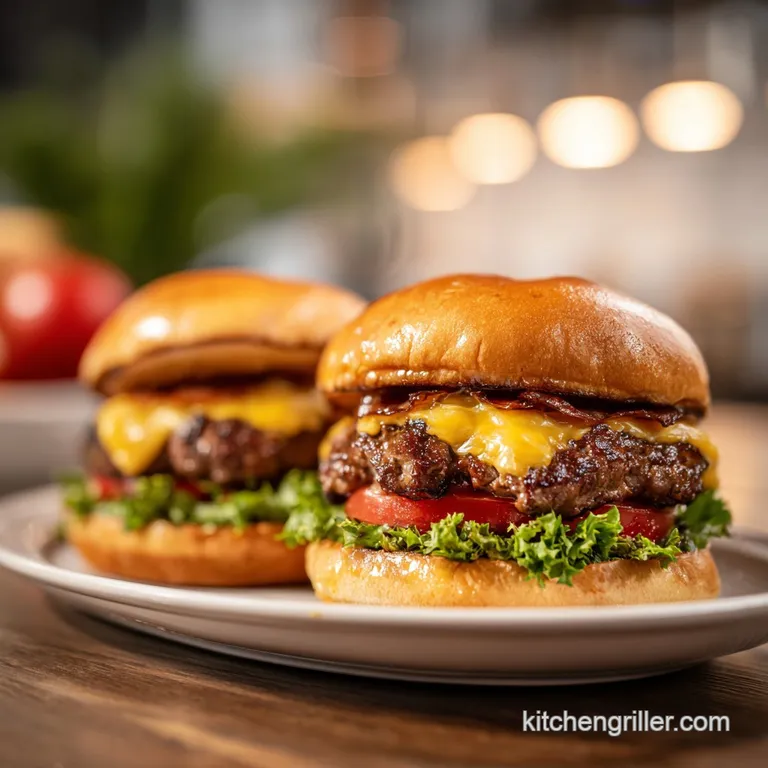
- Divide the cold 1.5 lbs 80/20 ground chuck into 4 loose balls (6 ounces each). Note: Handling the meat as little as possible prevents the fat from melting into your hands.
- Whisk 1/2 cup mayonnaise, 1 tbsp yellow mustard, and 1 tbsp sweet relish in a bowl. Note: This creates the acid balance needed to cut through the fatty beef.
- Preheat your griddle to 450°F (medium high). Spread 2 tbsp butter on the brioche buns and toast them until the edges are golden and the center is crisp.
- Place meat balls on the griddle with 6 inches of space between them. Note: They will expand significantly once smashed.
- Cover a ball with parchment paper and use your press to smash it into a thin patty until the edges are translucent and ragged.
- Sprinkle 1 tbsp kosher salt and 1 tsp black pepper over the patties. Place thinly shaved white onions on the raw top side.
- Cook for 2 minutes until a dark, mahogany crust forms on the bottom.
- Flip the patties so the onion side is down. Immediately top with American cheese.
- Cook for another 1-2 minutes until the cheese is completely molten and the onions are charred.
- Spread sauce on the buns, add 3 pickle chips per burger, and stack the hot patties on top.
For more details on managing your heat zones during the process, take a look at my Blackstone Griddle smash burgers walkthrough. The key is to move fast once that meat hits the steel. This isn't a "low and slow" operation; it's a high intensity sprint to get that flavor locked in.
Solving Common Burger Issues
The most common heartbreak with Blackstone Burgers is the meat sticking to the press. This happens because the proteins are looking for something to bond to, and your cold metal press is an easy target.
If you forget the parchment paper, you'll end up tearing the patty apart when you try to lift the press, ruining that beautiful surface area you're trying to create.
Another issue is the "steamed" burger. If your griddle isn't hot enough, the juices that release from the meat won't evaporate instantly. Instead, the meat will sit in a pool of gray liquid, boiling rather than frying. You need to hear that aggressive sizzle the second the beef touches the metal.
If it's quiet, stop, take the meat off, and wait for the griddle to get hotter.
The Meat Sticks to the Press
This is usually caused by the lack of a non stick barrier or a press that isn't heavy enough to produce a clean "shear" from the meat. Ensure you are using parchment paper and applying straight vertical pressure.
The Burger is Gray and Steamy
This is a temperature issue. If the griddle is below 400°F, the Maillard reaction won't happen fast enough to create a crust before the internal juices release.
| Problem | Root Cause | Solution |
|---|---|---|
| Patty is dry | Meat was too lean | Use 80/20 chuck, never 90/10 for smashing. |
| No crispy edges | Didn't smash thin enough | Apply more force until the edges are almost see through. |
| Bun is soggy | Didn't toast with butter | Butter and toast until a hard "crust" forms on the bread. |
Common Mistakes Checklist
- ✓ Using frozen meat (creates too much steam and won't sear properly)
- ✓ Smashing the burger a second time after the initial 30 seconds (this actually does squeeze out juices)
- ✓ Not cleaning the griddle between batches (burnt bits from the first round will stick to the second)
- ✓ Over seasoning the meat balls before they hit the heat (salt draws out moisture, making the meat rubbery)
- ✓ Using a low-fat cheese like Swiss (it won't melt fast enough for the 2 minute cook time)
Easy Dietary Adjustments
If you're looking to scale this down for a solo lunch, it's incredibly easy. Just use 6 ounces of beef and keep the sauce ratios the same you can store the extra sauce in the fridge for a week. To scale up for a crowd of 8 or 12, I recommend working in batches of 4.
Even on a large Blackstone, adding 12 cold meat balls at once will drop the surface temperature significantly, which will ruin your crust.
- To Scale Down (1-2 servings): Use a smaller cast iron pan and reduce the butter for toasting. The sauce keeps well, so make the full batch anyway!
- To Scale Up (8+ servings): Increase meat and buns linearly. Only increase salt and pepper to 1.5x the original amount, then adjust to taste. Work in batches to keep the griddle temp high.
If you are cooking for someone who needs a "Protein Style" version, skip the brioche and use large leaves of cold Iceberg lettuce. Just be sure to double wrap the lettuce around the hot patty to catch all the juices.
For an Oklahoma Onion Burger variation, triple the amount of shaved onions and smash them into the meat so they form a thick, caramelized carpet on one side of the patty.
Freezing And Reheating Tips
Smash burgers are really best enjoyed the moment they come off the steel. However, if you find yourself with leftovers, do not microwave them! A microwave will turn that beautiful crispy crust into a rubbery, sad mess. Instead, heat a small skillet over medium heat, add a teaspoon of water, and place the patty in.
Cover it with a lid for 60 seconds. The steam will melt the cheese and heat the meat without drying it out.
- Fridge Life: Store the patties separately from the buns and sauce for up to 3 days in an airtight container.
- Freezing: You can freeze the raw 6 ounce meat balls. Thaw them completely in the fridge before cooking. Never freeze the cooked patties, as the texture of the crust will be lost forever.
- Zero Waste: If you have leftover shaved onions, toss them on the griddle with a bit of butter and salt until they're jammy and dark. Store them in a jar to top your eggs the next morning. Leftover smash sauce is also incredible as a dip for fries or a spread for a deli turkey sandwich.
The Perfect Side Dishes
There is a myth that you need "fancy" sides for a burger this good, but the truth is that the burger is the star. Anything too complex just distracts from the beef. A simple bag of high-quality kettle chips provides the crunch you need, or if you have the griddle space, some frozen tater tots tossed in the rendered beef fat are a total revelation.
Another myth is that you shouldn't salt the meat until it's on the griddle. This one is actually true! Salting the ground beef balls beforehand starts breaking down the protein structures, which leads to a dense, sausage like texture. Keep the meat "loose" and only salt the surface once it's smashed and searing.
This ensures the interior stays tender while the exterior gets that salty, savory punch we're looking for in blackstone burgers 71591.
Finally, don't listen to anyone who says American cheese isn't "real" cheese. For this specific blackstone burgers 71591 application, the sodium citrate in American cheese is a scientific necessity.
It allows the cheese to melt into a liquid state without separating into oil and solids, which is exactly what you want when it meets the intense heat of the beef. It's the fusion of that molten cheese and the crispy beef that makes this recipe a legend.
Enjoy the sizzle, and don't forget to scrape that griddle clean while it's still hot!
Critical Sodium Alert 🚨
1440 mg 1440 mg of sodium per serving (63% 63% of daily value)
The American Heart Association recommends limiting sodium intake to less than 2,300 mg per day, with an ideal limit of less than 1,500 mg per day for most adults.
Tips to Drastically Reduce Sodium
-
Eliminate Added Salt-25%
The 1 tbsp of kosher salt in the ground chuck is a significant sodium source. Omit it entirely, as the cheese and pickles will still provide flavor.
-
Choose Low-Sodium Cheese-15%
Replace the 4 slices of American cheese with low-sodium or reduced sodium varieties. This can significantly cut down on sodium without sacrificing cheesiness.
-
Opt for Unsalted Pickles-10%
Dill pickle chips can be surprisingly high in sodium. Look for dill pickle chips labeled 'low sodium' or 'unsalted' to reduce intake.
-
Flavor Onions Naturally
While onions are naturally low in sodium, sautéing them in a little bit of unsalted butter or even water will soften them and release their flavor without adding extra sodium.
-
Boost Flavor with Herbs & Spices
Instead of relying on salt, use a generous amount of fresh or dried herbs like parsley, chives, or a pinch of garlic powder to add complexity and depth to your burgers and toppings.
-
Select Lower Sodium Condiments-5%
Consider using light mayonnaise and low-sodium yellow mustard. These alternatives can offer similar taste profiles with a fraction of the sodium.
Recipe FAQs
How to get the perfect lacy edge on these burgers?
Place cold meat balls onto the 450°F griddle and use a heavy duty press or spatula to smash them down firmly. Smearing the edges outward as you press increases surface area, which is the same principle used to achieve a perfect crust in our Garlic Butter Steak Bites.
Is it true I should use lean ground beef for better health?
No, this is a common misconception. You must use 80/20 ground chuck for smash burgers because the higher fat content is essential to create the signature mahogany colored crust when it hits the hot steel.
How to keep the patties from sticking to the spatula?
Place a square of parchment paper directly over the meat ball before applying pressure with your spatula. This prevents the raw meat from grabbing onto your tool and keeps your workspace clean.
How to determine when to flip the patties?
Wait approximately 2 minutes until a deep, dark crust has fully formed on the bottom. You will see the edges turning brown and crispy, indicating it is time to flip for the final minute of cooking.
How to properly season a smash burger?
Season the patties aggressively with kosher salt and cracked black pepper only after you have smashed them onto the griddle surface. This ensures the seasoning adheres to the patty and develops that signature savory flavor during the searing process.
Can I prepare the ingredients ahead of time?
Yes, you can whisk the signature smash sauce up to 3 days in advance to let the flavors meld. Keep your ground chuck in the refrigerator until the exact moment you are ready to place the balls on the preheated griddle to ensure the fat stays cold.
How to ensure the buns stay crisp and not soggy?
Apply butter to the cut sides of the brioche buns and toast them directly on the 450°F griddle surface until golden brown. Doing this creates a protective barrier that keeps the bun sturdy even after you add the hot patties and sauce.
Ultimate Blackstone Smash Burgers
Ingredients:
Instructions:
Nutrition Facts:
| Calories | 812 calories |
|---|---|
| Protein | 39g |
| Fat | 59g |
| Carbs | 31g |
| Fiber | 1g |
| Sugar | 6g |
| Sodium | 1440mg |
