Cottage Cheese Salad with Tomato and Cucumber
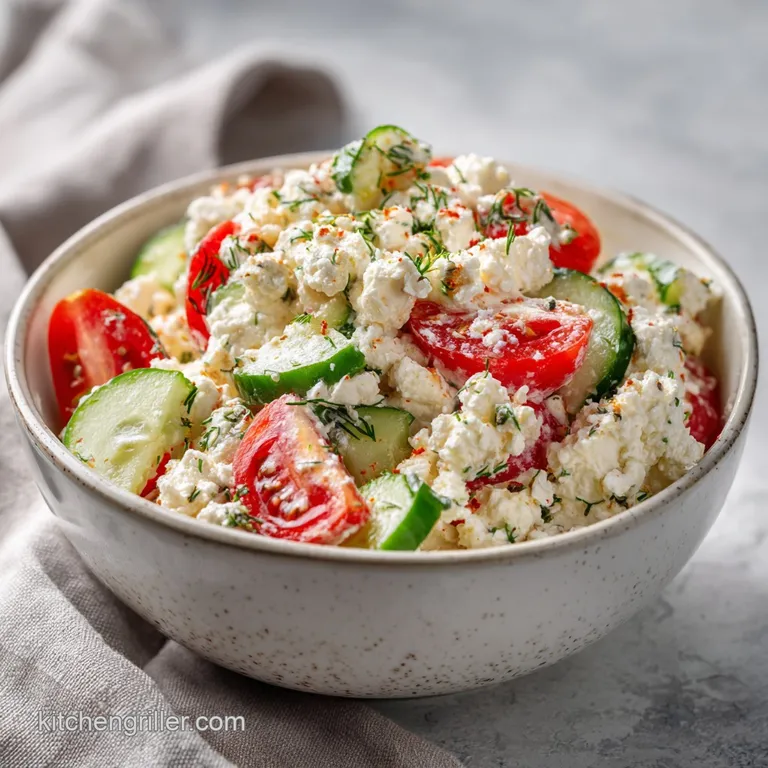
- Time: Active 10 minutes, Passive 0 minutes, Total 10 minutes
- Flavor/Texture Hook: Creamy, cooling curds paired with the explosive crunch of diced cucumber.
- Perfect for: Quick office lunches, high protein post workout snacks, or a fresh side for a weekend brunch.
- Mastering the Fresh Cottage Cheese Salad Recipe with Tomato and Cucumber
- The Logic of Texture and Why It Wins
- Essential Components for the Perfect Urban Side Dish
- Minimalist Tools for a Vibrant Kitchen Setup
- Step by Step Assembly for Maximum Freshness
- Fixing Common Textural Mistakes Like a Pro
- Creative Variations for Every Mood and Season
- Debunking Cottage Cheese Salad Myths
- Keeping Your Leftovers Crisp and Vibrant Daily
- Plating Strategies for an Instagenic Urban Meal
- Recipe FAQs
- 📝 Recipe Card
Mastering the Fresh Cottage Cheese Salad Recipe with Tomato and Cucumber
The rhythmic tock tock tock of a sharp knife against a wooden board is my favorite city soundtrack. Last Tuesday, while the sirens wailed three floors down and the humidity started to climb, I was focused on the crisp, clean snap of a Persian cucumber meeting its fate.
There is something deeply satisfying about that first cut the way the skin resists for a microsecond before giving way to a watery, cool interior. This Cottage Cheese Salad Recipe with Tomato and Cucumber is a standout dish perfect for a light lunch, born from those moments when you need something cold, fast, and remarkably filling.
I used to think cottage cheese was just a sad relic of 1970s diet culture, something to be eaten quickly over the sink. But when you treat it as a creamy base rather than a chore, everything changes. The secret lies in the contrast.
You have these velvety, salty curds holding onto the jagged edges of a cucumber cube, while the tomato juice mingles with a splash of olive oil to create a sort of "instant sauce" that coats every bite. It’s fresh, it’s vibrant, and it feels like a complete meal without even turning on the stove.
We’ve all made the mistake of just dumping some salt on cottage cheese and calling it a day. Trust me, we can do better than that. By focusing on the architecture of the salad how the red onion is minced just enough to provide a hum of heat without ruining your afternoon breath, and how the Za’atar adds a forest floor earthiness we turn a snack into a centerpiece.
This is the kind of recipe you make when you want to feel like a culinary stylist in your own tiny kitchen.
The Logic of Texture and Why It Wins
Building a great salad is more about physics than it is about magic. When we combine high moisture vegetables with a protein heavy dairy base, we are essentially managing a delicate balance of hydration and fat.
- Osmotic Regulation: Adding salt to the tomatoes and cucumbers just before serving draws out a tiny amount of juice, which then emulsifies with the olive oil.
- Lipid Coating: The 4% milkfat in the cottage cheese acts as a protective barrier, coating the tongue so the sharp acidity of the onion and tomato doesn't overwhelm the palate.
- Structural Integrity: Using Persian cucumbers provides a denser "shatter" because their skin is thinner and their seed cavity is much smaller than standard field cucumbers.
- Whey Emulsification: The natural liquid in the cottage cheese (whey) blends with the extra virgin olive oil to create a silky, un broken dressing that clings to the smooth tomato skins.
The Physics of the Curd Cucumber Bond
The fats in full fat cottage cheese act as a stabilizer, preventing the vegetable juices from becoming a watery puddle. This creates a temporary emulsion that keeps the salad creamy instead of thin and leaky.
| Texture Goal | Preparation Style | Visual Cue | Best For |
|---|---|---|---|
| Ultra Crisp | 1/2 inch cucumber chunks | Sharp, clean edges | Immediate serving |
| Soft & Juicy | Thinly sliced rounds | Translucent veggie edges | 15 minute marination |
| Salsa Like | Fine 1/4 inch dice | Uniform, small bits | Topping for sourdough |
A quick note on the prep: if you're looking for something that feels more substantial, keeping the cucumber chunks larger provides more resistance to the tooth. If you're pairing this with something like a Classic Potato Salad recipe, you might want to dice everything smaller to create a more refined texture contrast between the soft potatoes and the crunchy greens.
Essential Components for the Perfect Urban Side Dish
The beauty of this dish is its simplicity, but that means there is nowhere for mediocre ingredients to hide. Because we aren't cooking anything, the quality of your olive oil and the ripeness of your tomatoes do all the heavy lifting.
I always reach for the full fat tub honestly, don't even bother with low-fat cottage cheese here; it lacks the structural body to hold up the vegetables.
Component Analysis
| Ingredient | Science Role | Pro Secret |
|---|---|---|
| Cottage Cheese | Provides a protein rich, creamy emulsion base | Use 4% milkfat for a velvety mouthfeel that won't turn watery |
| Persian Cucumbers | Adds structural "shatter" and cooling hydration | Keep the skin on; it contains the most concentrated flavor |
| Za’atar | Introduces earthy sumac acidity and herbal depth | Bloom the spices in the olive oil for 30 seconds before mixing |
Ingredients & Substitutes
- 2 cups Persian or English Cucumbers: Diced into 1/2 inch cubes. Why this? They have thinner skins and fewer seeds than regular cucumbers.
- Substitute: Zucchini (raw and very fresh) offers a similar crunch but a more muted flavor.
- 1 cup Cherry or Roma Tomatoes: Halved. Why this? They have a higher sugar to water ratio, preventing a soggy salad.
- Substitute: Sun dried tomatoes (chopped) for a much more intense, savory punch.
- 1.5 cups Full Fat Cottage Cheese (4% milkfat): Why this? The fat carries the flavor of the herbs and provides a rich texture.
- Substitute: Plain Greek Yogurt (full fat); it’s tangier and smoother but lacks the iconic curds.
- 0.25 cup Red Onion: Finely minced. Why this? Provides a necessary sharp bite to cut through the creamy dairy.
- Substitute: Shallots for a more delicate, garlic adjacent sweetness.
- 1 tbsp Extra Virgin Olive Oil: Why this? Adds a fruity finish and helps create the "dressing" with the whey.
- Substitute: Avocado oil for a more neutral fat profile.
- 1 tsp Za’atar or Dried Oregano: Why this? Za’atar brings a nutty, citrusy complexity that plain herbs lack.
- Substitute: Dried Thyme mixed with a squeeze of lemon juice.
- 1 tbsp Fresh Dill or Parsley: Chopped. Why this? Fresh herbs provide a "top note" that makes the salad feel alive.
- Substitute: Fresh mint for a surprising, Mediterranean twist.
- 0.25 tsp Flaky Sea Salt: Why this? Provides little bursts of salinity rather than a flat saltiness.
- Substitute: Himalayan pink salt (fine) if you want a more subtle mineral taste.
- 0.25 tsp Cracked Black Pepper: Why this? Freshly cracked pepper has volatile oils that pre ground pepper loses.
- Substitute: White pepper for a fermented, earthy heat.
Minimalist Tools for a Vibrant Kitchen Setup
You don't need a lot of gear to pull this off, which is why I love it for city living. When space is at a premium, you realize that one great knife is worth more than ten gadgets. I usually just use a wide, shallow bowl for this it allows the ingredients to spread out so the cottage cheese doesn't get crushed under the weight of the vegetables.
- Sharp Chef’s Knife: Necessary for those clean cucumber cuts. If your knife is dull, you’ll bruise the tomatoes instead of slicing them, leading to a puddle of juice.
- Large Mixing Bowl: Something with enough room to fold the ingredients gently.
- Fine Mesh Sieve (Optional): If your cottage cheese is particularly "soupy," you can drain it for 5 minutes to get a thicker consistency.
- Measuring Spoons: To keep the Za'atar and olive oil ratios balanced.
Chef's Tip: If you find your red onions too aggressive, soak the minced pieces in a small bowl of ice water for 5 minutes. It washes away the sulfurous compounds that cause that lingering "onion breath" without losing the crunch.
step-by-step Assembly for Maximum Freshness
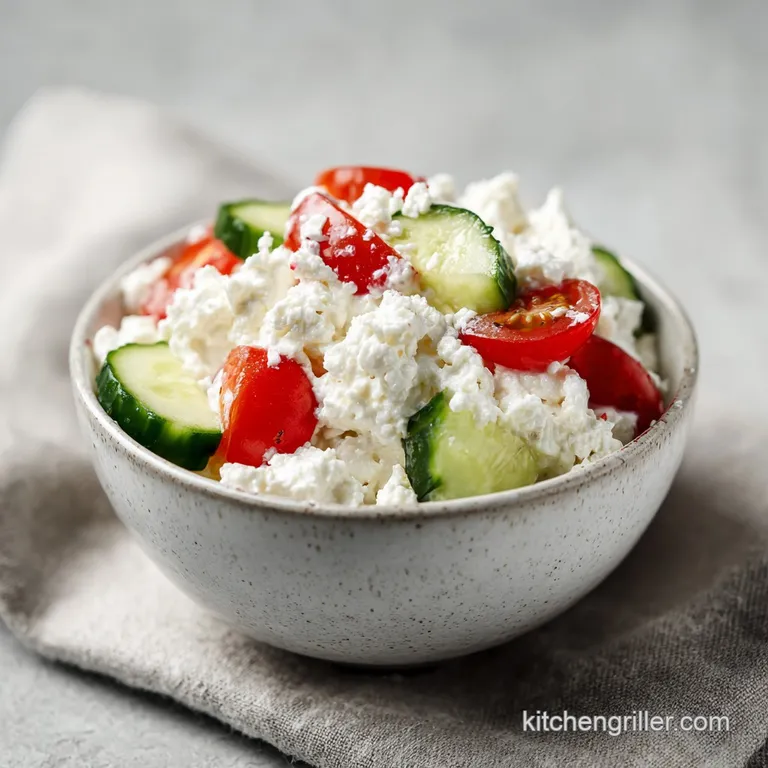
- Prep the cucumbers. Dice 2 cups of Persian cucumbers into uniform 1/2 inch cubes. Note: Uniformity ensures every bite has the same ratio of crunch to cream.
- Slice the tomatoes. Halve 1 cup of cherry tomatoes, ensuring you cut through the "equator" to expose the seeds. Expect a slight spray of juice.
- Mince the onion. Finely mince 0.25 cup of red onion. Stop when the pieces are roughly the size of a grain of rice.
- Drain the cheese (optional). If the 1.5 cups of cottage cheese looks very liquid, let it sit in a sieve for 2 minutes until the excess whey stops dripping.
- Layer the base. Place the cottage cheese in a shallow bowl and spread it slightly with the back of a spoon.
- Add the vegetables. Scatter the diced cucumbers, halved tomatoes, and minced onion over the cheese.
- Drizzle the oil. Pour 1 tbsp of extra virgin olive oil evenly over the top until the vegetables look glossy.
- Season the dish. Sprinkle 1 tsp of Za’atar, 0.25 tsp flaky sea salt, and 0.25 tsp cracked black pepper over the salad.
- Add the herbs. Finely chop 1 tbsp of fresh dill or parsley and scatter it as the final layer.
- Fold gently. Use a large spoon to turn the ingredients over exactly twice until the herbs are barely incorporated.
Fixing Common Textural Mistakes Like a Pro
The biggest tragedy that can befall this dish is "The Great Puddle." This happens when the salt sits on the vegetables too long before eating, turning your creamy salad into a cold soup. While it still tastes okay, the visual and textural appeal "shatters" (and not in the good, crunchy way).
Why Your Salad is Soupy
If your salad ends up swimming in liquid, it’s usually because of the cucumber's water content. Standard field cucumbers are notorious for this. To fix it, you can lightly salt the diced cucumbers in a separate bowl and let them sit for 10 minutes, then pat them dry before adding to the cheese.
| Problem | Root Cause | Solution |
|---|---|---|
| Watery base | High moisture in tomatoes/cucumbers | Salt veggies separately and drain before mixing |
| Lack of flavor | low-fat cottage cheese or old spices | Use 4% milkfat and toast your Za’atar in a dry pan |
| Overpowering onion | Large onion chunks | Mince finer or soak in ice water for 5 mins |
Common Mistakes Checklist
- ✓ Never use "pre sliced" cucumbers; they lose their structural cell walls and go limp.
- ✓ Avoid over mixing; you want distinct curds, not a homogenized pink mush.
- ✓ Don't skip the olive oil; it’s the bridge that connects the dairy to the vegetables.
- ✓ Ensure your tomatoes are at room temperature to maximize their natural sugars.
- ✓ Add the salt at the very last second before the bowl hits the table.
Creative Variations for Every Mood and Season
While the classic cucumber tomato onion trio is hard to beat, I often find myself raiding the fridge for whatever looks fresh. If you’re bored with the Mediterranean vibe, you can easily pivot. For instance, if you want something with a bit more sweetness, you could look into a Cottage Cheese Salad with fruit variation by swapping the tomatoes for sliced peaches and the Za'atar for fresh basil.
Scaling the Recipe
- Scaling Down (1 serving): Use 3/4 cup cottage cheese and 1 cup total of vegetables. Reduce the olive oil to 1.5 teaspoons and use just a pinch of salt.
- Scaling Up (4-6 servings): Double or triple the ingredients, but keep the salt and Za'atar to 1.5x the original amount first. You can always add more, but dairy based salads can become overly salty very quickly as the spices hydrate.
- Prep Tip: If making a large batch for a party, store the chopped vegetables in one container and the cottage cheese in another. Mix them in batches as people eat.
| Variation | Added Ingredient | Flavor Profile | Best For |
|---|---|---|---|
| The Protein Punch | 1/2 cup Chickpeas | Nutty and hearty | Meal prep lunch |
| The Mediterranean | 2 tbsp Kalamata Olives | Briny and sharp | Dinner side dish |
| The Sweet Heat | 1 tsp Hot Honey | Sweet and spicy | Brunch appetizer |
Debunking Cottage Cheese Salad Myths
One of the funniest things I hear is that cottage cheese is "bland." That’s like saying a canvas is bland it’s only as good as what you put on it! Another myth is that you can’t use cottage cheese in a "savory" way.
In many parts of the world, cottage cheese (or similar fresh curds) is almost exclusively savory.
Myth: "low-fat cottage cheese is a healthy swap for this recipe." Actually, the fat in the 4% version helps your body absorb the fat soluble vitamins (A, D, E, K) found in the tomatoes and cucumbers. Plus, low-fat versions often have added thickeners or sugars to compensate for the lost texture.
Myth: "You have to eat it immediately or it’s ruined." While it’s best fresh, a "marinated" version where the tomatoes have broken down slightly is actually quite popular in some Eastern European cultures. It’s different, but not bad.
Keeping Your Leftovers Crisp and Vibrant Daily
Storing this Cottage Cheese Salad Recipe with Tomato and Cucumber can be a bit tricky because of the moisture. In an airtight container in the fridge, it will last about 2 days. By day two, the cucumbers will have lost their "shatter" and the salad will be more liquid.
Zero Waste Tip: If you find yourself with a bowl of "watery" leftovers on day three, don't toss it! Blend it up with a little bit of vegetable broth and a handful of spinach for a quick, cold "gazpacho style" soup. Alternatively, the leftover mixture makes a fantastic topping for a baked potato.
The skins of the tomatoes and cucumbers contain the most fiber, so never peel them your gut (and your trash can) will thank you.
Plating Strategies for an Instagenic Urban Meal
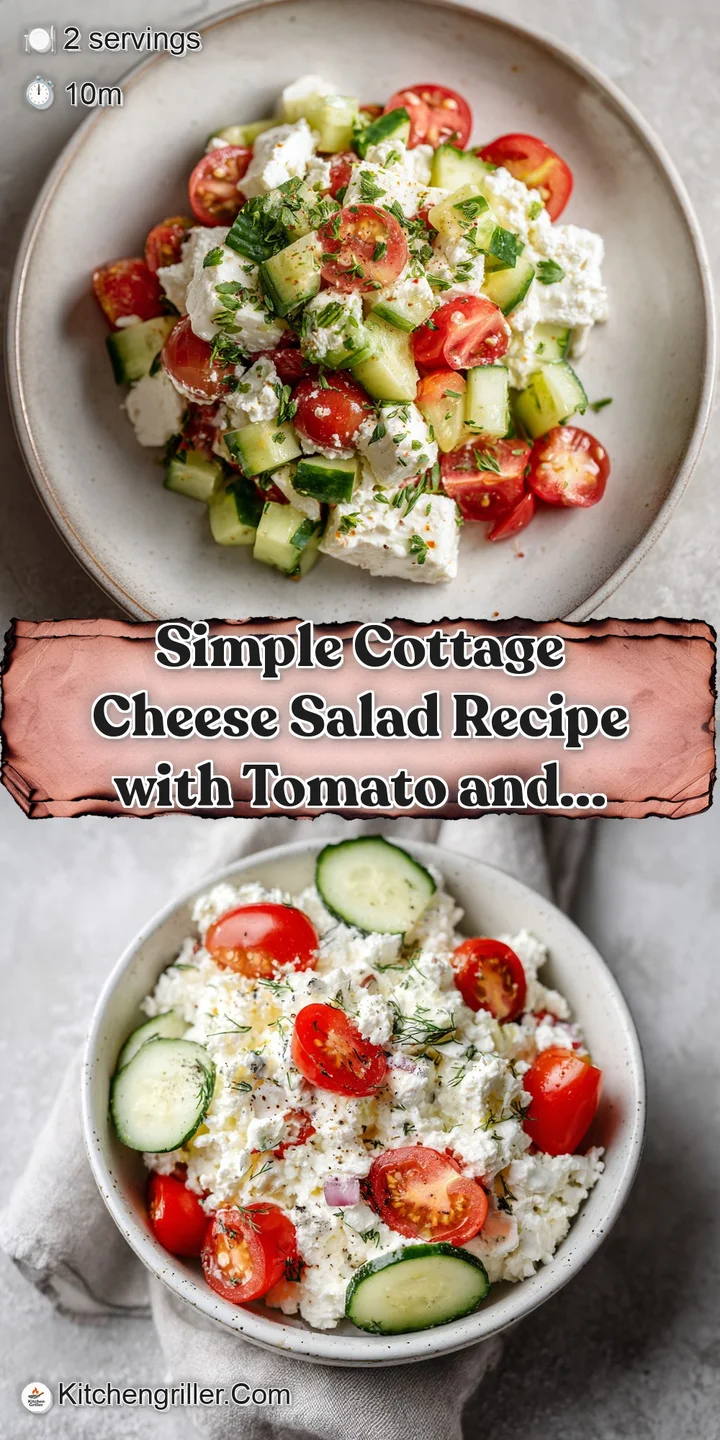
We eat with our eyes first, especially when the dish is as simple as this one. Instead of just plopping it into a cereal bowl, try spreading the cottage cheese on a flat, slate colored plate. This creates a "canvas" for the bright reds and greens of the vegetables.
- The Layered Look: Instead of mixing, layer the cucumbers on one side and the tomatoes on the other, leaving a "river" of white cottage cheese down the middle.
- The Herb Shower: Save half of your dill for the very end. Sprinkling fresh, un mixed herbs over the top gives the dish a "just picked" look that is incredibly appetizing.
- The Oil Glisten: A final, tiny drizzle of olive oil right before serving catches the light and makes the whole dish look expensive.
- The Vessel: If you're hosting a brunch, serve these in small glass jam jars. The layers of white, red, and green are stunning and it makes portion control a breeze.
This recipe is proof that you don't need a massive kitchen or a three hour window to eat something that feels curated and fresh. It’s about the quality of the dice, the temperature of the produce, and that final, perfect sprinkle of sea salt.
Now, go grab that tub of cottage cheese and start chopping your lunch is waiting.
Recipe FAQs
How do you make cucumber salad with cottage cheese?
Dice the cucumbers and tomatoes uniformly. Gently fold the diced vegetables, minced red onion, olive oil, and seasonings into the cottage cheese base. Mix only twice to maintain texture contrast between the creamy curds and the crisp vegetables.
What is in a cowboy salad?
No, this is not traditionally called a cowboy salad. A cowboy salad typically features beans, corn, and sometimes ground meat, but you could adapt this dish by adding canned chickpeas for a hearty twist, similar to our technique used in the Smoked Cream Cheese recipe for added texture.
What dressing goes on cucumber tomato salad?
A simple vinaigrette emulsified with the cheese whey works best. For this recipe, a dressing is naturally formed by combining extra virgin olive oil, flaky sea salt, pepper, and fresh dill. The fat coats the curds beautifully, making a separate dressing unnecessary.
Should I drain the cottage cheese before mixing?
Only if your cottage cheese is extremely liquidy (soupy). If you notice excessive whey pooling, allow it to sit in a fine mesh sieve for about two minutes. Using full fat cheese reduces this need, as the fat helps stabilize the moisture.
How do you prevent the salad from becoming watery when made ahead?
Keep the vegetables and cottage cheese separate until just before serving. The salt draws moisture out of the tomatoes and cucumbers via osmosis; if you mix it too early, the liquid pools at the bottom, creating a soup.
Can I substitute the cucumber with something else?
Yes, you can substitute with alternatives that offer density and water content. Firm, raw celery stalks chopped small or firm jicama work well for crunch, though they lack the cooling property of the cucumber. If you enjoy controlling texture, apply the same precision dicing technique you use here when working on a Homemade Black Bean recipe to these substitutes.
What is the secret to making the herbs taste brighter?
Use fresh herbs and add them as the final ingredient before serving. Chop the dill or parsley just before mixing, and reserve a small pinch to sprinkle over the top after plating. This preserves the volatile aromatic oils that give fresh herbs their lift.
Cottage Cheese Tomato Salad
Ingredients:
Instructions:
Nutrition Facts:
| Calories | 274 kcal |
|---|---|
| Protein | 20.4 g |
| Fat | 14.5 g |
| Carbs | 14.4 g |
| Fiber | 2.1 g |
| Sugar | 6.8 g |
| Sodium | 712 mg |
