Mushroom and Parmesan Risotto
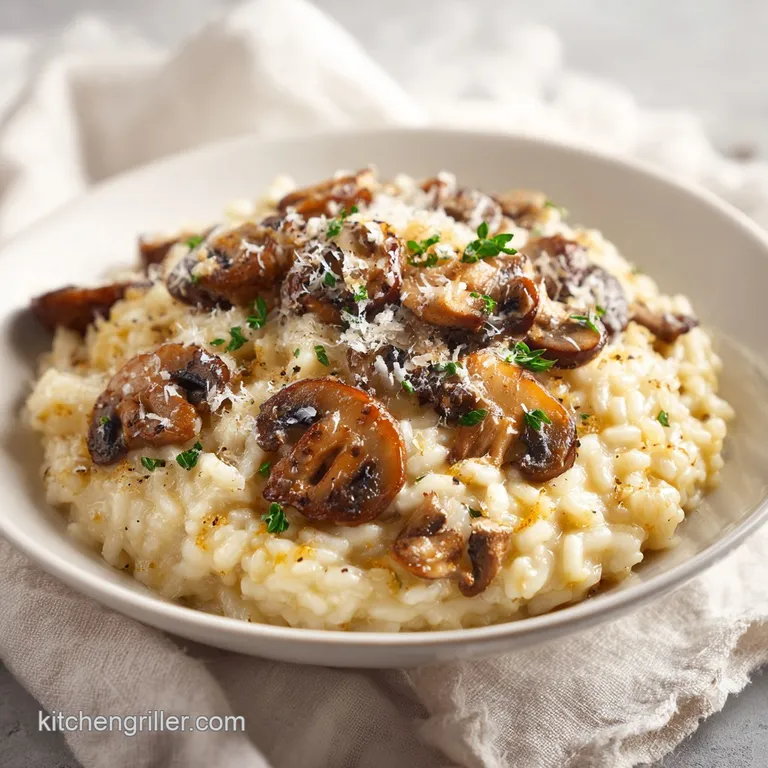
- Time: Active 15 minutes, Passive 30 minutes, Total 45 minutes
- Flavor/Texture Hook: Earthy, velvety, and rich with "all'onda" (wavy) flow
- Perfect for: Impressive date nights, cozy urban dinner parties, or high end meal prep
- The Truth Behind This Risotto Recipe with Mushrooms and Parmesan
- Critical Metrics for Your Best Ever Risotto
- The Elements of an Earthy Urban Masterpiece
- Selecting the Right Tools for Creamy Success
- Executing the Perfect All Onda Risotto Method
- Navigating Potential Starch and Texture Roadblocks
- Creative Twists on the Classic Mushroom Base
- Preserving and Reheating Your Creamy Rice Creations
- Vibrant Sides to Pair with Earthy Risotto
- Kitchen Myths That Need to Retire
- Recipe FAQs
- 📝 Recipe Card
The Truth Behind This Risotto Recipe with Mushrooms and Parmesan
Forget every "rule" you've heard about needing to stir risotto for 30 minutes straight until your arm goes numb. Honestly, that's just kitchen folklore that scares people away from a truly vibrant dish.
You don't need a gym membership to get this right, you just need to understand how the rice interacts with the liquid. I remember the first time I tried this, I was so terrified of stopping that I didn't even reach for my wine glass. Big mistake. The secret isn't constant motion, it's consistent friction.
What actually happens in the pot is a beautiful bit of culinary physics. We want the starch on the outside of the rice to slough off and thicken the stock, while keeping the center of the grain firm. If you stir too much, you break the grains. If you stir too little, they stick.
We're looking for that middle ground where the rice is gently bumping into its neighbors, releasing just enough starch to create a velvety sauce that coats every single mushroom slice.
This specific version is my absolute favorite because it uses three types of mushrooms to create a landscape of textures. You get the meaty bite of the Shiitakes, the silkiness of the Oysters, and the classic earthy base of the Creminis.
When that hits the salty, sharp Parmigiano Reggiano, it creates a flavor profile that feels incredibly urban and sophisticated. It’s the kind of meal that makes a Tuesday night in a small apartment feel like a corner table at a high end bistro.
Critical Metrics for Your Best Ever Risotto
Getting the timing and ratios right is the difference between a bowl of mush and a masterpiece. Use these specific benchmarks to guide your progress.
| Method | Total Time | Texture | Best For |
|---|---|---|---|
| Traditional Stovetop | 45 minutes | Maximum creaminess and control | The purist looking for the "all'onda" finish |
| Oven Baked Finish | 50 minutes | Hands off, slightly firmer grains | Multi tasking during a dinner party |
| Pressure Cooker | 25 minutes | Uniformly soft, less depth of flavor | Quick weeknight cravings |
Risotto is a living thing while it's in the pan. The stock to rice ratio is generally 4:1 by volume, but since we are using 300g of rice and 1.3L of stock, we are playing it safe to ensure you never run out of liquid before the rice hits that perfect al dente state.
To Ensure the Perfect Al Dente Bite
The rice should have a tiny, pearly white "bone" in the center when you bite into it. If it's completely soft, it's overcooked. Start tasting at the 15 minute mark of the simmering process. You are looking for a grain that yields to the tooth but doesn't disappear into a paste.
For a Natural Silky Emulsion
The temperature of your butter at the end is non negotiable. It must be cold. When you beat cold fat into the hot rice, it creates a stable emulsion rather than just melting into a puddle of oil. This is the difference between "buttery" and "greasy."
The Elements of an Earthy Urban Masterpiece
To make a truly great version of this dish, you have to look at your ingredients as building blocks of flavor.
| Component | Science Role | Pro Secret |
|---|---|---|
| Arborio Rice | High amylopectin starch provider | Toast it until it smells like popcorn to lock the grain shape |
| Fresh Mushrooms | Umami and moisture balance | Sear them separately to avoid a grey, boiled texture |
| Dry White Wine | Acid to cut through heavy starch | Use a Pinot Grigio or Sauvignon Blanc for a crisp finish |
| Cold Butter | Final emulsifying agent | Add it only after the heat is off to prevent the sauce from breaking |
The choice of rice is your foundation. I always reach for Arborio because it's widely available and incredibly forgiving. It has a high starch content that ensures that signature creaminess we're after.
If you want to get fancy, Carnaroli is often called the "king of rice" because it holds its shape even better, but Arborio is my reliable workhorse for a home kitchen.
Next, the mushrooms. Most people just toss them in with the rice, which is a tragedy. Mushrooms are like sponges; if you put them in with the liquid, they just get soggy. By searing them in olive oil first until they are golden brown and crackling, you develop the Maillard reaction, which gives you that deep, savory "meatiness" that defines a great mushroom dish.
Selecting the Right Tools for Creamy Success
You don't need a laboratory, but you do need a heavy bottomed pot. I swear by my cast iron Dutch oven for this. The thick walls hold heat consistently, which is vital when you're adding stock ladle by ladle. If your pan is too thin, you'll get hot spots where the rice burns while the rest of the pot is still crunchy.
A wide, shallow skillet is also necessary for the mushroom prep. We want surface area so the moisture from the 450g of fresh mushrooms can evaporate quickly. If they are crowded, they'll steam, and you'll lose that vibrant, seared exterior.
For stirring, use a wooden spoon with a hole in the middle (a "risotto spoon") if you have one, or a silicone spatula. Avoid metal spoons as they can be too aggressive and break the delicate grains.
While this is a stovetop masterclass, I’ve found that having a second burner dedicated just to keeping your 1.3L of stock at a low simmer is the most important "tool" of all.
Adding cold stock to hot rice is like throwing a bucket of ice water on a runner; it shocks the grain and stops the cooking process in its tracks, leading to unevenly cooked rice.
Executing the Perfect All Onda Risotto Method
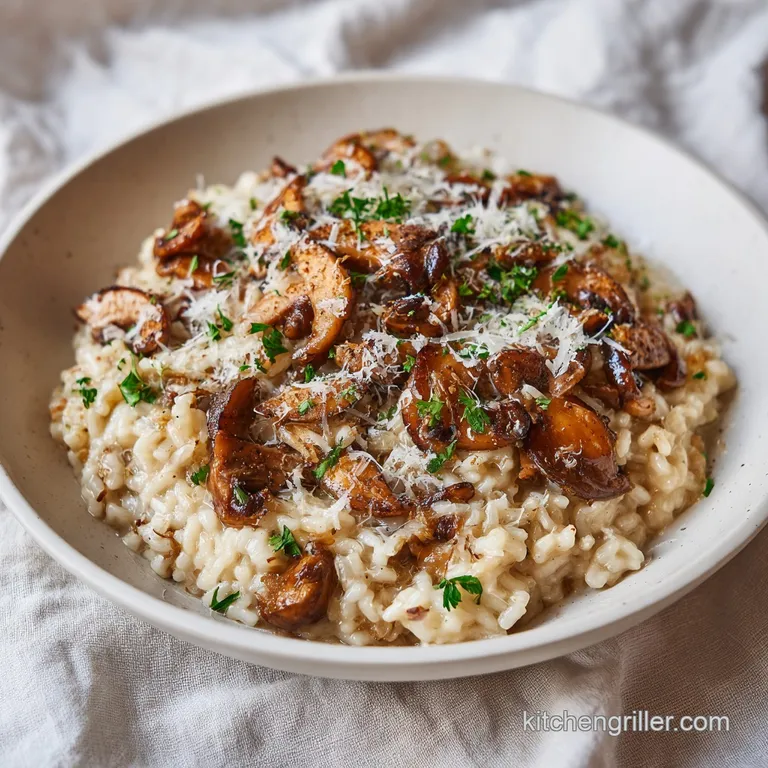
Let's get down to the actual cooking. Follow these steps closely, and pay attention to the sensory cues.
- Sauté the mushrooms. Heat 2 tbsp olive oil in a large skillet over medium high heat. Add the 450g fresh mushroom mix. Cook until golden brown and moisture has evaporated. Note: Don't salt them until they are brown, or they will release water too early and steam.
- Prep the umami boost. Soak 15g dried porcini in a little warm water (or part of your stock). Once soft, chop them finely. Note: This adds a concentrated forest flavor that fresh mushrooms can't provide alone.
- Simmer the stock. Place 1.3L stock in a saucepan. Bring to a low simmer and keep it there. Note: You want it hot, but not boiling away into nothing.
- Sauté the base. In your Dutch oven, sauté the minced shallots and 3 cloves of garlic in a little oil until translucent and fragrant. Don't let them brown; we want sweetness, not bitterness.
- Toast the rice. Add 300g Arborio rice. Toast for 2-3 minutes, stirring constantly until the edges are translucent and it smells nutty. Note: This "tostatura" step prevents the rice from becoming mushy.
- Deglaze the pan. Pour in 120ml dry white wine. Stir until the liquid is fully absorbed. This is where you scrape up all those flavorful bits from the bottom.
- The slow pour. Add the warm stock one ladle at a time. Stir frequently. Wait until the liquid is nearly absorbed before adding the next. Note: The bubbles should be gentle, not violent.
- The final stretch. Continue for 18-20 minutes. Taste the rice; it should be firm but not crunchy. Remove from heat.
- Perform the Mantecatura. Vigorously stir in 3 tbsp cold cubed butter and 75g grated Parmigiano Reggiano. Note: This creates that velvety, wavy texture.
- Combine and serve. Fold in the sautéed mushrooms and dried porcini. Garnish with parsley and serve immediately.
Navigating Potential Starch and Texture Roadblocks
Risotto is sensitive. If things go sideways, don't panic. Most issues are easily fixed with a little extra liquid or a change in heat.
Why Your Risotto Is Gummy
This usually happens if you've used a rice that wasn't starchy enough, or if you've over stirred to the point of breaking the grains. It can also happen if the heat was too low, causing the rice to sit in liquid rather than "dancing" in it.
| Problem | Root Cause | Solution |
|---|---|---|
| Crunchy Center | Liquid evaporated too fast | Add 1/2 cup extra warm stock and cover for 2 minutes |
| Soupy Texture | Too much liquid at the end | Stir vigorously off heat with extra cheese to bind |
| Bland Flavor | Under salted stock | Fold in a squeeze of lemon juice or extra Parmesan |
If you find yourself with a pan of rice that just won't soften, the "bone" is likely too dry. This happens if the stock wasn't hot enough. While we usually do this on the stove, if you find yourself struggling with consistent heat, check out how my Blackstone vegetables recipe handles over high heat caramelization for a different perspective on heat management.
Common Mistakes Checklist:
- ✓ Never wash the rice before cooking (you'll lose the vital starch).
- ✓ Don't let the stock boil dry; keep it at a gentle simmer.
- ✓ Avoid adding all the liquid at once; the friction from the "ladle method" is what creates the creaminess.
- ✓ Don't skip the "resting" period let it sit for 60 seconds after stirring in the butter before serving.
Creative Twists on the Classic Mushroom Base
Once you've mastered the basic technique, you can start playing with the flavor profile. The mushroom and Parmesan combination is a classic, but it's also a blank canvas.
- For a Decadent "Best Ever" Twist: Drizzle a teaspoon of truffle oil over the finished dish. Just be careful; a little goes a long way and can easily overpower the delicate oyster mushrooms.
- To Make It Vegan Friendly: Swap the butter for a high-quality olive oil and use a tablespoon of nutritional yeast instead of Parmesan. You'll still get that umami hit without the dairy.
- For an Urban Fusion: Add a tablespoon of white miso paste to your stock. The fermented saltiness of the miso pairs perfectly with the mushrooms and adds a layer of complexity that will have your guests wondering what your secret ingredient is.
If you're looking for a protein to serve alongside this, something with a similar flavor profile works wonders. My Garlic Parmesan Blackstone Chicken shares that savory, salty DNA and provides a nice textural contrast to the soft rice.
Preserving and Reheating Your Creamy Rice Creations
Risotto is notorious for becoming a solid block in the fridge. That's because the starch continues to absorb any available moisture as it cools.
Storage: Store leftovers in an airtight container for up to 3 days in the fridge. I don't recommend freezing risotto as the texture of the rice becomes grainy and the emulsion breaks upon thawing.
Reheating: Never just microwave it on high. Place the rice in a small saucepan with a splash of water or stock. Heat it gently over low heat, stirring constantly, until it regains that "wavy" consistency. You might need to add a fresh knob of butter to bring back the shine.
Zero Waste Tip: If your leftovers are too far gone to reheat into a creamy state, make Arancini. Roll the cold risotto into balls, stuff a cube of mozzarella in the middle, bread them, and fry them until golden. It’s a completely different, equally vibrant meal.
Vibrant Sides to Pair with Earthy Risotto
Because this dish is quite rich and starch heavy, you want sides that provide acidity or a crisp crunch to cleanse the palate.
- For a Balanced Palate: A simple arugula salad with a sharp lemon vinaigrette is the perfect partner. The peppery bite of the greens cuts right through the creamy Parmesan sauce.
- For the Wine Connoisseur: Pair this with the same dry white wine you used in the cooking process. A crisp Pinot Grigio or an unoaked Chardonnay will complement the earthiness of the mushrooms without competing with it.
- For the Veggie Lover: Roasted asparagus or charred broccolini with a pinch of chili flakes adds a much needed pop of color and a bit of heat to the plate.
When I’m hosting, I like to serve the risotto in warmed wide bowls. It’s an urban touch that keeps the food hot for longer, which is crucial for a dish that relies so heavily on a stable fat and starch emulsion.
If the plate is cold, the risotto will "seize" up before you've even finished your first glass of wine.
Kitchen Myths That Need to Retire
Let's clear the air on a few things that often trip up home cooks.
First, the "no cold stock" rule is actually true, but people exaggerate why. It's not about flavor; it's about thermodynamics. Adding cold liquid drops the temperature of the rice, which stops the starch from releasing. You end up with rice that is mushy on the outside and raw in the middle.
Always keep that stock simmering.
Second, the idea that you must use wine is a myth. While it adds a beautiful acidity, you can substitute it with a tablespoon of lemon juice or even a splash of white wine vinegar mixed with water. The goal is to provide a "bright" note to balance the heavy umami of the mushrooms.
Finally, "the more you stir, the creamier it gets" is only half true. If you stir too violently, you’re just making rice pudding. You want rhythmic, gentle stirring that coaxes the starch out without pulverizing the grains.
Treat the rice with a bit of respect, and it will reward you with that perfect, velvety texture every single time.
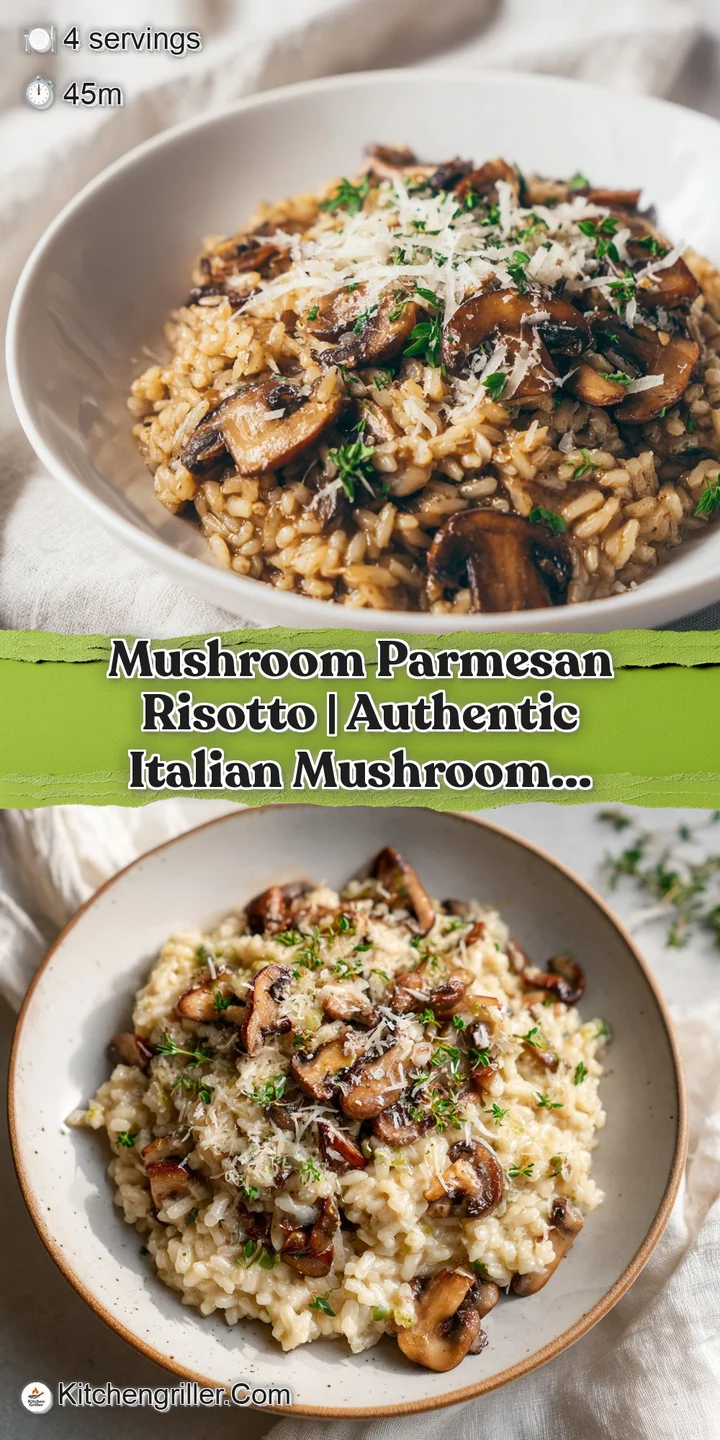
Recipe FAQs
Is it true I have to stir the risotto constantly for 30 minutes?
No, this is a common misconception. You only need to stir frequently enough to create friction between the grains, which releases starch and creates that signature creamy texture without breaking the rice.
How to achieve the "all'onda" wavy texture?
Perform the mantecatura vigorously at the end. After removing the pot from the heat, beat in the cold butter and Parmigiano Reggiano to emulsify the sauce so the rice flows like a wave when you tilt the plate.
Can I prepare any part of this dish ahead of time?
Yes, you can sauté the mushrooms up to 24 hours in advance. Keeping them chilled until you are ready to fold them into the finished rice saves 15 minutes of active prep time during your dinner service.
How to ensure the rice doesn't become mushy?
Toast the Arborio rice in the pot for 2-3 minutes first. This step creates a shell around each grain, helping it maintain an al dente bite while the starch releases into the stock.
Why should I keep the vegetable stock simmering on the back burner?
Maintain a consistent temperature to avoid shocking the rice. If you enjoy this process of managing thermal heat for perfect consistency, you will find it equally rewarding when you apply the same logic to caramelizing vegetables on a griddle.
How to fix the risotto if it looks too dry before serving?
Add a small ladle of warm stock right before serving. Risotto continues to absorb liquid quickly, so adding a final splash ensures it remains loose and creamy on the plate.
How to properly incorporate the dried porcini mushrooms?
Rehydrate them in a portion of your warm stock before chopping. Using this infused liquid as part of your total stock volume significantly deepens the earthy flavor profile of the entire dish.
Mushroom Parmesan Risotto
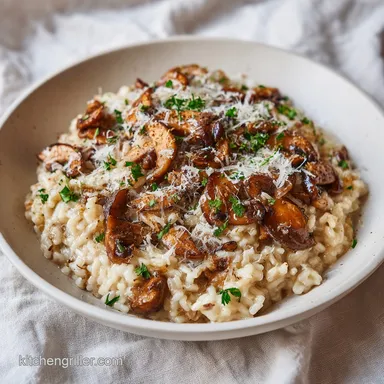
Ingredients:
Instructions:
Nutrition Facts:
| Calories | 584 kcal |
|---|---|
| Protein | 17 g |
| Fat | 22 g |
| Carbs | 69 g |
| Fiber | 4 g |
| Sugar | 2 g |
| Sodium | 480 mg |
