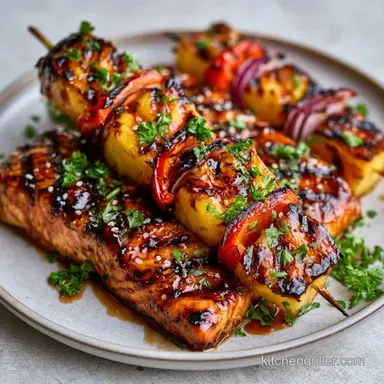
Grilled Pineapple Salmon Skewers
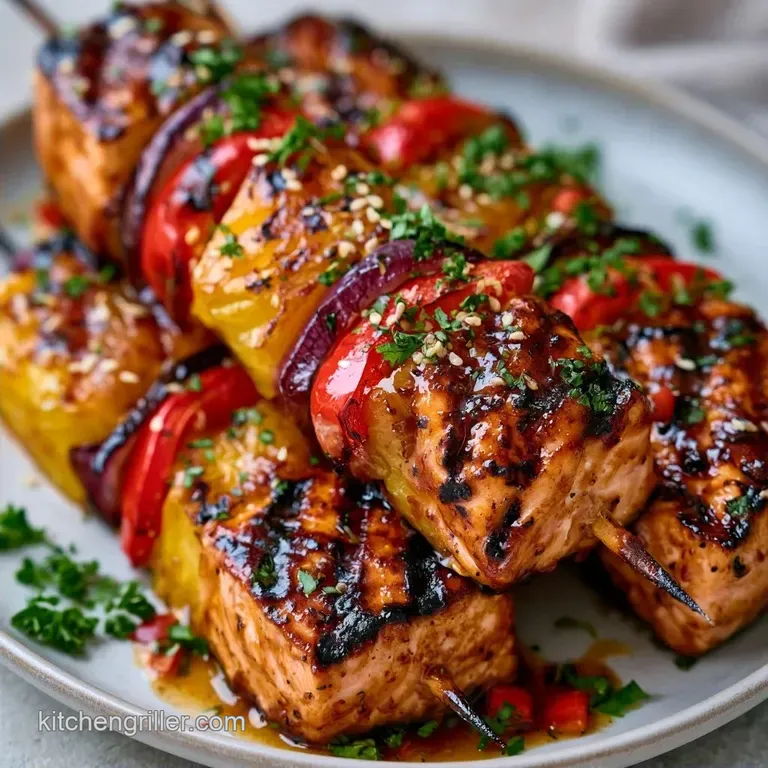
- Time: 20 min prep + 10 min cook
- Flavor/Texture Hook: Charred, sticky glaze with juicy salmon
- Perfect for: Fast weeknight dinners or summer grilling
Ever wondered why some grilled fish tastes like a dry eraser while others feel like they came from a high end bistro? I used to struggle with this, usually by overcooking the salmon in a desperate attempt to get a decent sear.
I'd end up with expensive fillets that clung to the grates and tore apart the second I touched them.
The trick is all in the temperature and the prep. Once I started treating the salmon like a steak and focusing on the surface moisture, everything changed. These Pineapple Salmon Skewers are my go to when I want something that feels fancy but actually fits into a hectic Tuesday.
You can expect a bright, tropical flavor with a deep mahogany char. We're using a quick reduction for the glaze so it clings to the fish instead of sliding off into the coals. It's a fast, reliable way to get dinner on the table without spending an hour scrubbing the grill.
How to Nail Pineapple Salmon Skewers
Natural Tenderizing: The enzymes in fresh pineapple break down tough proteins, which helps the salmon stay tender even under high heat.
Sugar Char: The brown sugar and pineapple juice create a fast caramelization. This gives you those dark, charred edges in about 5 minutes without drying out the center of the fish.
| Method | Time | Texture | Best For |
|---|---|---|---|
| Gas Grill | 10 mins | Heavy char, smoky | Large crowds |
| Cast Iron | 10 mins | Deep sear, glossy | Quick weeknight |
| Oven | 12 mins | Even cook, less char | Rainy days |
If you usually prefer chicken for your grilling, you might like my Chicken Kabobs for 4 recipe for a similar sweet and savory vibe.
The Quick Specs
- 1. Salmon Size
- Cut cubes to exactly 1 inch. Anything smaller overcooks too fast.
- 2. Pan Temp
- Your cast iron should be smoking slightly before the first skewer hits.
- 3. Glaze Consistency
- The sauce should coat the back of a spoon before you start basting.
Why These Ingredients Matter
For the protein, I use skinless salmon. It's easier to cube and doesn't get in the way of the glaze. Fresh pineapple is non negotiable here. Canned pineapple is often too mushy and doesn't char as well.
The soy sauce provides the salt, while mirin adds a subtle sweetness and a glossy finish. Ginger and garlic provide the punch that keeps the dish from tasting like candy. I use a neutral oil like canola or avocado because they handle high heat without burning.
Tools for the Job
You don't need a fancy setup for this. A sharp chef's knife is the most important tool to ensure the cubes are uniform. If you use wooden skewers, soak them in water for 20 minutes first so they don't catch fire on the grill.
A small saucepan is needed for the glaze. I prefer a cast iron skillet if I'm indoors, as it holds heat better than non stick pans.
From Prep to Plate
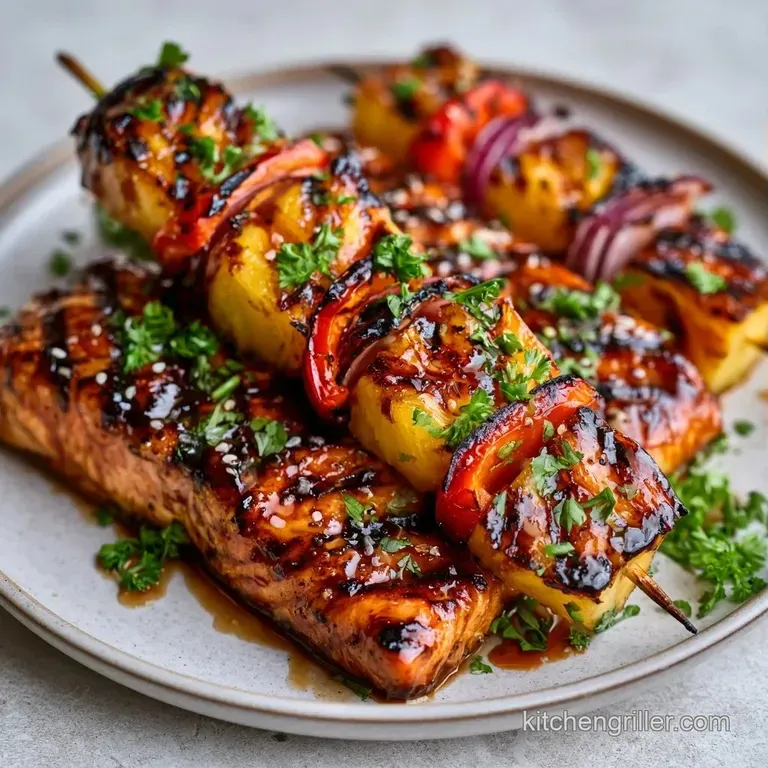
- Pat the salmon cubes dry with paper towels. Note: Wet fish steams instead of searing.
- Toss the salmon, pineapple, onion, and pepper in a bowl with 2 tbsp neutral oil.
- Whisk soy sauce, pineapple juice, brown sugar, mirin, ginger, and garlic in a small saucepan.
- Simmer the glaze over medium heat for 5-7 minutes until it reduces into a velvety syrup.
- Thread the salmon, pineapple, onion, and pepper onto skewers. Note: Leave a small gap between pieces for heat to circulate.
- Heat your grill or cast iron pan on high.
- Sear the skewers for 3-5 minutes per side.
- Baste frequently with the glaze until the fish is opaque and the sauce bubbles into a dark brown crust.
- Remove from heat and let them rest for 2 minutes.
Fixing Common Issues
The most frequent problem is the fish sticking. This happens if the pan isn't hot enough or the fish was too wet. If the salmon resists moving, don't force it. Let it sear for another minute, and it will usually release naturally once the crust forms.
Another issue is the glaze burning. Because of the sugar, the sauce can go from "caramelized" to "burnt" in seconds. Only baste during the last few minutes of cooking.
Fixing Sticky Salmon
If the fish clings to the metal, it's usually a heat issue. Make sure the oil is shimmering before you add the skewers.
Stopping Burnt Glaze
If the sauce is turning black too fast, pull the skewers off the heat immediately. You can always add a fresh brush of glaze at the end.
| Problem | Fix |
|---|---|
| Salmon sticking | Increase heat; pat fish drier |
| Burnt glaze | Baste only in the last 3 mins |
| Mushy pineapple | Use fresh, not canned, fruit |
| Raw center | Use smaller cubes or lower heat |
For those who want a different result, use this shortcut:
| Goal | What to change |
|---|---|
| Spicier kick | Add 1 tsp sriracha to glaze |
| More tang | Add a squeeze of lime at end |
| Extra char | Use a charcoal grill |
Easy Swaps and Twists
If you don't have mirin, a splash of white wine or extra pineapple juice works fine. For the protein, you can swap the salmon for shrimp or firm tofu, though the cooking time will drop to about 2-3 minutes per side.
If you want a healthier version, swap the brown sugar for maple syrup or a bit of honey. This keeps the stickiness but changes the flavor profile slightly. You can also swap the red pepper for zucchini or yellow squash for a different crunch.
| Original Ingredient | Substitute | Why It Works |
|---|---|---|
| Salmon (1.5 lb) | Firm Tofu (1.5 lb) | Holds shape well. Note: Less omega-3s, needs more glaze |
| Red Bell Pepper | Zucchini | Similar texture. Note: Releases more water |
| Soy Sauce (1/2 cup) | Tamari (1/2 cup) | gluten-free alternative. Note: Slightly richer flavor |
Storage and Leftover Tips
Keep remaining Pineapple Salmon Skewers chilled in a sealed container for up to 2 days. Freezing isn't advised, as the salmon may turn rubbery and the pineapple can develop a grainy texture.
Warm them up in a pan over medium heat or in a toaster oven for 3-4 minutes. Try to steer clear of the microwave, which often overcooks the fish and creates a strong fishy odor.
To minimize waste, toss your red onion scraps and pepper seeds into a quick veggie broth. Any remaining pineapple juice is great for a morning smoothie or as a cocktail mixer.
Plating Your Feast
I recommend presenting these on a large platter lined with baby spinach or fresh cilantro to make the yellow pineapple and red pepper colors stand out. To add a bit of crunch, top them with sliced green onions and a sprinkle of toasted sesame seeds.
These are a wonderful match for a light salad or steamed jasmine rice. If you're looking for something more substantial, my Classic Potato Salad offers a delicious contrast to the sweet and savory skewers.
Finish the dish by squeezing a fresh lime wedge over the top right before you serve. The acidity cuts through the salmon's richness and brightens the overall flavor profile.
Critical Sodium Level
1340 mg 1340 mg of sodium per serving (58% 58% of daily value)
The American Heart Association recommends a daily sodium limit of 2,300 mg, and an ideal limit of 1,500 mg for most adults to reduce cardiovascular risk.
Tips to Reduce Sodium in Your Salmon Recipe
-
Swap for Coconut Aminos-30%
Replace the 1/2 cup of soy sauce with coconut aminos, which provides a similar savory flavor with significantly less sodium.
-
Dilute with Pineapple Juice-20%
Use half the amount of soy sauce and increase the pineapple juice to maintain the sauce volume and sweetness while cutting salt.
-
Add Fresh Citrus-10%
Add a squeeze of fresh lime or lemon juice to the sauce; the acidity mimics the brightness of salt and enhances the natural flavors.
-
Boost Fresh Aromatics
Double the amount of fresh ginger and minced garlic to provide a more punchy, flavorful profile without adding any sodium.
Recipe FAQs
Do pineapple and salmon actually taste good together?
They pair excellently because the acidity of the pineapple cuts through the richness of the salmon. The sweet and savory contrast creates a balanced tropical flavor.
Can pineapple be used on grilled kabobs?
Pineapple is a great addition to kabobs since it caramelizes beautifully under high heat. It adds moisture and a bright pop of color to the platter.
How do I cook salmon skewers perfectly?
Sear the skewers on a high heat grill or cast iron pan while basting frequently with the teriyaki glaze. Cook until the fish is done and the sauce has caramelized.
What side dishes pair best with these skewers?
Light, grilled vegetables complement the bold glaze perfectly. If you enjoyed the charred textures here, try some lemon herb grilled veggies for a fresh balance.
Is it true that salmon skewers must be marinated for hours?
False. A quick toss in oil and a frequent basting of the reduced syrup glaze provides plenty of flavor without toughening the fish.
Which steps make these skewers easy to prepare?
Cutting all ingredients into uniform 1 inch cubes ensures everything cooks evenly and quickly. Using a simple reduced syrup glaze simplifies the process while maximizing taste.
Pineapple Salmon Skewers in 30 Minutes