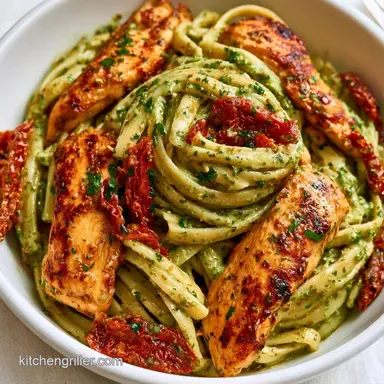
Creamy Chicken Pesto Pasta with Sun-Dried Tomatoes
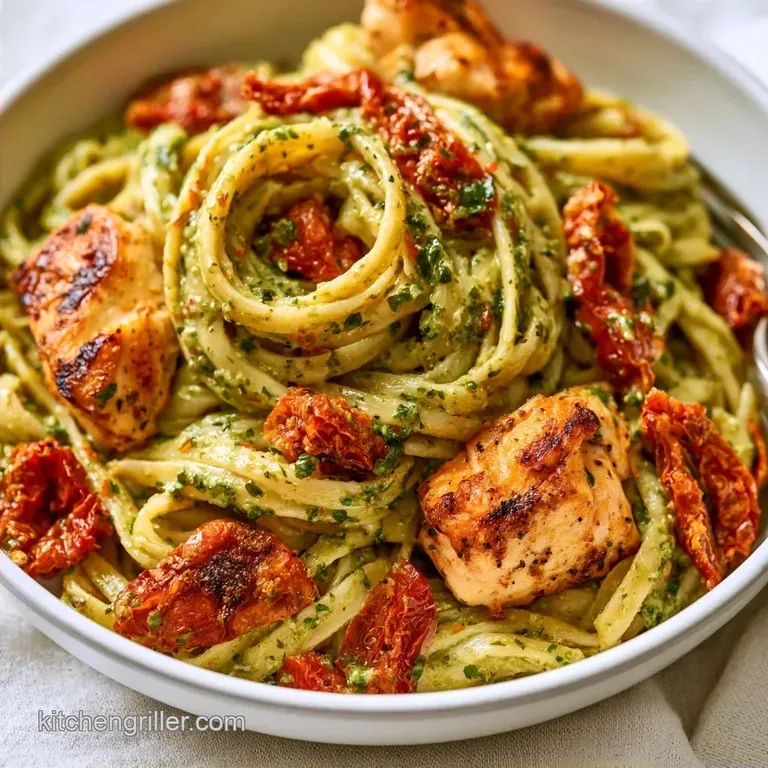
- Time: 5 min prep + 25 min cook
- Flavor/Texture Hook: Tangy sun dried tomatoes in a silky cream sauce
- Perfect for: Busy weeknights or a quick date night dinner
Chicken Pasta in Creamy Pesto SunDried
The sizzle of chicken hitting a hot pan is the best part of my Tuesday nights. I used to overcook my breasts until they felt like rubber, but I've learned that a hard sear followed by a quick rest is the only way to go. This is the ultimate recipe for Chicken Pasta in Creamy Pesto SunDried Tomato Sauce.
It's a high reward meal that doesn't take all night. You get the brightness of basil, the saltiness of Parmesan, and that concentrated punch from the tomatoes. It's a budget friendly way to feel fancy without spending two hours in the kitchen.
I've streamlined this to a single skillet for the sauce. You'll just need a pot for the noodles and a pan for everything else. Trust me, the cleanup is way easier than you'd think.
Why the Sauce Stays Glossy
- Starch Bridge: Reserving the cloudy pasta water helps the heavy cream and pesto oil bind together. This stops the sauce from separating into an oil slick.
- over High heat Sear: Browning the chicken quickly creates a crust that adds depth. It ensures the meat stays juicy while the outside gets that golden color.
| Goal | What to change |
|---|---|
| More Veggies | Add frozen peas or chopped zucchini |
| Extra Heat | Stir in 1/2 tsp red pepper flakes |
| Lighter Sauce | Swap heavy cream for half and half |
Shopping List Breakdown
The pesto and sun-dried tomatoes are the stars of this dish. For a more affordable version, store-bought pesto is a great option, provided that olive oil is listed as the first ingredient.
Penne or fusilli are the ideal pasta choices here. Their ridges and spirals are better at catching the sauce than smoother varieties. If you are looking to save money, any short pasta from your pantry will suffice.
- 1 lb Penne or Fusilli pasta Why this? Ridges grip the heavy sauce
- 1.5 lbs Chicken breast, diced into 1 inch pieces Why this? Lean protein that cooks quickly
- 2 tbsp Olive oil Why this? Great for searing at high heat
- 1 tsp Salt Why this? Crucial for the pasta water
- ½ tsp Black pepper Why this? Standard seasoning for chicken
- 3 cloves Garlic, minced Why this? Fresh aromatic base
- ½ cup Basil pesto Why this? The primary herbal flavor
- ½ cup Heavy cream Why this? Adds body and richness
- ½ cup Grated Parmesan cheese Why this? Thickening agent and source of salt
- ½ cup Sun dried tomatoes, drained and sliced Why this? Tangy and concentrated sweetness
- 2 cups Fresh baby spinach Why this? Adds nutrients and a pop of color
As for substitutions, try chicken thighs for a richer taste, though they need more time to brown. If baby spinach isn't available, kale is a fine alternative, but sauté it for an extra 2 minutes.
Gear for the Job
Basic equipment is all you need: a large pot for boiling the pasta and a wide skillet. I suggest using stainless steel or cast iron, as these materials maintain heat more effectively for searing the chicken.
Tongs are a great addition, making it much easier to toss the pasta in the sauce compared to using a spoon. Additionally, have a measuring cup ready to save some pasta water. It's a minor detail, but it's key to achieving the right sauce consistency.
Cooking it step by step
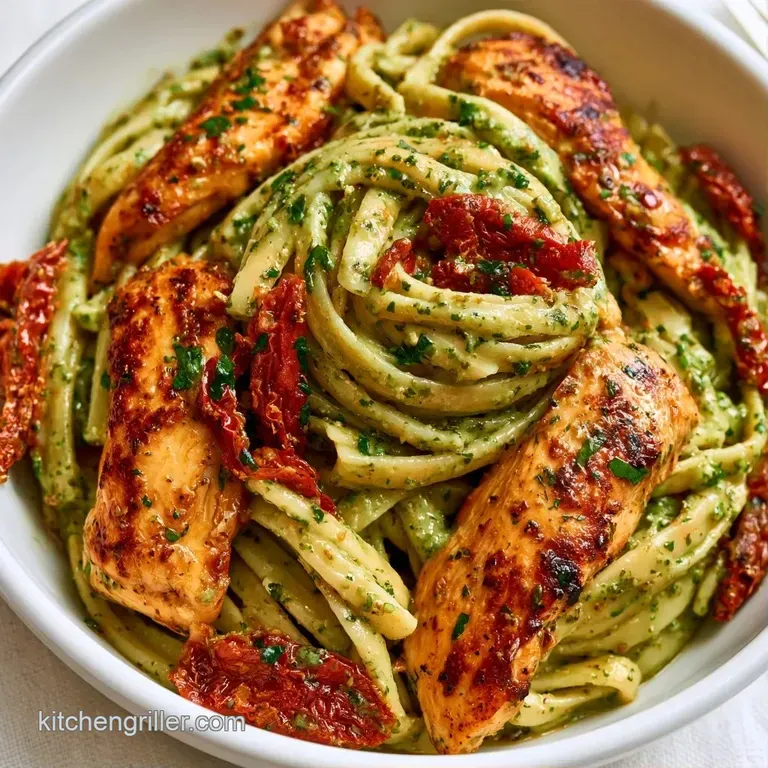
Phase 1: The Pasta Base
- Start by boiling a large pot of well salted water. Stir in the pasta and follow the package instructions to cook it until al dente.
- Save ½ cup of the starchy cooking water before you drain the pasta. Note: This "liquid gold" will help emulsify your sauce.
Phase 2: Searing the Protein
- Use paper towels to pat the chicken dry, then season with salt and pepper. Note: Removing surface moisture ensures better browning.
- Warm some olive oil in a wide pan over medium high heat. Arrange the chicken in one layer and sear for 3-4 minutes without stirring until a golden brown crust forms.
- Flip the pieces and cook for an additional 3 minutes until the meat is opaque. Transfer the chicken to a plate for now.
Phase 3: Building the Sauce
- Drop the heat to medium. Toss in the minced garlic and sauté for roughly 1 minute until it smells fragrant.
- Pour in the heavy cream and let it simmer gently until the liquid reduces and bubbles.
- Turn the heat down to low. Mix in the basil pesto, grated Parmesan, and sun-dried tomatoes, stirring until the cheese melts.
- Fold in the fresh baby spinach and stir until the leaves wilt.
Phase 4: The Final Emulsion
- Return the cooked pasta and seared chicken to the pan. Pour in the saved pasta water and toss for 1-2 minutes until the sauce is glossy and clings to the pasta.
Fixing Common Sauce Issues
If the sauce feels a bit off, don't panic. Most issues can be fixed with a bit more heat or a splash of liquid. I once made this and forgot the pasta water, and the sauce was way too thick. Adding a tablespoon of warm milk saved the whole dish.
For those who love this flavor profile, you might also like my Pesto Chicken Pasta which uses a slightly different method.
Sauce is too thick
If the sauce looks clumpy or thick, the Parmesan might have seized. Stir in a splash of water or milk over low heat.
Dull pesto color
Heat kills the bright green of basil. Always add the pesto at the end on low heat to keep the color vibrant.
Rubbery chicken
This happens when you crowd the pan or cook too long. Use a wide skillet and don't move the chicken too much.
| Problem | Fix |
|---|---|
| Clumpy Sauce | Add 1-2 tbsp warm milk or pasta water |
| Brown Sauce | Reduce heat before adding pesto |
| Dry Chicken | Reduce sear time by 1 minute |
Best Sides for this Dish
This is a heavy meal, so I like to pair it with something bright and acidic to cut through the cream. A simple arugula salad with lemon vinaigrette is my go to. The peppery greens balance the rich Parmesan perfectly.
If you want more bulk, garlic bread is a classic. But if you're watching calories, roasted asparagus or steamed broccoli are great choices. They add a crunch that the soft pasta needs.
Keeping Leftovers Fresh
Place any leftovers in an airtight container and keep them in the fridge for up to 3 days. It is normal for the pasta to absorb some of the sauce while stored.
To reheat, use the stove over low heat, adding a bit of water or cream to bring back the sauce's consistency. Try to avoid the microwave, as it can make the chicken rubbery and cause the cream to split.
For a zero waste approach, save the oil from the sun-dried tomato jar. It's concentrated with tomato flavor, making it ideal for sautéing garlic or drizzling over a fresh salad.
Trying Different Twists
Feel like mixing it up? You can easily swap the protein. Shrimp pairs perfectly with pesto and cooks even faster than chicken just sear them for 2 minutes per side and stir them in at the very end.
For a low-carb alternative, use spaghetti squash or zoodles instead of penne. If you do, reduce the heavy cream by half to compensate for the extra water released by the vegetables. You can also try my Pesto Chicken Vegetables for a completely pasta free meal.
To make this vegan, use coconut cream and a dairy-free pesto. Swap the Parmesan for nutritional yeast to maintain that savory, nutty punch.
Common Kitchen Myths
It is a common fallacy that searing meat "locks in" the juices. The process is actually about the Maillard reaction, which creates a flavorful brown crust.
Adding oil to your pasta water doesn't stop the noodles from sticking. In fact, it prevents the sauce from properly adhering to the pasta. Just use plenty of water and stir occasionally.
Scaling the Recipe
Cutting it in half: Use a 10 inch skillet. Reduce the garlic to 2 cloves and keep a close eye on the cream, as smaller amounts evaporate more quickly.
Doubling the batch: Avoid doubling the salt and spices immediately. Start with 1.5x and adjust to taste. Most importantly, brown the chicken in two separate batches; crowding the pan will cause the meat to steam rather than sear.
For detailed nutrition data on the ingredients, visit USDA FoodData Central.
Critical Sodium Level
1180 mg 1,180 mg of sodium per serving (51% 51% of daily value)
The American Heart Association recommends a daily limit of no more than 2,300 mg, with an ideal limit of 1,500 mg for most adults to reduce cardiovascular risk.
Tips to Reduce Sodium
-
Eliminate Added Salt-25%
Remove the 1 tsp of salt entirely. The pesto and Parmesan cheese already provide significant sodium to season the dish.
-
Swap the Pesto-20%
Replace store-bought pesto with a homemade version or a low-sodium variety to avoid hidden preservatives and excess salt.
-
Rinse Sun-Dried Tomatoes-20%
Thoroughly rinse the sun-dried tomatoes under cold water before slicing, or substitute them with fresh halved cherry tomatoes.
-
Limit the Parmesan-15%
Reduce the grated Parmesan cheese by half or substitute with a small amount of fresh, unsalted ricotta for creaminess.
-
Boost Natural Flavor
Add fresh lemon juice, lemon zest, or extra cracked black pepper to enhance the flavor profile without adding any sodium.
Recipe FAQs
Do pesto and sun-dried tomatoes pair well?
They work beautifully together because the concentrated acidity of the tomatoes cuts through the rich pesto and cream. You can find similar flavor pairings in my sun dried tomato chicken recipe.
How do you make the pesto cream sauce?
Sauté minced garlic in a skillet over medium heat, then stir in heavy cream and simmer until reduced. Fold in basil pesto, Parmesan, and sun-dried tomatoes on low heat to keep the sauce silky.
Is it true that the sauce will separate without a thickener?
That's a myth. Adding reserved starchy pasta water emulsifies the heavy cream and pesto oil into a glossy, stable sauce.
What can I add to jazz up the pasta?
Stir in fresh baby spinach at the end until wilted for a pop of color and nutrients. Adding a pinch of red pepper flakes also provides a nice heat contrast to the cream.
Creamy Pesto Chicken Pasta 3