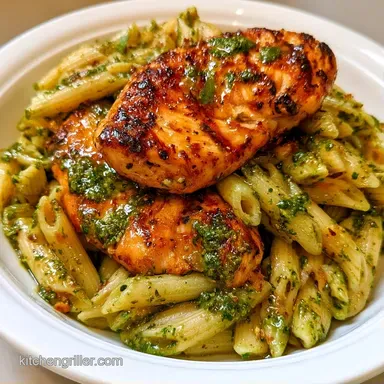
Pesto Chicken Pasta with Sundried Tomatoes
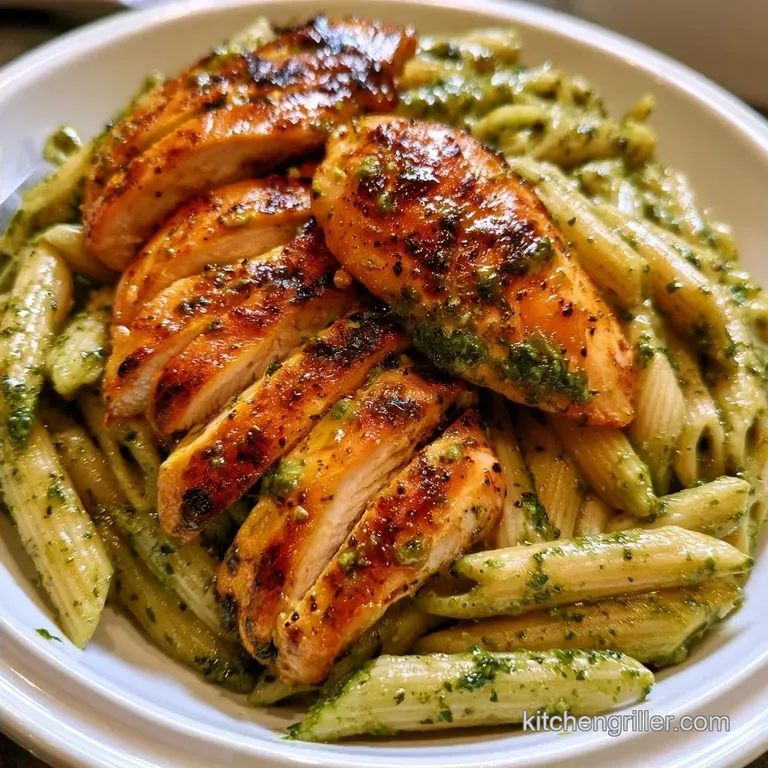
- Time: 10 min prep + 15 min cook
- Flavor/Texture Hook: Creamy sauce with pops of tart sundried tomatoes
- Perfect for: Weeknight dinners and beginner cooks
- Pesto Chicken Pasta for Busy Weeknights
- Why This Simple Method Works
- The Essentials You'll Need
- Basic Tools for the Job
- Bringing the Meal Together
- Fixing Common Cooking Issues
- Twists to Change the Flavor
- Storage and Zero Waste Tips
- Serving and Pairing Suggestions
- High in Sodium
- Recipe FAQs
- 📝 Recipe Card
Pesto Chicken Pasta for Busy Weeknights
The smell of basil and garlic hitting a hot skillet is my favorite way to end a long workday. There's something about that aroma that just tells your brain the stress is over and dinner is here. I used to try making pesto from scratch every time, but honestly, on a Tuesday night, that's just too many dishes.
I found that the real hero here is the prepared pesto. When you combine it with a bit of heavy cream, it stops being just a topping and becomes a proper sauce that coats every piece of pasta. It's a huge upgrade from the thin, oily mess some quick recipes produce.
This Pesto Chicken Pasta delivers that restaurant feel but takes about the same time as ordering takeout. You'll get tender chicken, al dente pasta, and a sauce that actually sticks to the food instead of pooling at the bottom of the bowl.
Why This Simple Method Works
Starchy Water: Saving a bit of the boiling water helps the pesto and cream bind together, so the sauce stays smooth.
High Heat Sear: Cooking the chicken without moving it for 3 minutes creates a brown crust that adds a savory depth you can't get from simmering.
Low Heat Finish: Adding the pesto and cream on low heat prevents the basil from overcooking and turning a dull brown color.
| Version | Prep Time | Texture | Best For |
|---|---|---|---|
| Fresh Pesto | 15 mins | Bright, punchy | Weekend meals |
| Jarred Pesto | 5 mins | Consistent, rich | Weeknight rush |
The Essentials You'll Need
| Ingredient | Purpose | Alternative |
|---|---|---|
| Basil Pesto | Main flavor profile | Spinach or walnut pesto |
| Heavy Cream | Provides thickness and richness | Full fat coconut milk (adds a tropical note) |
| Parmesan | Adds saltiness and nuttiness | Pecorino Romano (bolder flavor) |
| Sundried Tomatoes | Tangy, chewy accent | Roasted red peppers |
Key Ingredients
- 1 lb (450g) boneless, skinless chicken breast, diced into 1 inch pieces Why this? This lean protein cooks rapidly when diced
- 12 oz (340g) penne or farfalle pasta Why this? The ridges and folds grab the sauce
- 2 tbsp (28g) olive oil
- 1 tsp (5g) salt
- ½ tsp (2g) black pepper
- ¾ cup (170g) prepared basil pesto Why this? Intense herb flavor in a short time
- ½ cup (120ml) heavy cream
- ½ cup (50g) freshly grated Parmesan cheese
- 3 cloves (15g) garlic, minced
- ¼ cup (40g) sundried tomatoes, chopped
Easy Alternatives
Swap chicken breasts for thighs if you prefer a juicier result, though allow an extra 2 minutes for cooking. For a lighter, oil-based version, replace the cream with a tablespoon of butter and a bit more pasta water.
While any short pasta works, steer clear of long noodles like spaghetti, which can be awkward to eat with the chicken pieces.
Basic Tools for the Job
This meal doesn't require any specialized equipment. Just grab a large pasta pot and a wide skillet. Choosing a wide pan ensures the chicken browns beautifully rather than steaming in its own juices.
I recommend having a colander and tongs on hand. Tongs are perfect for folding the pasta into the sauce without breaking the noodles. If you own a microplane, use it for the Parmesan; pre-shredded cheese is often coated in cornstarch, which can make your sauce grainy.
Bringing the Meal Together
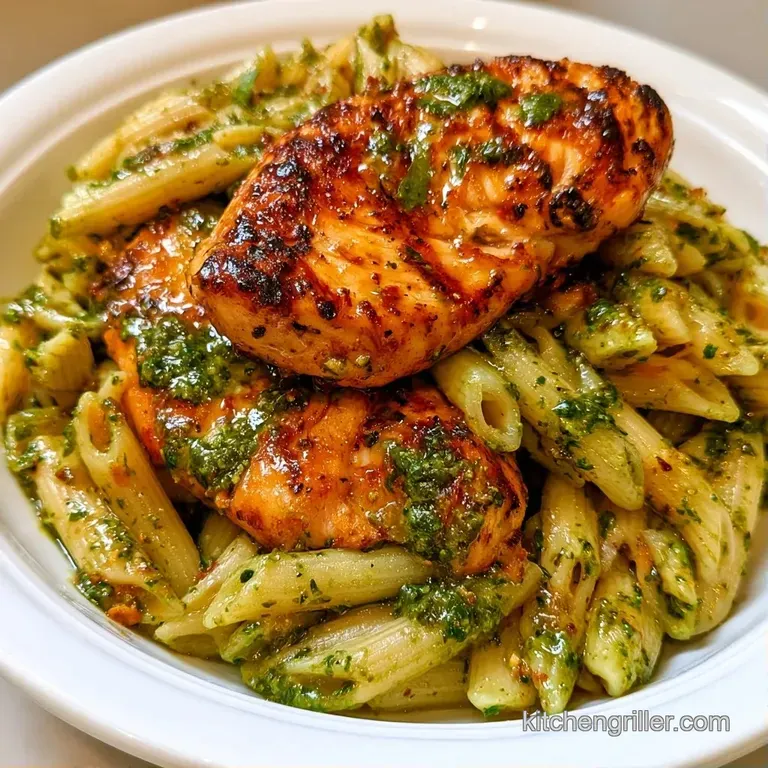
Phase 1: The Pasta Base
- Get a big pot of salted water boiling vigorously.
- Toss in the pasta and boil as per the packet instructions until al dente.
- Reserve ½ cup (120ml) of the starchy cooking liquid before draining the rest. Note: This water is the glue for your sauce.
Phase 2: Searing the Chicken
- Use paper towels to pat the chicken cubes dry, then season with salt and pepper. Note: Dry meat browns faster.
- Set a skillet over medium high heat and add olive oil until it begins to shimmer.
- Arrange the chicken in a single layer. Let it sear undisturbed for 3 minutes until a golden crust forms, then stir and cook for another 3-4 minutes until fully cooked.
- Mix in the minced garlic and sundried tomatoes, sautéing for 60 seconds until the garlic smells nutty.
Phase 3: The Final Emulsion
- Reduce heat to low. Mix in the heavy cream and prepared pesto.
- Transfer the cooked pasta into the skillet.
- Stir in a bit of the reserved pasta water and the Parmesan cheese. Toss gently for 1-2 minutes until the sauce is glossy and clings to the pasta.
Chef's Note: If the sauce looks too thick, add another tablespoon of that pasta water. It should look velvety and smooth, not like a paste.
Fixing Common Cooking Issues
Occasionally, the sauce may separate. This is often caused by using temperatures that are too high when stirring in the cream and pesto, which allows the fats to split from the liquids and create oily pockets.
Rubbery chicken is another common pitfall. This occurs when the pan is overcrowded; if the pieces are too close together, they steam instead of searing, resulting in a tough, overcooked texture.
Handling Separated Sauce
If you notice oil pooling, remove the pan from the heat immediately. Quickly whisk in a teaspoon of cold butter or a splash of warm pasta water to bind the sauce back together.
Avoiding Rubbery Chicken
If your skillet is small, cook the chicken in two batches. Make sure the oil is hot enough that the meat sizzles instantly upon contact.
| Problem | Fix |
|---|---|
| Sauce is too thin | Simmer for 1 more minute or add more Parmesan |
| Pesto lost its color | Add a squeeze of fresh lemon juice at the end |
| Chicken is bland | Season more aggressively with salt before searing |
Twists to Change the Flavor
If you want to lighten this up, try a Healthy Chicken Pesto Pasta Recipe by swapping the heavy cream for a splash of chicken broth and adding a handful of fresh baby spinach at the very end. The heat from the pasta will wilt the spinach in about 30 seconds.
For a bolder punch, add a pinch of red pepper flakes when you sauté the garlic. If you're feeling fancy, you can top the dish with toasted pine nuts for a crunch that contrasts with the creamy sauce.
If you love this flavor profile but want something for the grill, these Pesto Shrimp Kabobs are a great alternative. , if you want a different way to prep your protein, try some Garlic Parmesan Chicken for a similar savory vibe.
For a cold version, let the Pesto Chicken Pasta cool completely and toss it with halved cherry tomatoes and fresh mozzarella pearls. It's a great way to turn dinner leftovers into a lunch salad.
Storage and Zero Waste Tips
Keep any remaining portions in an airtight vessel in the refrigerator for a maximum of 3 days. Since the pasta soaks up the sauce over time, the dish may appear slightly dry upon retrieval.
When reheating, stir in a tablespoon of milk or water before popping it in the microwave. This thins the sauce and restores its velvety consistency. I suggest avoiding the freezer, as the cream may split and the pesto's vibrant color can fade.
To minimize waste, blend the fresh basil stems directly into your pesto if making it from scratch. Additionally, any leftover sun-dried tomato oil is excellent for sautéing veggies or as a dip for crusty bread.
Serving and Pairing Suggestions
To prevent the sauce from thickening too fast, serve this Pesto Chicken Pasta in warmed bowls. Although it's filling enough on its own, a side of roasted asparagus or a light arugula salad with lemon vinaigrette cuts through the richness of the cream and cheese.
For a more complete meal, add some toasted garlic bread ideal for mopping up the remaining pesto sauce from your plate.
Since the pasta is quite indulgent, a crisp white wine or sparkling water with lime works best to refresh your palate between bites. It's a straightforward, honest meal that feels special without needing an entire day of preparation.
High in Sodium
840 mg 840 mg of sodium per serving (37% 37% of daily value)
The American Heart Association recommends a daily limit of 2,300 mg of sodium to reduce the risk of high blood pressure and heart disease.
Tips to Reduce Sodium
-
Omit Added Salt-25%
Eliminate the 1 tsp of salt entirely. The Parmesan and pesto already provide significant sodium to season the dish.
-
Switch Pesto-20%
Replace the prepared pesto with a homemade version or a low-sodium alternative to avoid processed salt additives.
-
Limit Parmesan-15%
Reduce the Parmesan cheese to 2 tablespoons instead of a half cup, or use a smaller amount of a sharper aged cheese for maximum flavor.
-
Rinse Tomatoes-10%
If using packed sundried tomatoes, rinse them under cold water to remove excess surface brine and salt.
-
Boost Natural Flavor
Add a squeeze of fresh lemon juice or extra cracked black pepper to brighten the flavors without adding any sodium.
Recipe FAQs
What ingredients are needed for this chicken pesto pasta?
Combine chicken breast, penne or farfalle, basil pesto, heavy cream, Parmesan, garlic, and sundried tomatoes.
Tip: Pat your chicken dry before seasoning to ensure a better crust.
Which pasta shapes work best with this sauce?
Penne and farfalle are ideal because their shapes hold the creamy pesto sauce well.
Tip: Always cook your pasta al dente to prevent it from getting mushy during the final toss.
Is it true that pesto must be marinated on the chicken before cooking?
False. Stir the pesto in at the end on low heat to preserve its bright color and fresh flavor.
Tip: Cooking pesto at high temperatures can cause the basil to turn brown.
Does using jarred pesto instead of homemade ruin the dish?
Actually, no. high-quality store-bought pesto works perfectly for this quick meal.
Tip: Stir in a splash of pasta water to help jarred sauces emulsify more smoothly.
How to get a golden sear on the chicken?
Heat olive oil until it shimmers and cook the chicken in a single layer without moving it for 3 minutes.
Tip: Use a wide skillet to avoid crowding the pan, which causes steaming instead of searing.
What side dishes complement pesto chicken pasta?
A light garden salad or some tangy sides balance the richness of the cream sauce.
Tip: Avoid other heavy pasta sides to keep the meal from feeling too weighted.
Which technique makes the sauce glossy and creamy?
Stir the heavy cream and pesto on low heat, then toss with cooked pasta, Parmesan, and a splash of reserved pasta water.
Tip: Adding that starchy water is the secret to a sauce that clings to the noodles instead of pooling.
Pesto Chicken Pasta in 25 Minutes