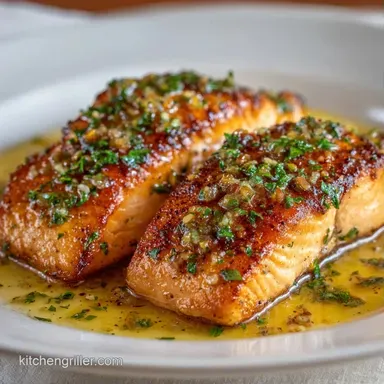
Garlic Butter Salmon Fillet: Crispy and Velvety
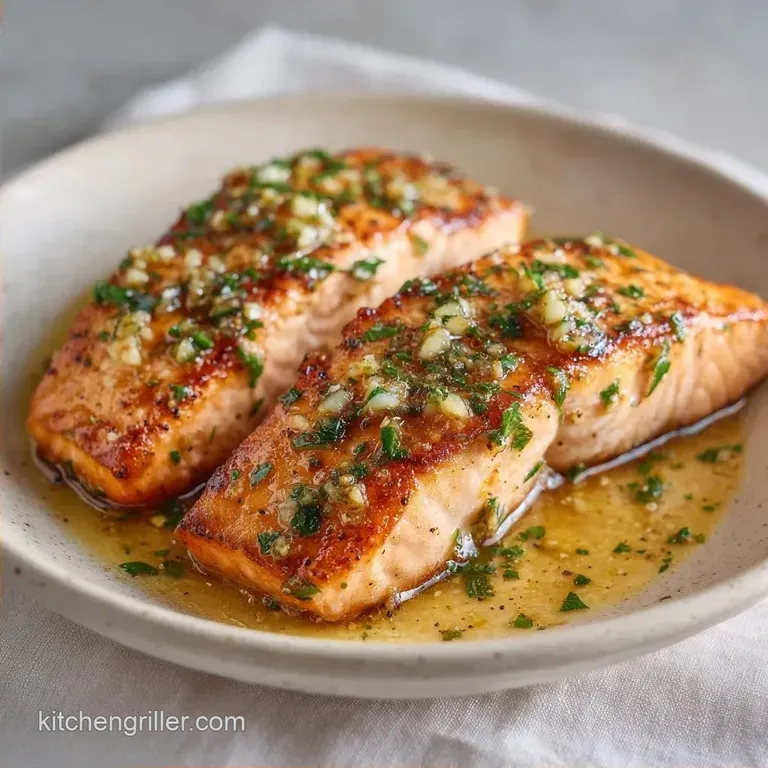
- Time: 10 min active + 12 min cook
- Flavor/Texture Hook: Shattering crispy skin with a velvety lemon garlic finish
- Perfect for: An impressive but fast weeknight dinner or a small dinner party
- Perfect Pan Seared Garlic Butter Salmon
- Why This Recipe Works
- The Component Breakdown
- Essential Kitchen Tools
- Step-by-Step Cooking Guide
- Fixing Salmon Mistakes
- Creative Taste Twists
- Scaling the Recipe
- Salmon Cooking Myths
- Storage and Waste Tips
- The Best Side Pairings
- High in Sodium
- Recipe FAQs
- 📝 Recipe Card
Perfect Pan Seared Garlic Butter Salmon
Sizzle. That's the first thing you hear when a cold slab of salmon hits a ripping hot cast iron pan. For me, this sound is the signal that dinner is actually happening. I remember the first time I tried making this in my first tiny apartment.
I was trying to mimic those polished city bistro plates, but I ended up with a sticky mess and garlic that tasted like charcoal. It took a few tries to realize that timing the butter is everything.
The beauty of Garlic Butter Salmon is how it fits into a fast paced urban life. You don't need an hour of prep or a dozen fancy tools. You just need a few fresh ingredients and a pan that can take the heat. It's a dish that feels expensive but takes less than half an hour from the fridge to the table.
We're going for a specific result here: skin that cracks like a cracker and meat that stays tender and translucent in the middle. By using a baste technique, we wrap the fish in flavor without drying it out.
This isn't about being fancy, it's about using a few smart moves to get a result that tastes like you spent all day in the kitchen.
Why This Recipe Works
The Dry Surface: Removing moisture from the skin allows it to sear immediately instead of steaming, which is how you get that shatter crisp texture.
Late Stage Fat: Adding butter at the end prevents it from burning at high temperatures while still allowing the garlic to infuse the oil.
Temperature Carryover: Pulling the fish at 130°F ensures it reaches a perfect medium rare/medium after resting, preventing that chalky white protein (albumin) from leaking out.
Acid Balance: The lemon juice cuts through the heavy butter, brightening the flavor and preventing the dish from feeling too greasy.
| Method | Time | Texture | Best For |
|---|---|---|---|
| Stovetop | 12 mins | Crispy skin, velvety meat | Quick dinners, maximum flavor |
| Oven | 15-20 mins | Evenly cooked, softer skin | Large crowds, hands off cooking |
The Component Breakdown
| Ingredient | Science Role | Pro Secret |
|---|---|---|
| Unsalted Butter | Flavor Carrier | Adds richness and helps the garlic brown without burning |
| Lemon Zest | Aromatic Oil | Contains essential oils that provide a "fresh" scent without adding extra liquid |
| Kosher Salt | Moisture Control | Draws out surface moisture for a better sear; use coarse grains for even coverage |
| Olive Oil | Heat Buffer | Higher smoke point than butter, allowing the fish to sear without smoking the kitchen |
Essential Kitchen Tools
You can use a stainless steel pan, but a 12 inch cast iron skillet is the gold standard here. Cast iron holds heat better, meaning the pan doesn't cool down the moment the cold fish hits the surface. This is vital for that initial crust.
A fish spatula is also a huge help. Because the skin becomes so crisp, a thin, flexible spatula lets you slide under the fillet without breaking the crust. If you don't have one, a thin metal turner works, but be gentle.
Finally,, a digital meat thermometer is the only way to be certain. Salmon overcooks in about 60 seconds. According to USDA Food Safety, checking internal temperatures is the only reliable way to ensure food is safe and cooked to your preference.
Step-by-step Cooking Guide
Step 1: Prep for the Perfect Sear
Pat the salmon fillets completely dry with paper towels. This is the most skipped step, but it's the most important. Season both sides generously with salt and pepper. Note: Dry skin equals crispy skin.
Step 2: Achieve the Mahogany Crust
Heat olive oil in a 12 inch cast iron skillet over medium high heat until it shimmers. Place fillets skin side down, press lightly with a spatula for 10 seconds, and sear for 4-5 minutes without moving them until the skin is golden and crisp.
Step 3: The Butter Baste Finish
Flip the fillets. Immediately add the butter and minced garlic to the pan. As the butter foams, stir in the lemon juice and lemon zest. Using a spoon, continuously pour the bubbling garlic butter over the salmon for the final 2-3 minutes of cooking.
Note: This coats the fish in flavor while it finishes cooking.
Step 4: Resting for Moisture
Remove the pan from heat once the internal temperature reaches 130°F (54°C). Garnish with fresh parsley and let the fish rest for 3 minutes. This allows the juices to redistribute, keeping the Butter Salmon Fillet moist.
Fixing Salmon Mistakes
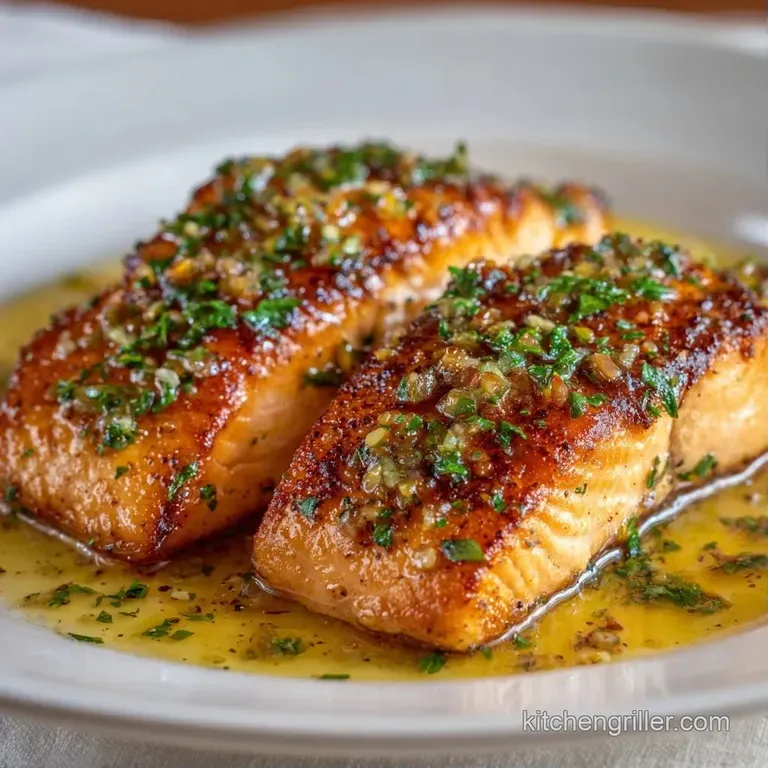
Why Your Salmon Sticks to the Pan
If the fish won't budge, it's usually because the pan wasn't hot enough or the fish was flipped too early. The salmon will naturally release from the metal once the sear is complete. If you force it, you'll leave the best part of the crust in the pan.
If the Garlic Burns
Garlic has a low burn point. If you see it turning dark brown or black, your pan is too hot. Add a splash of lemon juice or a knob of extra butter immediately to drop the temperature and stop the burning process.
Overcooked and Dry
If the fish feels firm to the touch or has a lot of white "beads" on the surface, it's overdone. To prevent this, always use a thermometer and remember that the fish continues to cook for a few minutes after it leaves the pan.
| Problem | Root Cause | Solution |
|---|---|---|
| Mushy Skin | Too much moisture | Pat dry with paper towels twice |
| Bitter Taste | Burnt garlic | Add butter/lemon immediately to cool pan |
| Raw Middle | Pan too hot/sear too fast | Lower heat slightly, cook longer on side 2 |
Common Mistakes Checklist
- ✓ Skipping the paper towel dry down.
- ✓ Moving the fish too much during the first 4 minutes.
- ✓ Adding butter at the very beginning (it will burn).
- ✓ Cooking until the internal temp hits 145°F in the pan (it will overcook during rest).
- ✓ Using cold garlic that isn't minced finely.
Creative Taste Twists
If you want to change the vibe of this Garlic Butter Salmon, you can easily swap a few things. For a zesty Mediterranean twist, add a teaspoon of dried oregano and some halved cherry tomatoes to the pan during the basting phase. The tomatoes will blister and create a light sauce.
For a sweet heat glaze, mix a teaspoon of honey or maple syrup into the butter and add a pinch of cayenne pepper. This gives the Butter Salmon Fillet a sticky, caramelized exterior that's great for guests.
If you're keeping things low carb, this recipe is already perfect as is. Just avoid serving it with glazed carrots. Instead, pair it with a fresh arugula salad. If you're planning a full meal, you might want to follow this up with a light Greek Yogurt Dessert to cleanse the palate.
Scaling the Recipe
When doubling this recipe to 8 fillets, do not crowd the pan. If the fillets are touching, they will steam instead of sear, and you'll lose that crispiness. Work in two batches.
For the garlic butter sauce, you don't need to double the butter and garlic exactly. Increase them by 1.5x instead. Too much butter in the pan can actually boil the fish rather than sear it.
If you're cooking for one, use a smaller 8 inch skillet. Reduce the cooking time by about 20% since smaller fillets often cook faster. Be extra careful with the butter, as it will evaporate more quickly in a small pan.
Salmon Cooking Myths
Searing meat does not "seal in juices." This is a common misconception. Moisture loss happens regardless of how you sear. The crust is actually about flavor and texture, not about creating a waterproof barrier.
Some people think you need to bring salmon to room temperature before cooking. While this helps with even cooking in thick steaks, for standard fillets, it's not necessary and can actually be a food safety risk if left out too long. Just pat them dry and go.
Storage and Waste Tips
Store leftover Garlic Butter Salmon in an airtight container in the fridge for up to 3 days. To reheat, avoid the microwave, which will make the fish rubbery. Instead, put it in a pan over medium heat for 2-3 minutes with a tiny bit of butter to refresh the sauce.
For freezing, it's better to freeze the raw fillets. If you must freeze cooked salmon, wrap it tightly in foil and plastic wrap for up to 2 months. Thaw in the fridge overnight before reheating in the oven at 275°F (135°C).
To avoid waste, don't throw away the salmon skin if it peels off. You can fry it separately in a little oil until it's like a chip and use it as a garnish. If you have leftover garlic butter in the pan, pour it over steamed asparagus or sautéed spinach.
The Best Side Pairings
This dish is rich, so you need something to cut through the fat. A bright, citrusy risotto or a pile of garlicky sautéed kale works well. For a more comforting approach, a side of creamy mashed potatoes is a classic choice.
If you want some carbs on the side, a toasted slice of Rosemary Sourdough is perfect for soaking up the extra lemon garlic butter left on the plate.
For a lighter urban dinner, serve the salmon over a bed of quinoa with diced cucumbers and feta. This balances the richness of the butter with fresh, salty notes and a bit of crunch.
High in Sodium
820 mg 820 mg of sodium per serving (36% 36% of daily value)
The American Heart Association recommends a daily sodium limit of no more than 2,300 mg for most adults to maintain heart health.
Tips to Reduce Sodium
-
Reduce Kosher Salt-25%
Reduce or omit the 1 tsp of kosher salt. As the primary sodium source in this recipe, cutting it provides the most significant health benefit.
-
Amplify Citrus-10%
Increase the lemon juice and zest. The acidity of the lemon tricks the palate into perceiving more salt than is actually present.
-
Increase Garlic-5%
Add 1-2 extra cloves of minced garlic to create a bolder, more pungent flavor profile to compensate for less salt.
-
Expand Herb Profile
Add fresh dill or thyme along with the parsley to add aromatic complexity without adding any sodium.
Recipe FAQs
Can I bake garlic butter salmon instead of pan-searing?
Yes, though you will lose the crispy skin. Bake the fillets at 425°F until the internal temperature reaches 130°F for a tender result.
How to cook garlic butter salmon fillets in the oven?
Place seasoned fillets on a lined tray and drizzle with melted garlic butter. Bake until the center hits 130°F, then garnish with fresh parsley.
Is it possible to make this creamy garlic butter salmon?
No, this recipe focuses on a light lemon-butter emulsion. Without additional dairy like cream, the sauce remains zesty and translucent.
How to get the skin perfectly crispy on garlic butter salmon?
Pat the fillets completely dry with paper towels before searing. Press them skin-side down in shimmering olive oil for 4-5 minutes without moving them.
How to reheat leftover garlic butter salmon without it getting rubbery?
Warm in a pan over medium heat for 2-3 minutes. Adding a small amount of butter helps refresh the sauce and maintain the fish's texture.
Is it true that salmon must be cooked to 145°F for safety?
No, this is a common misconception for those preferring a medium-rare finish. Removing the fish at 130°F ensures it stays moist, as the temperature rises during the 3-minute rest.
What are the best sides for garlic butter salmon?
Pair this dish with a nutrient-dense roasted vegetable. A roasted sweet potato provides a sweet contrast to the savory garlic butter sauce.
Garlic Butter Salmon: Crispy Pan-Seared