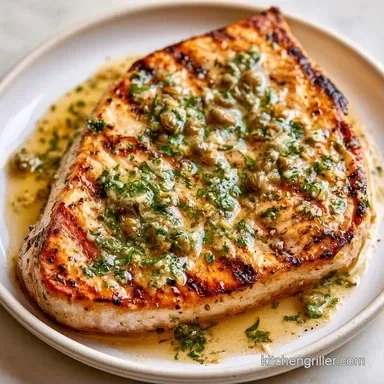
Grilled Swordfish with Basil Caper Butter in 25 Minutes
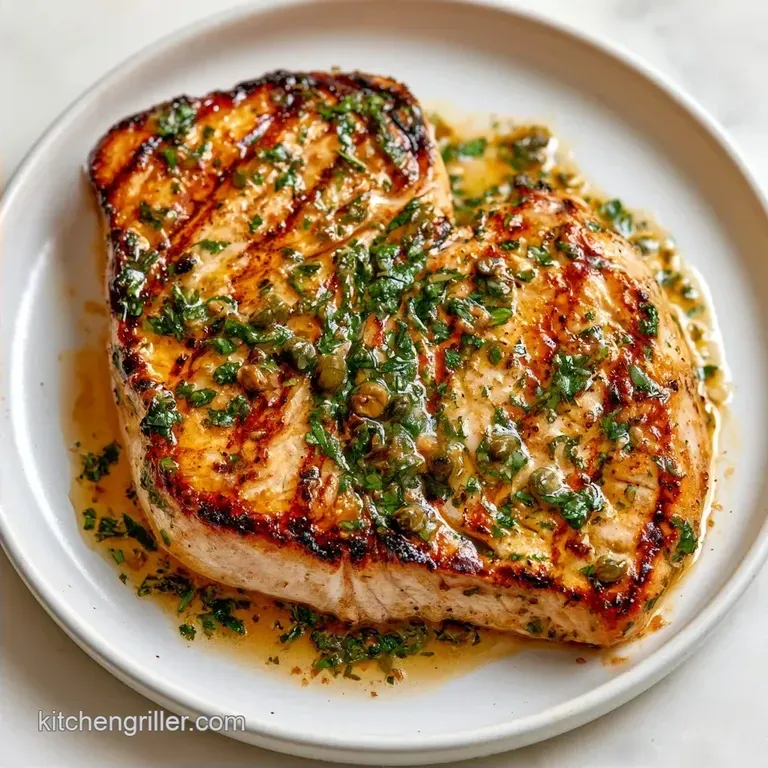
- Time: 15 minutes prep + 10 minutes on the grill
- Taste Profile: Briny, buttery, and charred
- Perfect for: A fast weeknight dinner
Tsssss. There's nothing quite like the sound of a chilled fillet meeting a scorching grill. Then comes the aroma a blend of seared fish and bright, zesty lemon. For years, I overdid the cooking until the fish had the consistency of a pencil eraser, but I eventually realized that timing is everything.
The secret is removing the steak from the flames just before it seems ready. Let the carryover heat finish the cooking as the butter cascades over the surface. This results in a deep mahogany crust and a moist, tender center.
This Grilled Swordfish with Basil Caper Butter doesn't require fancy skills. It's simply about precision and using acidity to balance the richness. Believe me, once you watch that butter seep into those charred lines, plain grilled fish will never satisfy you again.
The Reason This Works
Dense Texture: Swordfish is the "meat of the sea," so it doesn't flake or fall through the grates like cod. This lets you get a deep sear without the fish disintegrating.
Acid Balance: The lemon juice and capers break down the richness of the butter. This keeps the dish feeling fresh rather than heavy.
Residual Cooking: Pulling the fish at 130°F prevents the proteins from tightening too much. The carry over heat brings it to a safe temperature while keeping the juices inside.
| Source | Texture | Prep Time | Impact |
|---|---|---|---|
| Fresh Steaks | Firm, clean taste | 5 mins | Best sear and flavor |
| Frozen/Thawed | Slightly softer | 20 mins | More moisture, harder to sear |
Right then, let's look at the flavor profile. The capers act like little salt bombs that pop in your mouth, and the basil adds a peppery, floral note. It's a simple combination, but it works because it mimics a classic Piccata but the smoky depth of a gas grill.
The Ingredient Breakdown
The swordfish is the star here, and you want a cut that is about an inch thick. Any thinner and it overcooks in seconds. Any thicker and you struggle to get the center done without burning the outside.
For the butter, use unsalted. You've already got salt in the rub and brine in the capers, so using salted butter can make the whole thing taste like a salt lick. Fresh basil is non negotiable here. Dried basil tastes like old oregano and will ruin the freshness of the sauce.
Capers provide the brine. If you use the larger capers, chop them up so you get a bit of that tang in every single bite. The lemon zest provides the aromatic oils, while the juice provides the sharp acidity.
The Shopping List
For the Basil Caper Butter
- 4 tbsp (57g) unsalted butter, softenedWhy this? Creamy foundation for the sauce
- 2 tbsp (8g) fresh basil, finely mincedWhy this? Provides a fresh, peppery scent
- 1 tbsp (15g) non pareil capers, drained and choppedWhy this? Adds a briny, salty pop
- 1 tsp (5ml) fresh lemon juiceWhy this? Lifts the richness of the butter
- 1/2 tsp (3g) lemon zestWhy this? Intense citrus essence
- 1/4 tsp (1.5g) kosher salt
- 1/4 tsp (1g) cracked black pepper
For the Grilled Swordfish
- 4 (6 oz / 170g) swordfish steaks, about 1 inch thickWhy this? Hearty, grill ready consistency
- 2 tbsp (30ml) extra virgin olive oilWhy this? Stable at heat with a clean profile
- 1 tbsp (15ml) fresh lemon juiceWhy this? Softens the fish
- 1 tsp (6g) garlic powderWhy this? Distributes evenly and resists burning
- 1 tsp (6g) kosher saltWhy this? Helps create a golden brown sear
- 1/2 tsp (2g) cracked black pepper
Substitutes
- Butter: Ghee (better heat resistance, similar taste)
- Basil: Fresh parsley (a gentler, fresh option)
- Capers: Chopped green olives (salty, distinct tang)
- Swordfish: Thick tuna steaks (similar in density)
Tools You'll Need
You can keep things simple, though certain tools make the process faster. Gas or charcoal grills are ideal. If you're cooking inside, a cast iron grill pan is your best option.
Use a meat thermometer it's non-negotiable. Guessing with swordfish is risky, as the window between "juicy" and "rubbery" is only about two minutes. A digital instant read thermometer is the only way to guarantee a perfect result.
Keep some paper towels nearby. If the fish is damp when it hits the heat, it will steam instead of sear. You want it completely dry.
Cooking the Steaks
1. Mix the butter. Combine the softened butter, minced basil, chopped capers, lemon juice, zest, salt, and pepper in a small bowl. Use a fork to blend into a smooth, green gold paste and keep it at room temperature.
2. Dry the fish. Use paper towels to wipe the swordfish steaks until they are bone dry. Note: This is the most critical step for achieving a brown crust.
3. Create the rub. In a small bowl, whisk together the olive oil, lemon juice, garlic powder, salt, and pepper. Coat both sides of the steaks with this mixture.
4. Heat the grill. Set your grill to a medium high setting of roughly 400°F (200°C). Ensure the grates are clean and well oiled.
5. First sear. Lay the steaks on the grates. Sear for 4–6 minutes until a deep golden brown crust forms and the fish pulls away easily.
6. Flip and finish. Turn the steaks over and cook for another 4–6 minutes. Listen for the sizzle to stay steady.
7. Check the temp. Pull the fish off the grill as soon as the center hits 130°F (54°C).
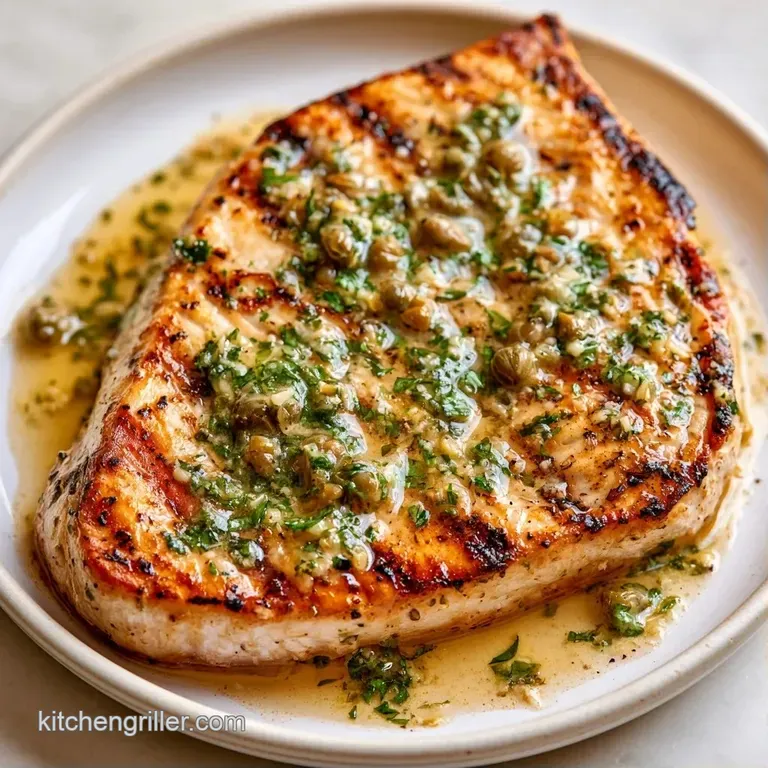
8. The final melt. Quickly add a scoop of the basil caper butter to each piece. Let them rest for 5 minutes so the butter melts into a glossy, rich sauce.
Chef's Note: For a more concentrated flavor, pop your butter in the freezer for 10 minutes before mixing. This keeps the basil and capers evenly distributed instead of settling.
Fixing Common Issues
If your swordfish ends up with a rubbery texture, you likely overshot the pull temperature. Because it is a lean fish, it lacks the protective fats found in salmon fillets. Pulling it at 130°F is the secret to keeping it tender.
Another common pitfall is "pale fish" syndrome. This is usually caused by surface moisture or a lack of searing heat. You are aiming for a deep mahogany char. If your gas grill isn't delivering, try using a cast iron skillet on the stove, similar to my pan seared swordfish technique.
If the butter doesn't melt evenly, the fish probably cooled too quickly or you waited too long to add the dollop. Apply it the very moment the fish comes off the heat.
| Problem | Root Cause | Solution |
|---|---|---|
| Rubbery Texture | Cooked beyond 145°F | Pull at 130°F and rest |
| Pale/Grey Color | Insufficient heat or damp fish | Pat dry and preheat to 400°F |
| Butter not melting | Surface temperature dropped | Apply butter immediately after grilling |
| Fish sticking | Flipped too soon | Wait for the crust to "release" naturally |
Quick Fixes for Flavor:
- More zing? → Mix in an additional 1 tsp of lemon zest.
- Salty kick? → Double the amount of capers.
- Less rich? → Use a high-quality olive oil blend instead of butter.
Presentation Tips
Grilled Swordfish with Basil Caper Butter looks best when the colors pop. The deep brown of the sear against the bright green of the melting butter is a great contrast. Serve it on a warm platter to keep the sauce fluid.
Pair this with something light. I love a bed of lemon dressed arugula or some grilled asparagus. The bitterness of the greens cuts through the butter perfectly. If you want a starch, a simple quinoa salad with cucumber and feta works well.
For a "restaurant" look, slice the steak into thick strips across the grain. Spoon any remaining melted butter from the plate back over the top and finish with a pinch of fresh basil leaves.
Keeping it Fresh
Refrigerate any remaining portions in a sealed container for 2 days. The butter will solidify, which is perfectly fine.
Avoid using the microwave to reheat the fish, as it will turn the swordfish rubbery. Instead, place the steak in a pan over medium low heat with a teaspoon of water. Cover it with a lid for 2-3 minutes. This steams the fish and remelts the basil caper butter without overcooking the center.
Do not freeze cooked swordfish, as the texture becomes mealy. If you have raw steaks you cannot use, freeze them vacuum sealed for up to 3 months.
Sustainable Tip: Save your basil stems. Blend them with olive oil, garlic, and a pinch of salt to create a quick basil oil for drizzling over salads or pasta.
Switching Up Flavors
If you want to move away from the Mediterranean vibe, try swapping the basil for fresh dill and the lemon for a bit of grainy mustard. It gives the dish a more Nordic feel that still pairs well with the meaty texture of the fish.
For those watching their carbs, this recipe is already naturally low carb. Just serve it with steamed broccoli or sautéed spinach. If you want something even more punchy, try my Salsa Verde swordfish for a brighter, vinegary finish.
You can also swap the butter for a compound olive oil. Mix the capers and basil into a high-quality extra virgin olive oil. It's a lighter version that's great for summer lunches when you don't want something as heavy as butter.
Right then, you're all set. Grilled Swordfish with Basil Caper Butter is one of those dishes that looks like it took hours but actually comes together in 25 minutes. Just remember: pat it dry, heat the grill, and pull it at 130°F. Happy grilling!
Critical Sodium Level
1850 mg 1,850 mg of sodium per serving (80% 80% of daily value)
The American Heart Association recommends that most adults limit their sodium intake to 2,300 mg per day, with an ideal limit of 1,500 mg for those with hypertension.
Strategies to Reduce Sodium in Your Swordfish
-
Eliminate Added Salt-30%
Remove both the 1/4 tsp and 1 tsp of kosher salt from the recipe entirely; the natural sodium in the fish and capers is sufficient.
-
Rinse the Capers-20%
Place the non-pareil capers in a fine mesh strainer and rinse them thoroughly under cold water to remove excess brine.
-
Increase Acidity-10%
Add an extra tablespoon of fresh lemon juice to brighten the flavors and compensate for the reduction in salt.
-
Use Fresh Garlic-5%
Substitute the garlic powder with 3 cloves of fresh minced garlic to provide a more robust flavor without added sodium.
-
Amplify Fresh Herbs
Double the amount of fresh basil or add fresh parsley to enhance the aromatic profile of the butter sauce.
Recipe FAQs
How to cook swordfish steaks?
Sear on a medium high grill at 400°F for 4 6 minutes per side.
Tip: Pat the steaks completely dry before oiling to ensure a deep golden crust.
How do I keep swordfish from becoming dry?
Remove the steaks from the heat immediately when they reach an internal temperature of 130°F.
Tip: Resting the fish for 5 minutes allows the carry over heat to finish cooking without toughening the protein.
What is the best way to handle frozen swordfish steaks?
Thaw them fully in the refrigerator before seasoning and grilling.
Tip: If you enjoyed mastering high heat searing here, see how the same principle works in our grilled vegetables guide.
Is it true that swordfish should be cooked until it flakes like white fish?
No, this is a common misconception. Swordfish is a dense, steak like fish that becomes rubbery if overcooked to a flaky consistency.
Tip: Target a medium doneness for the best balance of texture and juiciness.
Which approach is best for a European style swordfish dish?
Combine lemon juice, capers, and fresh basil for a classic Mediterranean flavor.
Tip: Chop the capers finely so the briny flavor is evenly distributed in the butter.
Grilled Swordfish Basil Butter